The short answer
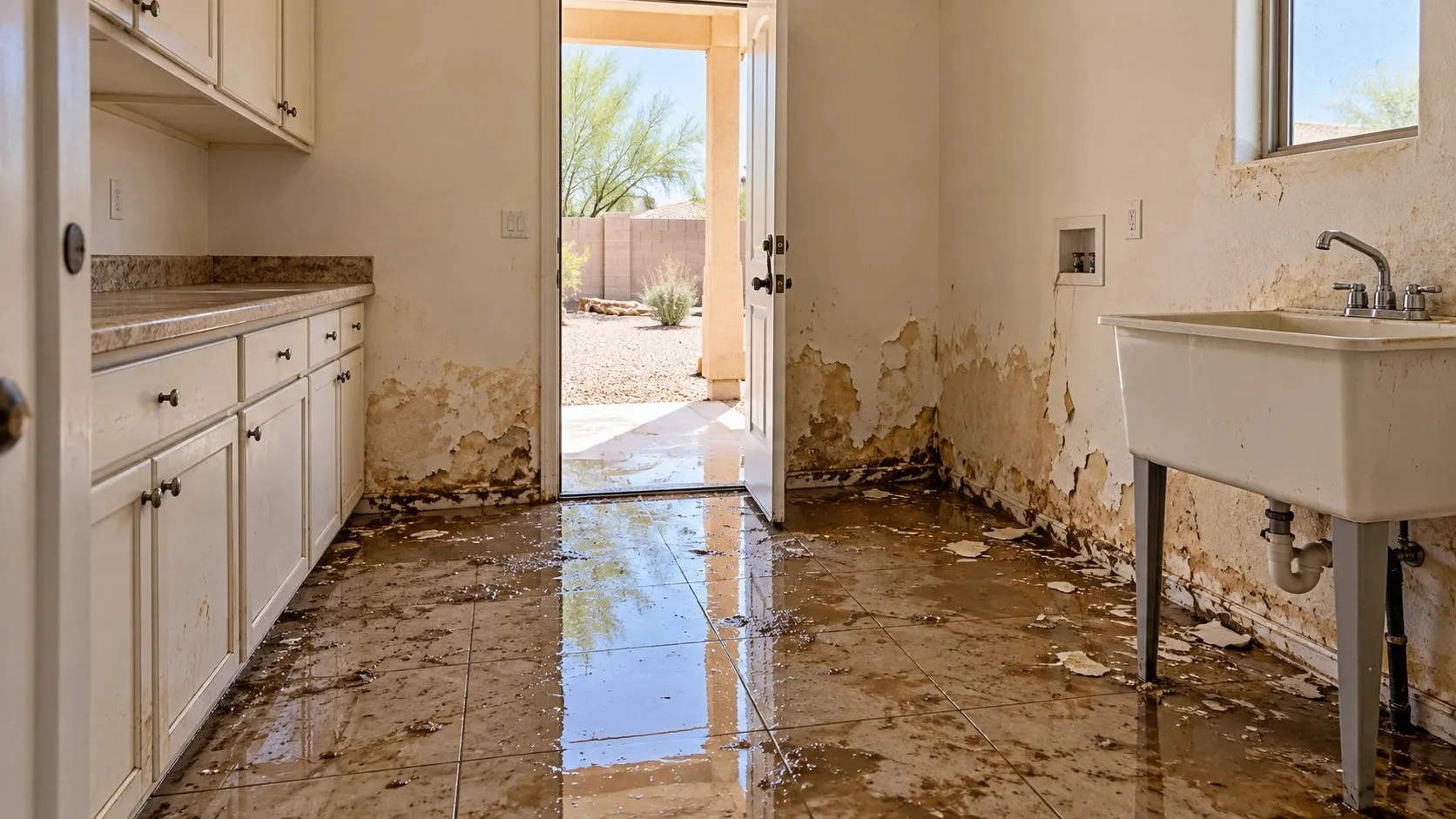
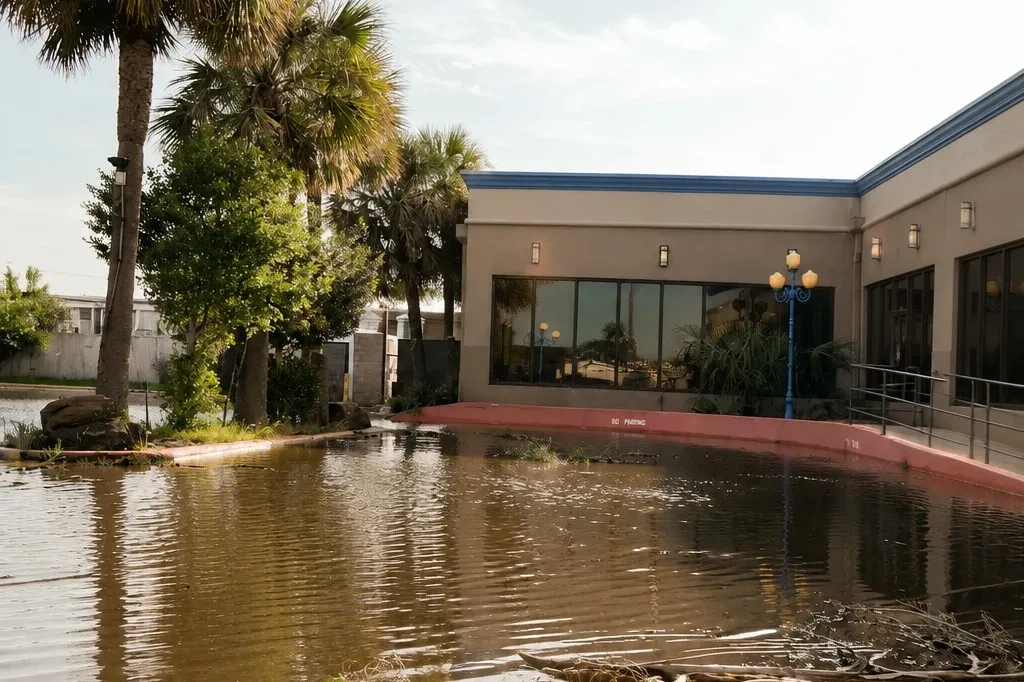
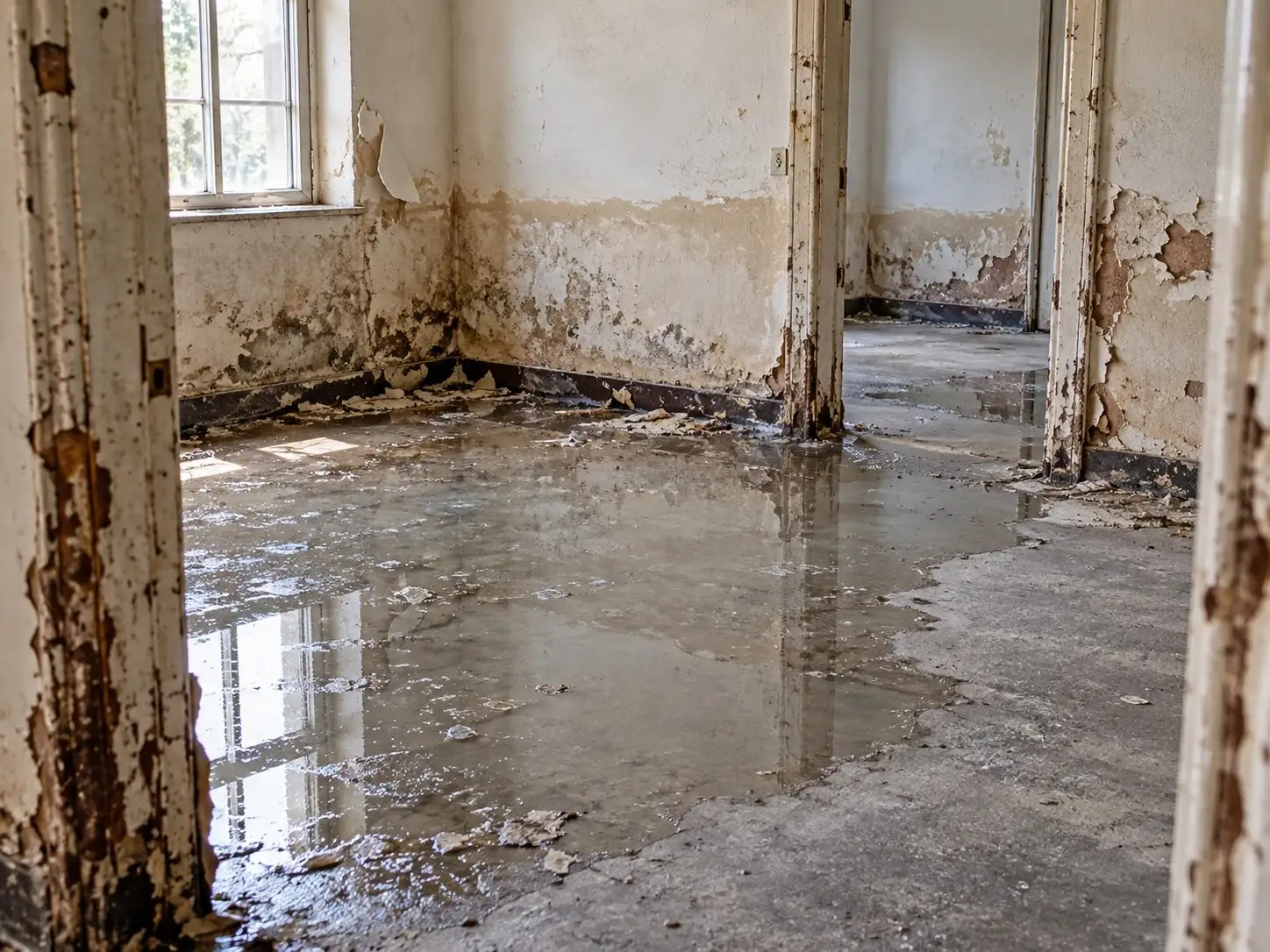
Water damage in Scottsdale homes can start with plumbing, appliances, the AC or the weather. Dripping from above? Read what to do about a ceiling leak.
Supply lines and hoses
Supply lines feed your washer, toilet and fridge under constant pressure. IBHS, an insurance research group, found a burst supply line caused half of washing machine water damage incidents. It says washer makers recommend new hoses every 5 years.
See slab leak and burst pipe water damage.
Water heaters and hard water
An IBHS study found the risk of a water heater leak or burst rises sharply at 5 years. It also says sediment builds faster with hard water. City of Scottsdale water is very hard by USGS standards.
See slab leak and burst pipe water damage.
Slab leaks and desert soil
A slab leak is a leak in a pipe under the concrete floor. The Arizona Geological Survey says problem soils can crack floor slabs and rupture pipelines. The City of Scottsdale’s free WaterSmart portal sends leak alerts to customers with hourly water use.
See slab leak and burst pipe water damage.
AC drain lines
Phoenix averages 111 days a year at or above 100 degrees, per the National Weather Service. An EPA home cooling checklist says a plugged AC drain line can cause water damage in the house.
Monsoon roof leaks
The National Weather Service dates monsoon season from June 15 to September 30. It lists flash floods and microbursts among common monsoon hazards. Rain that gets past the roof can show up as a stain or a drip in the ceiling.
Rare winter freezes
Phoenix averages 1 day a year at or below 32 degrees, per the National Weather Service. When a freeze warning comes, IBHS suggests disconnecting garden hoses and turning off outside faucets.
See slab leak and burst pipe water damage.
Found water? Do this first
Shut off the main water valve, stay away from wet outlets, take photos and call. The full checklist is on the home page: what to do in the first 10 minutes.