Cave Creek, Arizona
Water Damage Restoration in Cave Creek, AZ
For water damage restoration in Cave Creek, AZ, the first job is to stop the water. This page lists the town's after-hours water line, then the local flood and leak risks.
Founded
1870, mining and ranching
Elevation
1,804 to 3,924 feet
ZIP code
85331
Scottsdale City Hall
About 29 miles away
Water leak or outage in Cave Creek: the town's after-hours line
To report an after-hours water leak or outage, the Town of Cave Creek lists 602-667-4574. If the leak is inside your home, close your main water valve first.

Put that number in your phone now, before you need it. Not sure the town supplies your water? Look at who sends your water bill.
For a leak inside the house, the main valve comes first. You will often find it where the water line comes into the house. Close it, and water stops flowing in.
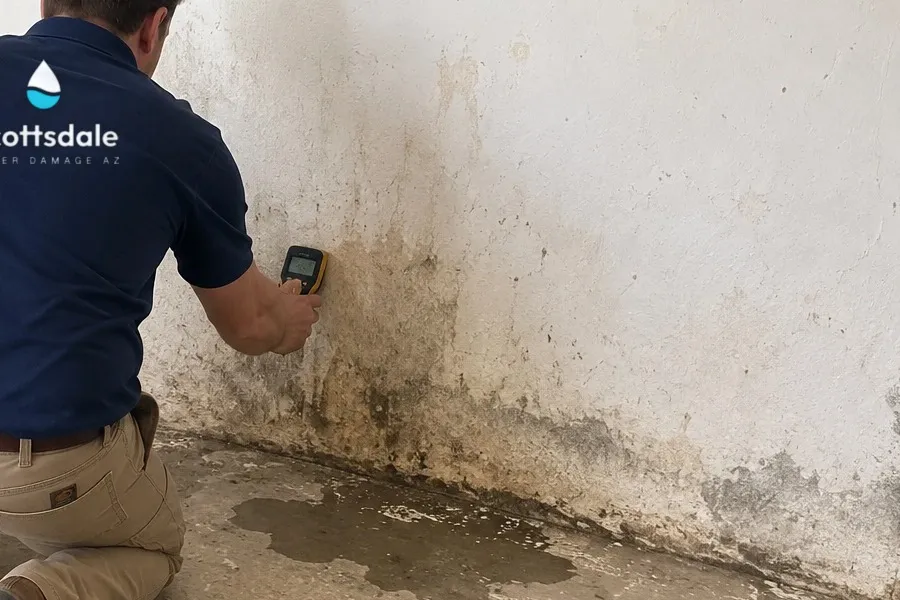
Next, take photos of the water and everything it reached. A plumber fixes the broken pipe or fixture. Then the wet floors, walls and cabinets get dried.
Speed matters for that last step. To prevent mold, the EPA says to get wet areas and items dry within 24 to 48 hours.
Flash floods in Cave Creek: washes, rain and the 2025 storms
Flash floods are a common monsoon hazard, says the National Weather Service. On September 18 and 19, 2025, county flood data shows 1 to 2 inches of rain around Cave Creek and North Scottsdale.
That data comes from the Flood Control District of Maricopa County. Phoenix Sky Harbor got only 0.23 inches on the same days.
Land in town rises from 1,804 feet to 3,924 feet, according to the town. Rain on the higher ground runs downhill through the washes.
The district keeps a stream gage on Galloway Wash at Galloway Road. A stream gage measures how much water is flowing.
At the gage, the wash drains 6.6 square miles. FEMA puts the wash's 100-year flow at 3,100 cubic feet of water per second. A 100-year flow is the size of a rare, very large flood.
In 2006, the Flood Control District held an open house on its Cave Creek Drainage Master Plan. The notice said the plan "will recommend actions" to protect residents and property from erosion and flooding.
Checking on Cave Creek flooding today? Look at current National Weather Service alerts before you head out. The NWS calls low-lying areas and spots near a wash particularly dangerous.
The NWS also asks families to keep children from playing near washes or storm drains after any rain.
If runoff gets inside, be careful around it. The restoration industry's water damage standard lists rising water from rivers or streams as Category 3. That class covers badly contaminated water that can cause serious reactions.
See how flood cleanup works when water comes in from outside.
Monsoon roof and ceiling leaks in Cave Creek homes
The National Weather Service puts monsoon season at June 15 through September 30. When a ceiling drips after a storm, the roof and the AC drain line are the first places to check.
Clogged roof scuppers
A scupper is the opening that drains water off a flat roof. Rosie Romero, host of Rosie on the House, told KTAR in 2018 that a little leaf debris can clog one.
Water pooling on the roof
When a scupper clogs, rain can pond on the roof instead of draining. Romero warned that the weight of that water can cause structural failures.
Exhaust fans and vent pipes
Romero said ponding water can get in through bathroom or kitchen exhaust fans. It can also enter at a plumbing vent pipe connection.
A plugged AC drain line
Your AC pulls water out of the air and sends it down a condensate drain. If that drain plugs, an EPA cooling checklist warns, the water can damage your house.
A stain that keeps growing
A ceiling stain that spreads after each storm points to water still getting in. See how ceiling water damage repair works.
Desert soil, caliche and slabs
Some Arizona soils swell, shrink or collapse. The Arizona Geological Survey says these problem soils can crack foundations and floor slabs, and can rupture pipelines.
The survey says structure damage in Arizona is commonly related to these soils.
Expansive clay is one kind. It swells when monsoon rain wets it and shrinks in summer heat. That repeated wetting and drying drives the damage.
Caliche is another layer to know. University of Arizona Cooperative Extension describes it as soil cemented together by calcium carbonate, a natural mineral. A hard caliche layer can block water from soaking down, so water can sit on top of it.
The survey gives two tips for the ground around your foundation:
- Water less near the foundation.
- Keep plants away from it.
A leak under the concrete slab your home sits on can stay hidden. If your water meter keeps moving while every tap is off, water is going somewhere. A plumber can find the leak.
To see what comes next, read about burst pipe and slab leak water damage and how the drying works.
Water damage restoration services in Cave Creek, AZ
Pick the problem that matches yours, or start with the main guide to water damage restoration in Scottsdale.
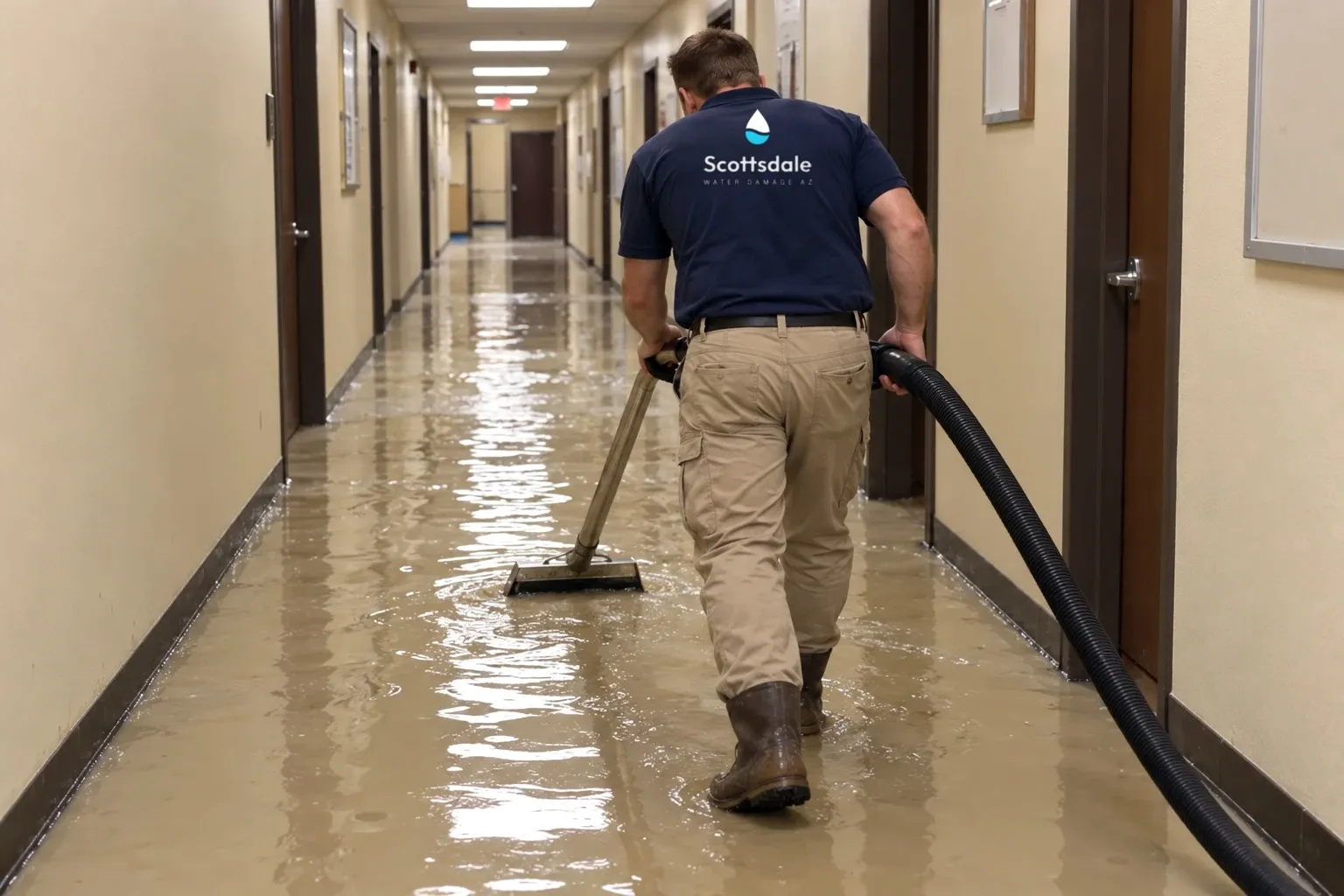 Burst pipe & slab leakBurst pipe, slab leak or leaking water heater: what to do first and who to call.
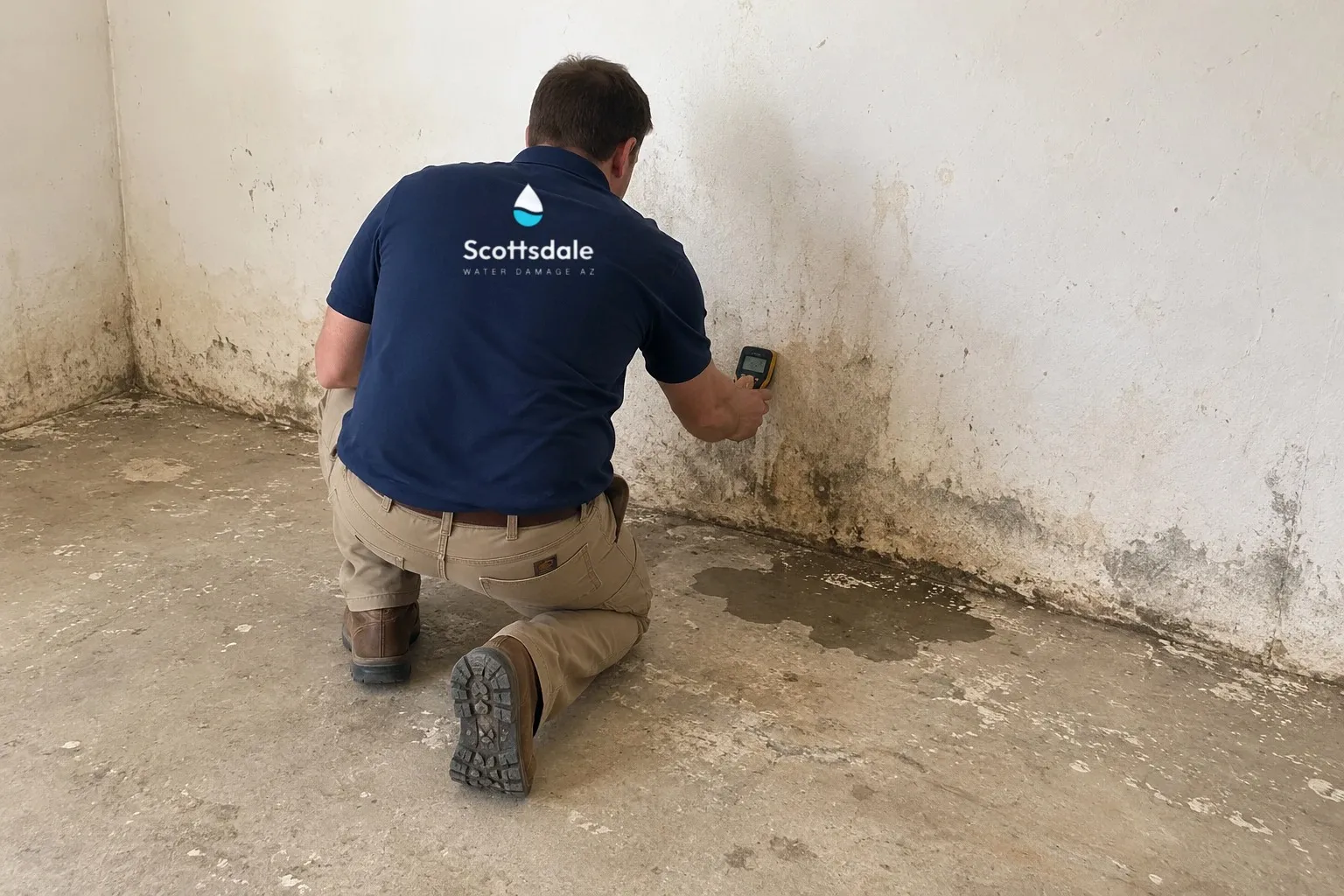 Ceiling water damageA stain, drip or sagging spot in your ceiling from rain, an AC clog or a pipe leak.
- Flood cleanupFor monsoon rain or a flash flood that pushed water into your home from outside.
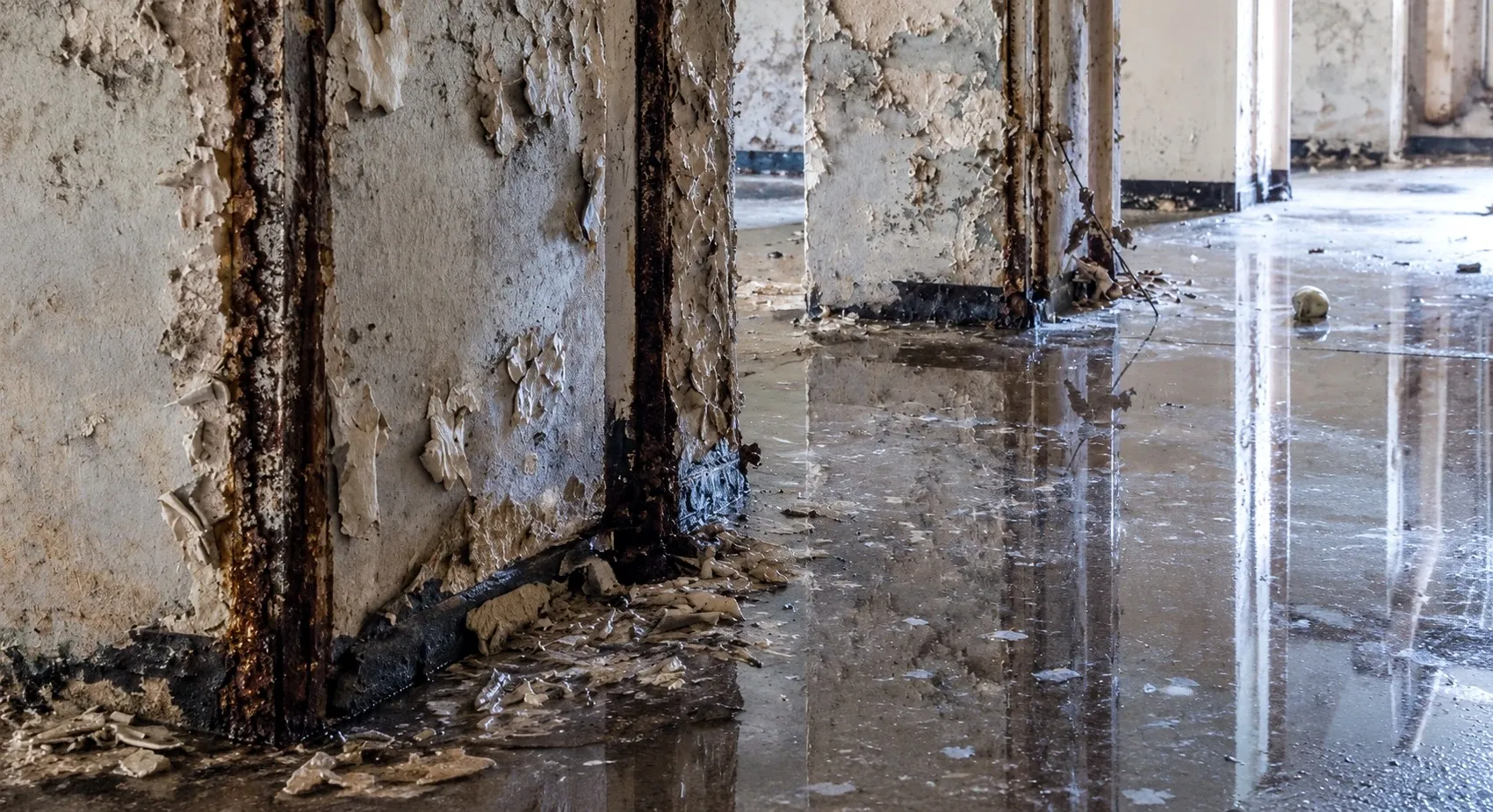 Sewage cleanupA drain backup or a toilet overflow brought sewage into your home.
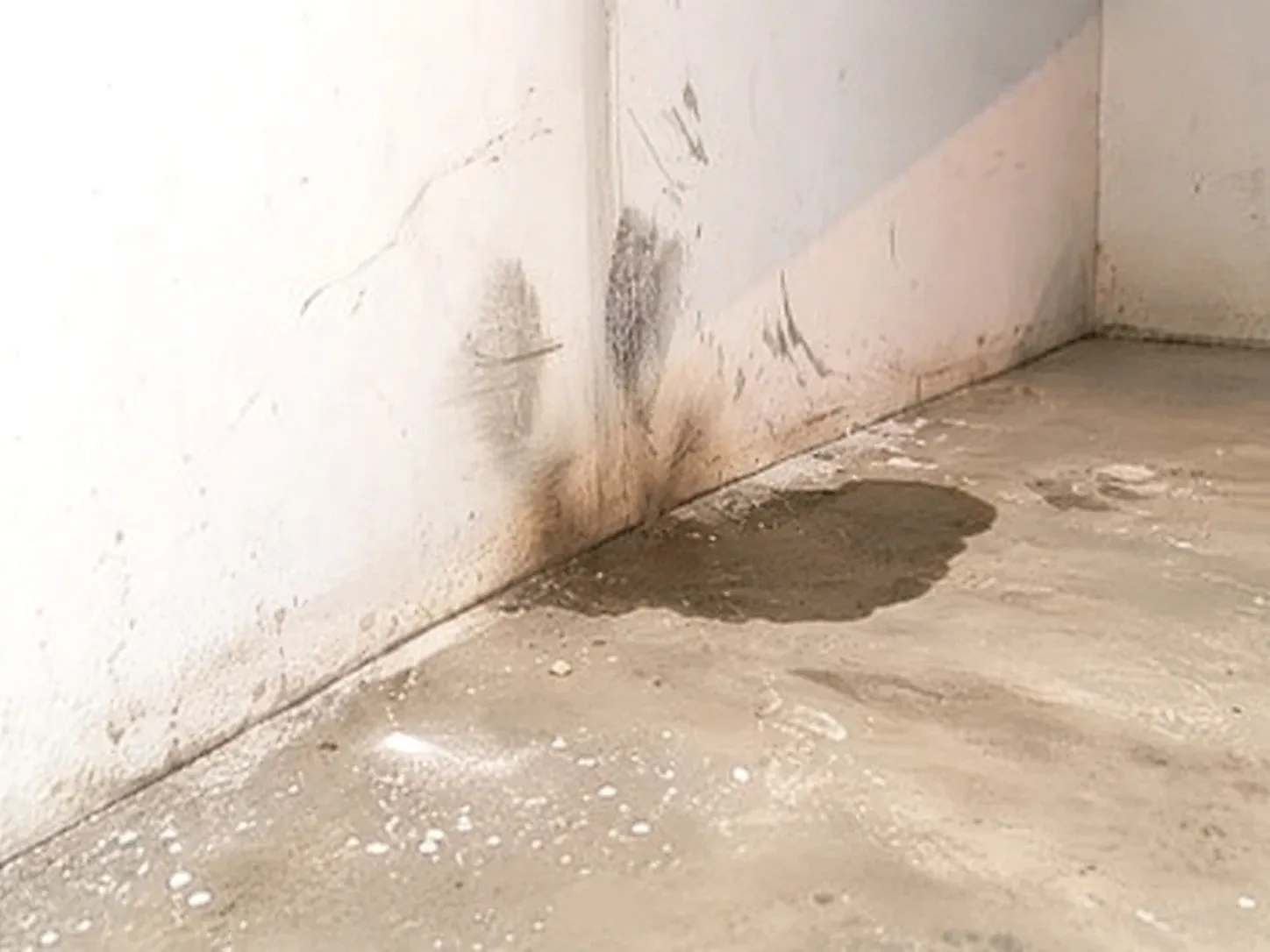 Mold remediationFor mold or a musty smell after a leak, an AC drain backup or a monsoon storm.
Cave Creek at a glance
Cave Creek was founded in 1870 as a mining and ranching community, according to the town. It is about 29 miles from Scottsdale City Hall.
- Residents agreed to incorporate on July 6, 1986.
- The town covers 37.91 square miles.
- The town's 2025 population estimate is 5,238.
- 45% of homes in town were built in 2000 or later, census data shows.
The town calls itself a "rural desert community" that keeps its "Old West" look. It was also a U.S. Cavalry stop, the town says.
Live in neighboring Carefree? Its page covers first steps and who to call.
Cave Creek water damage questions

What causes water to drip from a ceiling after a monsoon storm?
Often it is the roof or the AC drain line. On a flat roof, a clogged scupper can leave rain pooling up top. Rosie Romero told KTAR that pooled water can get in at exhaust fans or vent pipes. A plugged AC condensate drain can leak too. Put a bucket under the drip. If the ceiling sags, stay out from under it.
Does homeowners insurance cover water damage from rain?
Your insurer decides how your policy treats rain damage. Most homeowners insurance does not cover flood damage, according to FEMA's FloodSmart program. Call your insurer or agent to report the damage and ask what your policy covers. No one can promise what your insurer will pay. Be careful with anyone who does. On the cleanup side, rain that comes in from above is not automatically Category 3, the most contaminated class of water. The group behind the restoration industry's water damage standard said so in 2026.
How long does it take to clean up after a flood?
There is no set answer. It depends on how much got wet, how dirty the water was, and how much must be rebuilt. Runoff from a wash can bring in mud, and that has to come out before drying. The sooner drying starts, the better. The EPA says materials dried within 24 to 48 hours usually will not grow mold. If mold has already started, mold remediation becomes its own job.
How should you clean up a flooded house?
Start with safety. Stay away from standing water near outlets or cords, and keep kids and pets out. Photograph everything first. A restoration crew then usually works in this order: stop the source, remove standing water, measure moisture, dry, then repair. Read how flood cleanup works. If the water carried sewage, see sewage cleanup.
Who do I call for water damage?
Start by closing your main water valve. To report an after-hours water leak or outage, the Town of Cave Creek lists 602-667-4574. A plumber fixes the pipe or fixture that failed. A water damage restoration crew dries the floors, walls and cabinets. With the water off, call for help for help.
Water damage help near Scottsdale
Each area page covers local storm risks and what to do first when water gets into a home.
 ScottsdaleIndian Bend Wash Greenbelt: 11 miles of flood control.
- Paradise ValleyAbout 4.4 miles from Scottsdale City Hall, with four water providers and many properties on septic.
- North ScottsdaleDC Ranch and Pinnacle Peak Park, about 16 to 21 miles from Scottsdale City Hall.
- Fountain HillsAbout 21 miles from Scottsdale City Hall. 58% of homes here were built from 1980 to 1999.
- CarefreeEasy Street and Ho Hum Road, about 27 miles from Scottsdale City Hall.