Finding mold after water damage means something stayed wet too long. A burst pipe, a roof leak or a clogged AC drain can all start it. This guide covers how fast to dry things, the signs to look for, what to do and when to call for help.
How long does it take mold to grow after water damage?
The EPA says to dry water-damaged areas and items within 24 to 48 hours to prevent mold growth. Treat that window as your drying deadline.
No one can name the exact hour mold will show up. It depends on what got wet and how long it stays wet. What you control is how soon drying starts.
Some surfaces are easy to dry. Water on a tile floor that you mop up right away is one example. Other materials soak water in and hide it:
- Carpet and the pad underneath
- Drywall and the insulation behind it
- Wood baseboards, cabinets and subfloors
- Ceiling drywall under a leak
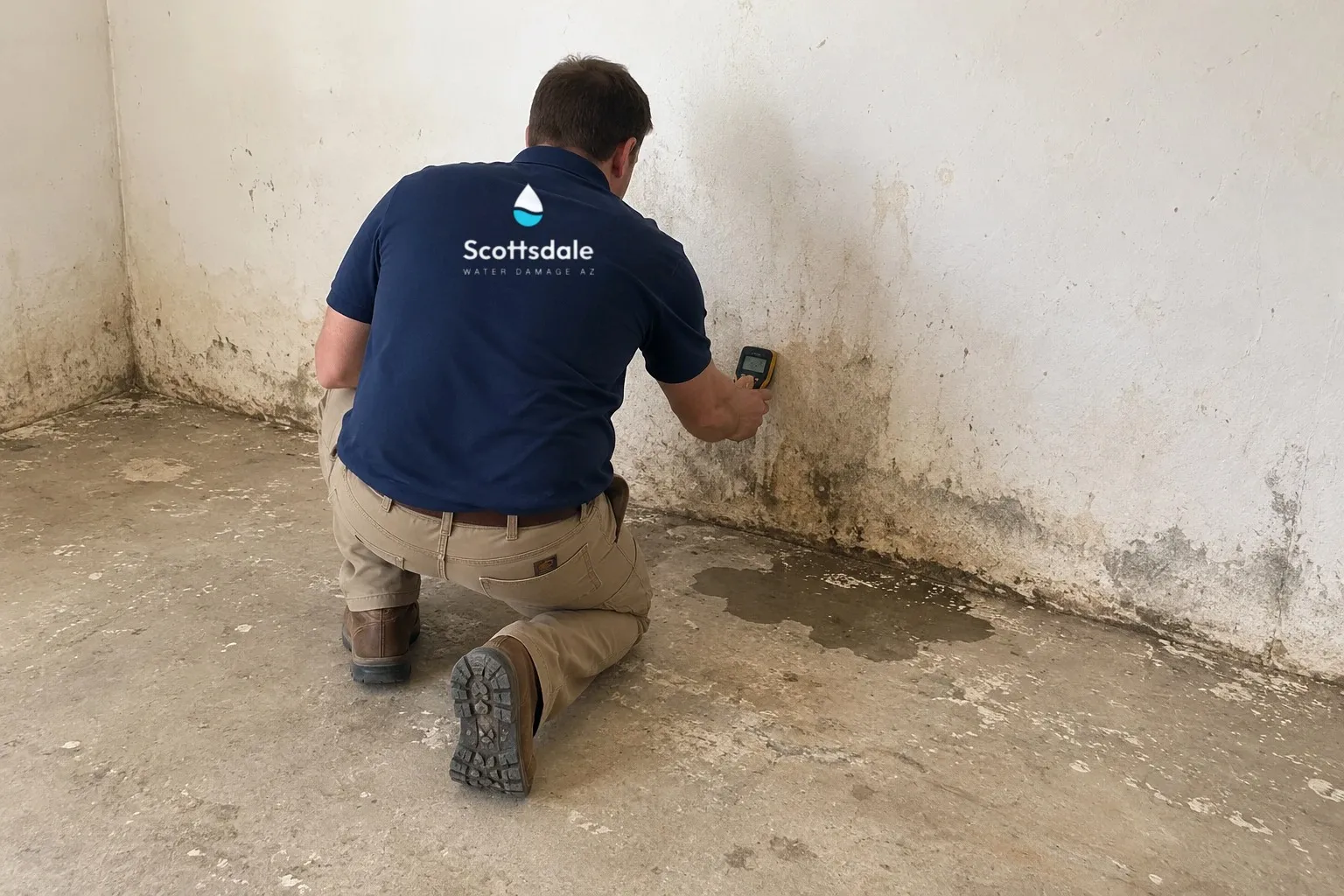
If these got soaked, drying the surface may not reach the water inside. A moisture meter helps here. It is a small tool that shows how wet a wall or floor is below the surface. Restoration crews use one to check that drying is done.
Can water damage cause mold even in Arizona?
Yes. A leak brings water indoors in any climate, and the EPA says the key to mold control is moisture control.
It is easy to think the desert keeps mold away. But dry air outside does not dry the inside of a wall. Water trapped behind drywall, under flooring or above a ceiling can stay wet out of sight.
Where indoor moisture comes from
- The AC drain line. Your AC pulls water out of the air and sends it down a small pipe called the condensate drain. The EPA’s energy-efficiency program says a plugged condensate drain can cause water damage in the house.
- Pipes and supply lines. A slow drip under a sink or behind a toilet can go unnoticed.
- Roof leaks. Summer storms can push water through a roof or a vent.
- Water heaters and appliances. A leaking water heater, washer hose or icemaker line can soak the floor and cabinets around it.
Keep indoor humidity in check
The EPA says to keep indoor humidity below 60% if possible, ideally between 30% and 50%. A small humidity gauge shows you the number. If the reading stays high after a leak, something may still be wet.
Signs of mold after water damage
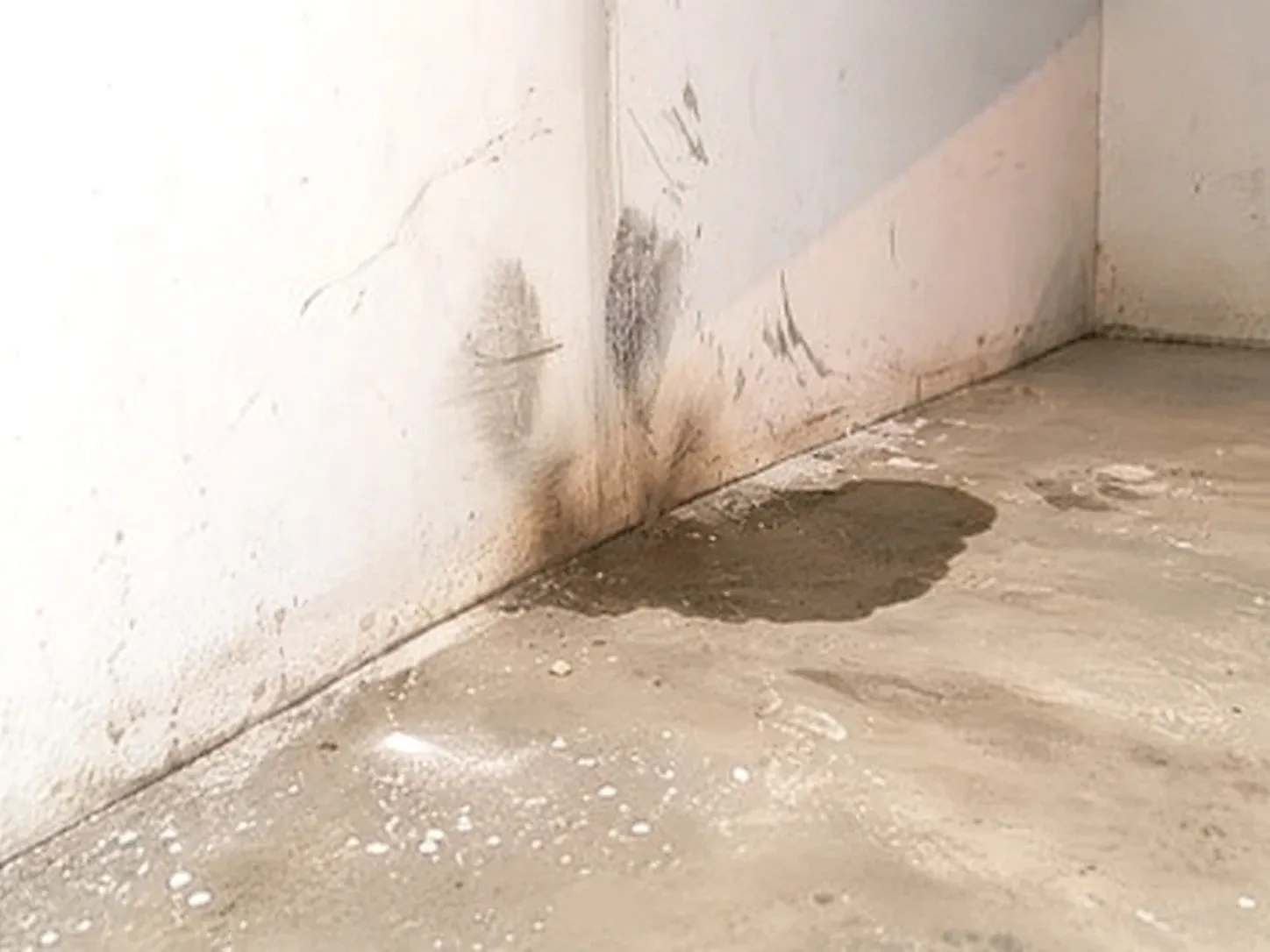
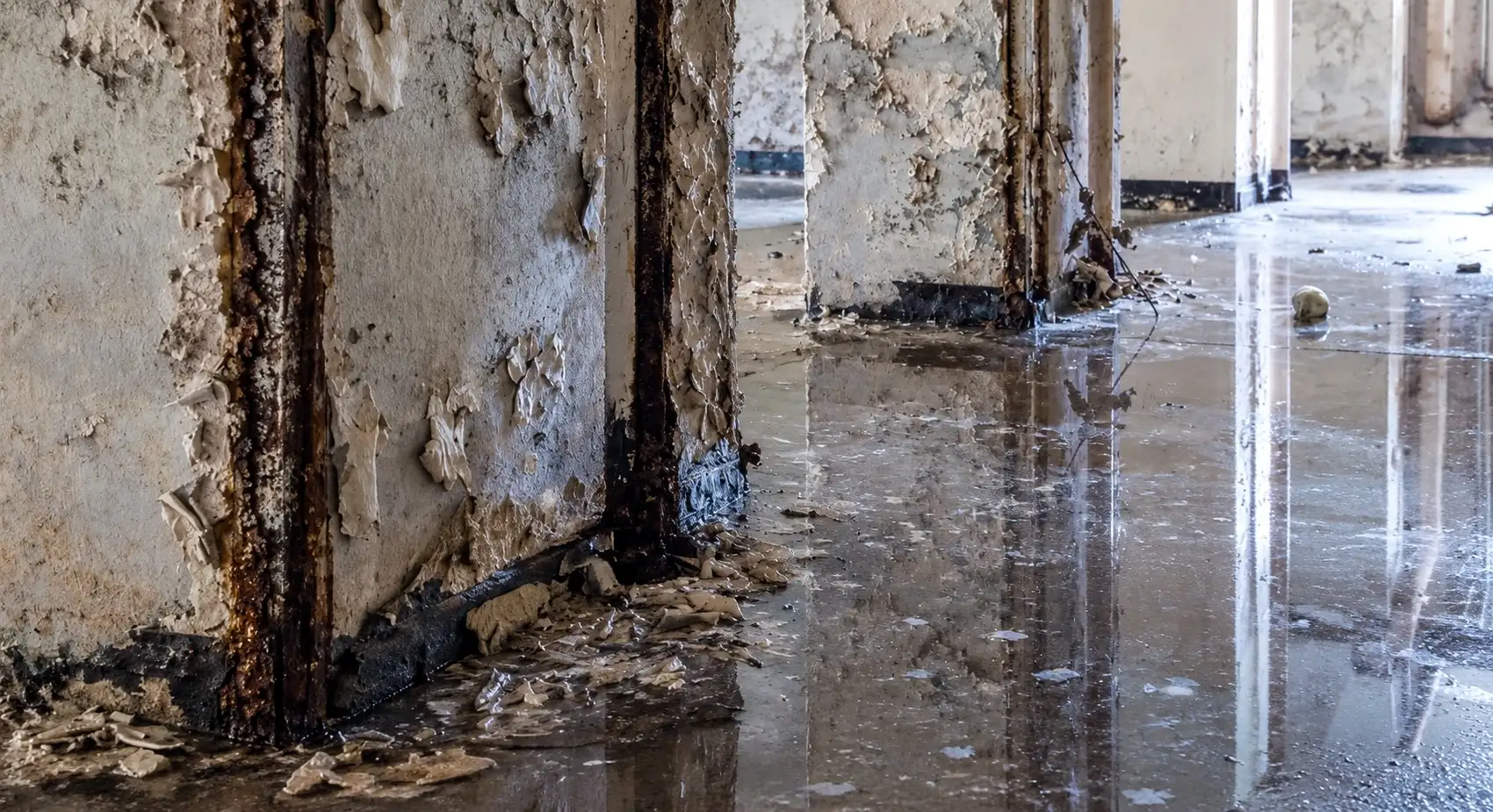
Watch for a musty smell, spots on walls or ceilings, and stains that keep growing. Warped or soft drywall and peeling paint near a past leak are warning signs too.
Here is what each sign looks like:
- A musty smell. An earthy, damp odor that lingers in one room, closet or cabinet. You may smell mold before you see it.
- Spots or patches. Small dots or fuzzy areas, often in clusters. Mold comes in many colors, including black, green, gray and white.
- Stains that grow. A water stain that spreads or darkens can mean water is still getting in.
- Warped or soft drywall. Press gently near the baseboard or around a stain. Soft or crumbly drywall has soaked up water.
- Peeling or bubbling paint. Paint lifts when water gets behind it.
- Swollen wood. Baseboards and the bottoms of cabinets swell when they soak up water.
Check the hidden spots too. Look under sinks, behind the washer, around the water heater and near the indoor AC unit.
Is mold from water damage dangerous?
Mold is worth taking seriously, but health answers should come from a doctor or a public health source. The Arizona Department of Health Services publishes a homeowner sheet on this topic called “Mold in My Home: What Do I Do?”
This guide is not medical advice. If you or someone at home feels unwell and you suspect mold, talk to a doctor.
Be careful with scary claims and miracle sprays you see online. For health facts, stick to government sources like the Arizona Department of Health Services and the EPA.
What to do if you find mold
Stop the water first, then dry the area. For a moldy patch under about 10 square feet, the EPA says that in most cases you can do it yourself.
Follow these steps in order:
- Stop the water. Shut off the water to that fixture, or at the main valve. If a pipe is the cause, the plumber fixes it before drying starts.
- Keep the HVAC off if it may have mold. HVAC means your heating and cooling system. The EPA says not to run it if you know or suspect it is contaminated with mold.
- Dry what you can. Move wet items out. Run a dehumidifier if you have one. Aim for the EPA’s 24 to 48 hour window.
- Measure the patch. The EPA uses about 10 square feet (roughly 3 ft by 3 ft) as the do-it-yourself size. If yours is bigger, read the next section.
- Remove the mold. The EPA says killing mold is not enough. It must also be removed. Absorbent materials, such as ceiling tiles and carpet, may have to be thrown away if they get moldy.
- Keep watching the spot. If the smell or stains come back, water may still be getting in.
When to call a professional
Consider a professional for mold over about 10 square feet, for hidden mold, or when sewage caused the damage.
Here is what the EPA says about each case:
- More than about 10 square feet. The EPA points to a separate guide for larger cleanups. That covers a lot of water damage, or mold over about 10 square feet.
- Hidden mold. A musty smell with no visible spots can mean mold inside a wall, under a floor or above a ceiling. If you suspect hidden mold, the EPA suggests considering an experienced professional.
- Sewage or other dirty water. If sewage or other contaminated water caused the damage, the EPA says to call a professional experienced with that type of damage.
If one of these fits your home, read about mold remediation in Scottsdale.
What a mold cleanup usually involves
Mold remediation means cleaning up mold and fixing the moisture that caused it. A typical job goes in this order:
- Find and stop the water source. The plumber or roofer fixes the leak first.
- Measure moisture to find everything that got wet.
- Remove moldy materials that cannot be cleaned, such as drywall or carpet.
- Clean the remaining surfaces and dry the structure.
- Repair what was removed.
The EPA notes that it is impossible to get rid of all mold and mold spores indoors. The goal is to remove mold growth and fix the moisture problem. Be careful with anyone who promises a mold-free home.
Questions to ask before you hire
- Do you have experience with mold cleanup? The EPA suggests making sure a contractor has experience cleaning up mold.
- Can you share references? The EPA also suggests checking references. Ask for a few past customers you can call.
- What is your ROC license number? You can check any contractor’s license with the Arizona Registrar of Contractors (ROC).
- How will you find and fix the moisture? Cleaning without fixing the source leaves the cause in place.
Water still coming in, or a wall that will not dry? Call now for help with water damage restoration in Scottsdale. For other leaks and next steps, browse more water damage guides.