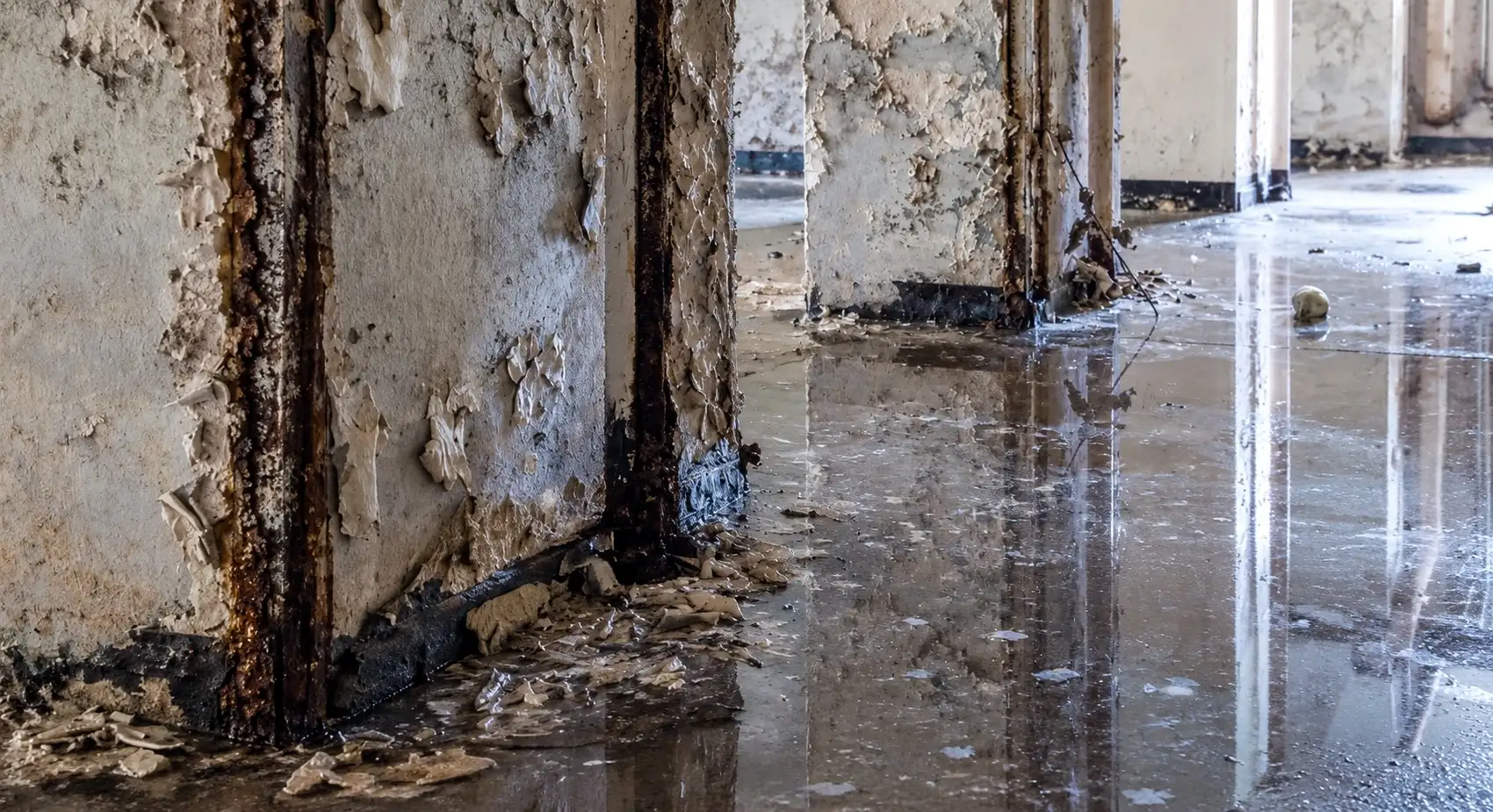
Sewage Cleanup in Scottsdale, AZ
The first rule of sewage cleanup in Scottsdale: keep people and pets away from the water. Below are the safe first steps and who to call.
Sewage backup in your house? What to do first
Keep everyone out of the room and stop using water and drains. Shut off any water still feeding it, skip the shop vac, take photos, then call.
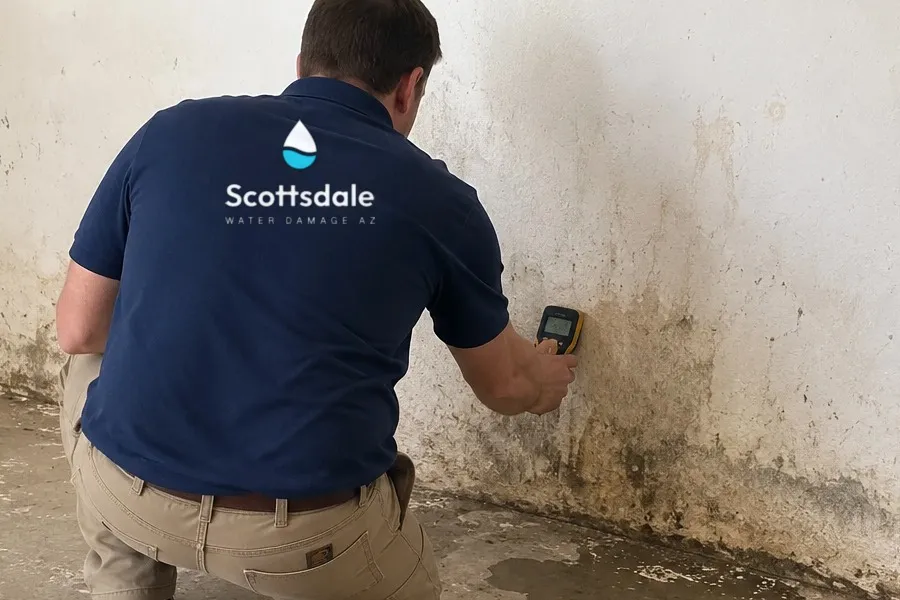
- 01
Keep people and pets out
Close the door to the room if you can. Keep kids and pets well away, and do not walk through the water.
- 02
Stop using water and drains
Every flush, shower or load of laundry can add to the backup. Hold off until the line is clear.
- 03
Shut off water still feeding it
If a toilet keeps running, turn off the small valve behind it. If water still keeps coming, shut the main water valve.
- 04
Skip the shop vac
A shop vac or a mop means touching sewage. The EPA says to call a professional experienced with sewage or other contaminated water.
- 05
Take photos first
Photograph the water, the drain it came from and what it soaked. Photos help when you talk to your insurer.
- 06
Call for help
Call now for help with emergency sewage cleanup. If a public sewer line is the problem, call your sewer utility too.
Is sewage backup dangerous?
Yes, treat it as dangerous. The S500 standard for water damage restoration calls sewage Category 3 water: grossly contaminated and able to cause significant adverse reactions.

Water damage work sorts water into three categories, from clean to dirty. Sewage is the dirtiest, Category 3.
According to the S500 standard, Category 3 water:
- is grossly contaminated, which means very dirty
- can carry germs and other harmful agents
- can cause significant adverse reactions in people who touch or swallow it
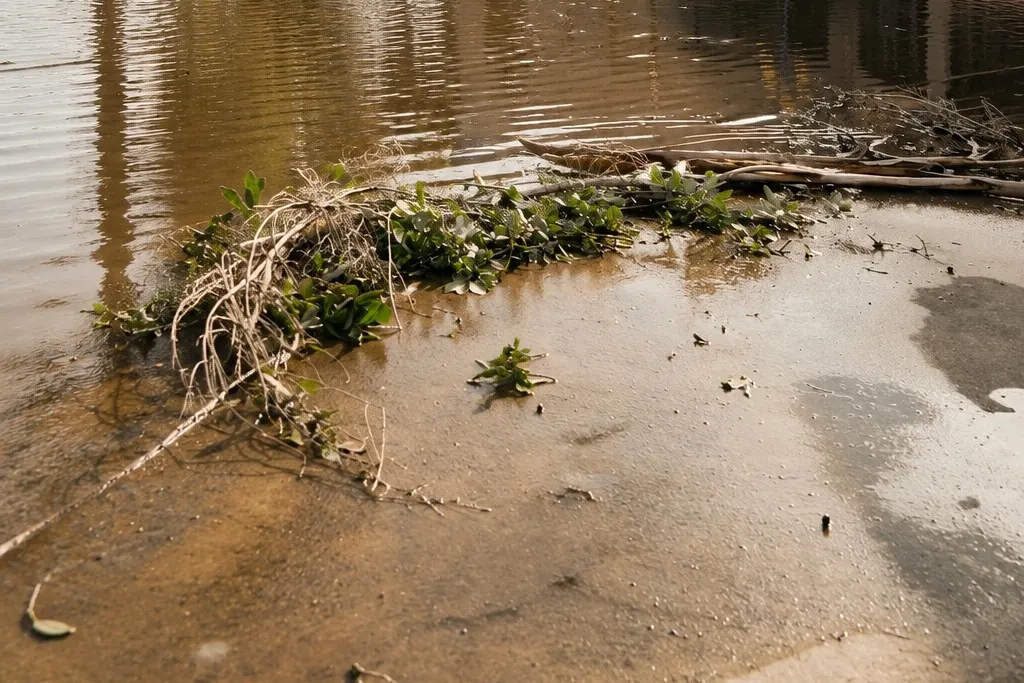
Floodwater rising from rivers or streams is in the same class. If floodwater came in from outside, read about flood cleanup.
For sewage or other contaminated water, the EPA says to call a professional experienced with that type of damage.
For health questions, ask your doctor. Soaked materials can also grow mold if they stay wet. The Arizona Department of Health Services has a homeowner sheet on it: "Mold in My Home: What Do I Do?"
Clean water from a pipe is a different job. For that, see water damage restoration in Scottsdale.
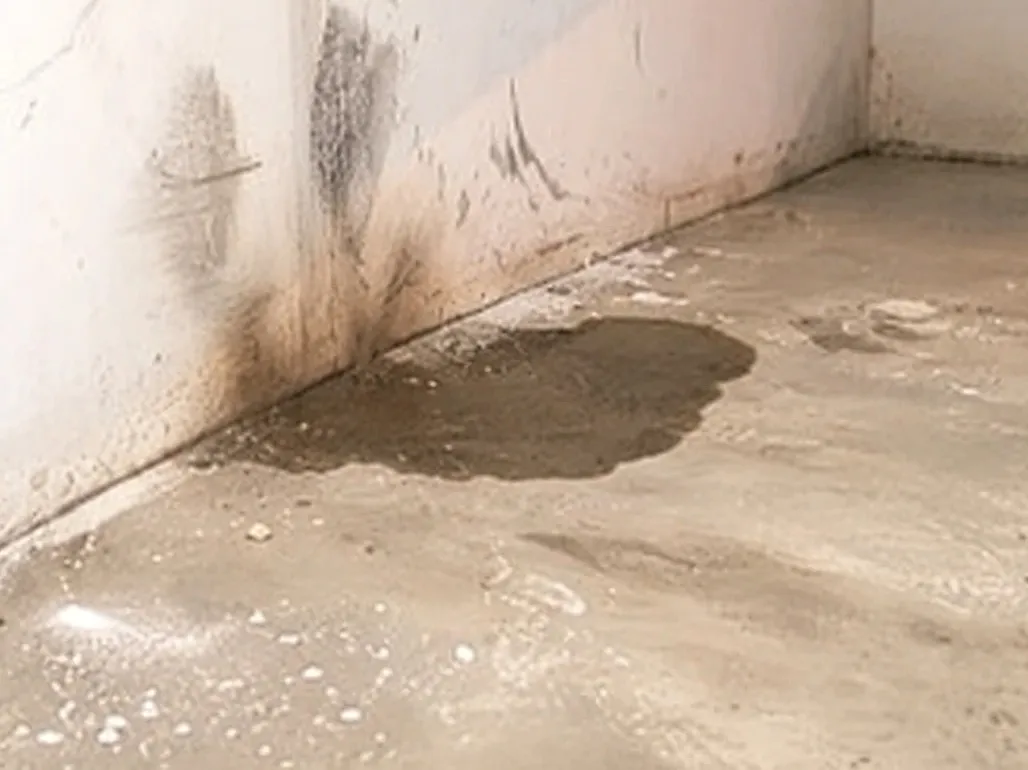
Toilet overflow: clean water or sewage?
It depends on where the water came from. Restoration companies sort it into three categories, from clean tank water to sewage.
- 01
Tank or supply line: Category 1
Water from the tank or the supply line starts clean. Restoration companies call it Category 1. Treat clean water from a broken toilet supply line like a burst pipe.
- 02
Bowl water, no feces: Category 2
A toilet overflow without feces is usually called Category 2. Restoration companies describe it as water with significant contamination that could cause illness or discomfort.
- 03
Feces or a drain backup: Category 3
Water with feces in it, or water that came up from the drain, is sewage. The S500 standard puts sewage in Category 3. Follow the first steps above.
- 04
Time and heat can change it
The S500 standard says time and temperature can change a water's category. A clean overflow left to sit may not stay clean.
- 05
Where toilet water damage starts
The Insurance Institute for Business & Home Safety (IBHS) studied toilet water damage. It found 78% came from faulty supply lines, flanges (where the toilet joins the drain), fill valves or overflow.
How sewage cleanup works
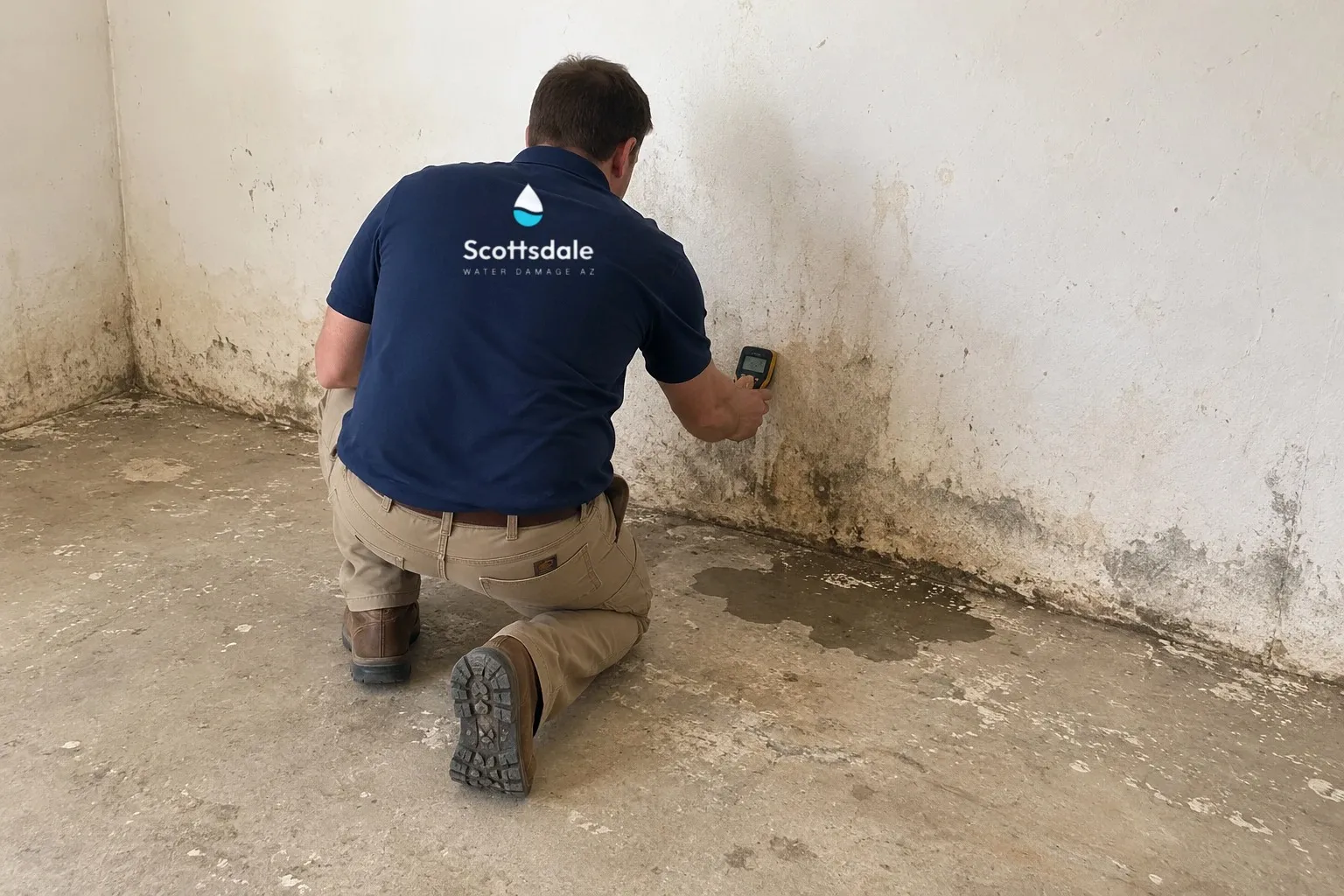
Sewage backup cleanup usually follows this order: contain, remove, clean, dry, then rebuild. For Category 2 or 3 water, the S500 standard says remediation (removing the contamination) should come before drying.
Stop it and contain it
First the backup has to stop. A plumber clears the line, or a septic company pumps the tank. Then the rooms are usually closed off, so no one tracks sewage through the house.
Remove sewage and soaked materials
Standing sewage gets pumped or vacuumed out. Carpet, pad and the bottom of the drywall soak it up, so they may have to be thrown away.
Clean and disinfect
Hard surfaces that stay get cleaned and disinfected. This is the remediation step.
Dry the structure
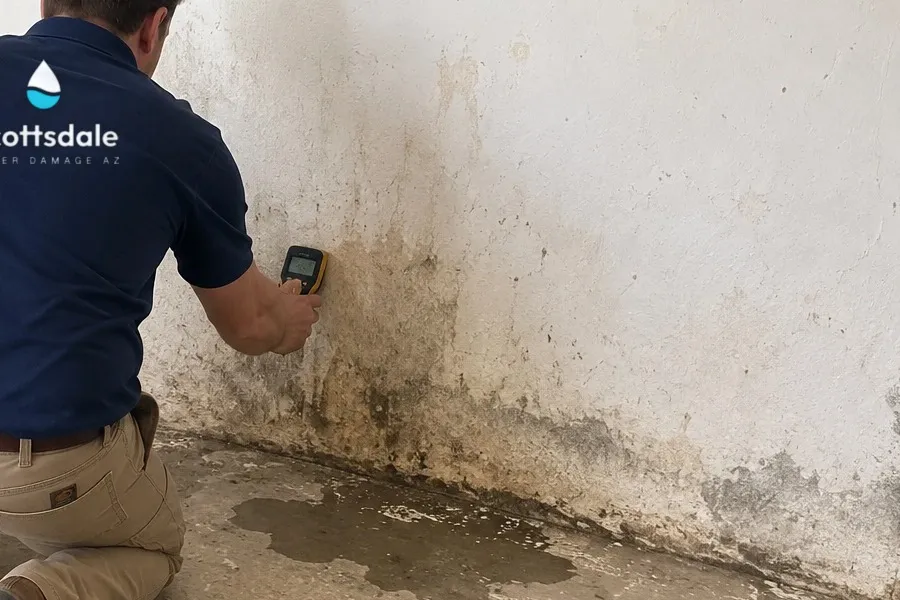
Drying should start only after the cleaning. Fans and dehumidifiers dry the framing, subfloor and walls. Moisture meter readings show when they are dry.
Rebuild
New drywall, baseboards and flooring go back where the old ones were removed.
Septic or city sewer? Who to call
It depends on where the problem is. A clog in your own pipes or septic tank needs a plumber or septic company. A broken public sewer line goes to the utility that runs it.

Not sure if your home is on septic or a public sewer? Ask your town or city.
These local contacts are listed on official town pages:
- Scottsdale: City of Scottsdale Water Services, 480-312-5650. The Town of Paradise Valley lists it as the general and 24-hour emergency number.
- Paradise Valley: the Town says many properties are on a septic system, not the sewer system. For septic, it lists Maricopa County Environmental Services at 480-483-4703. Town sewer emergencies go to 480-312-5650, a 24-hour line run by the City of Scottsdale. See all Paradise Valley septic and sewer contacts.
- Fountain Hills: the Fountain Hills Sanitary District lists 480-837-9444 for a broken or collapsed public sewer line.
- Carefree: ask the town if your home is on septic or sewer. Read more about sewer backups in Carefree.
Numbers can change. If one does not work, check the official town or city website.
Does homeowners insurance cover sewer backup?
Usually not. According to the Insurance Information Institute (Triple-I), sewer backups are not covered under a typical homeowners policy, nor by flood insurance.
Your own policy is what counts, and your insurance company makes the call. Ask your adjuster to explain your coverage.
- Triple-I lists accidental discharge or overflow from a plumbing system among the causes a standard policy covers. Your policy wording decides.
- Report the backup to your insurer or agent, and ask what your own policy says.
- Take photos before cleanup starts.
If someone promises what your insurer will pay for sewage cleanup, be careful. No one can know that in advance.
For more, see this guide: does insurance cover sewer backup.
How much does sewage cleanup cost in Scottsdale?
It depends on the job, so there is no single price. Cost comes down to the size of the area, the water depth, what must be removed, the category and the rebuild.
What moves the price:
- Area: one bathroom is a smaller job than a whole floor.
- Depth: the higher the water climbed, the more wall and trim it reached.
- Materials removed: carpet, pad, drywall and cabinets that soaked up sewage may have to go.
- Category: sewage means more removal and cleaning than a clean water leak.
- Rebuild: new drywall, flooring and paint add to the total.
Get the estimate in writing before the cleanup begins. Then look up the company's contractor license with the Arizona Registrar of Contractors.
Questions people ask
Is sewage backup in a house dangerous?
Treat it as dangerous. The S500 standard for water damage restoration calls sewage Category 3 water: grossly contaminated and able to cause significant adverse reactions. The EPA says to call a professional experienced with sewage damage. For health questions, ask your doctor.
What should I do if sewage backs up into my house?
Keep people and pets out, and stop using sinks, toilets and showers. If water still feeds the backup, shut the main water valve. Skip the shop vac. Take photos, then call for help.
What should I do if my toilet is overflowing?
Turn off the small valve on the wall behind the toilet, and do not flush again. Restoration companies call clean tank water Category 1 and bowl water without feces Category 2. If there is feces, treat it as sewage and call.
Does homeowners insurance cover sewer backup?
Usually not. Triple-I says sewer backups are not covered under a typical homeowners policy, nor by flood insurance. Your insurer decides what your own policy covers, so ask your agent.
How much does sewage cleanup cost?
There is no single price. Cost depends on the area, the water depth, what has to be removed, the category and the rebuild. Get the price in writing before anyone starts.
What is biohazard cleanup, and when is it needed?
It means cleaning up material that can carry germs or other harmful agents. Sewage counts, since the S500 standard calls it Category 3 water. For sewage damage, the EPA says to call a professional experienced with that type of damage.
Water damage help near Scottsdale
Each area page covers local storm risks and what to do first when water gets into a home.
 ScottsdaleIndian Bend Wash Greenbelt: 11 miles of flood control.
- Paradise ValleyAbout 4.4 miles from Scottsdale City Hall, with four water providers and many properties on septic.
 North ScottsdaleDC Ranch and Pinnacle Peak Park, about 16 to 21 miles from Scottsdale City Hall.
 Fountain HillsAbout 21 miles from Scottsdale City Hall. 58% of homes here were built from 1980 to 1999.
 Cave CreekFounded in 1870 as a mining and ranching community, about 29 miles from Scottsdale City Hall.
 CarefreeEasy Street and Ho Hum Road, about 27 miles from Scottsdale City Hall.