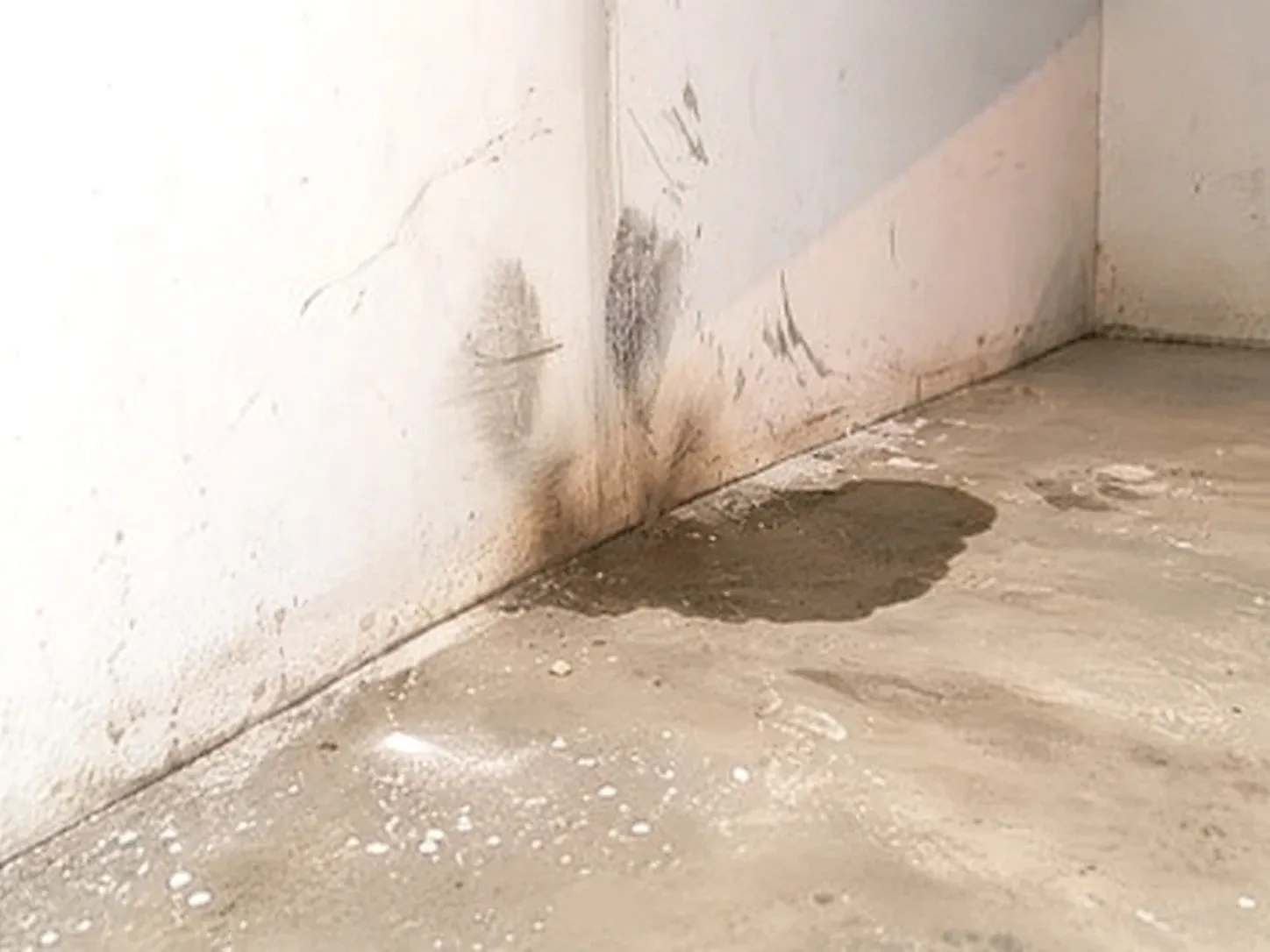
Mold Remediation in Scottsdale, AZ
Mold remediation in Scottsdale starts with the water that fed the mold. The leak gets fixed and the area gets dried first. Then the mold growth comes out.
Found mold after water damage? What to do first
Stop the water and dry the area first. The EPA says the key to mold control is moisture control. Then the mold has to be removed, not just sprayed.
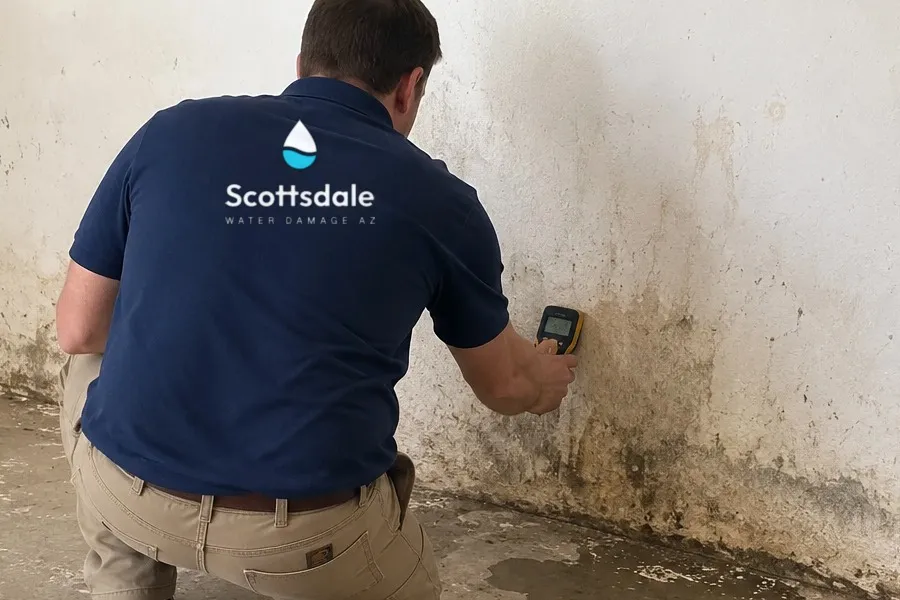
- 01
Stop the water source
Shut off the water to the leaking fixture, or the main if you can't find the leak. Mold needs moisture to grow.
- 02
Get wet things out of the room
Move wet rugs and boxes to a dry spot. The faster they dry, the less chance mold has to start.
- 03
Keep the AC off if it may have mold
Do you think mold is in your AC system or ducts? The EPA says not to run it until it is checked.
- 04
Don't just spray it
The EPA says killing mold is not enough. It must be removed. Moldy carpet and ceiling tiles may have to be thrown away.
- 05
Take photos before anything is thrown out
Photograph the mold, the stain and the leak. Write down the date. Your insurer may ask when the damage started.
How fast does mold grow after water damage?
The EPA says to dry water-damaged areas and items within 24 to 48 hours to prevent mold growth. The longer materials stay wet, the more chance mold has to start.
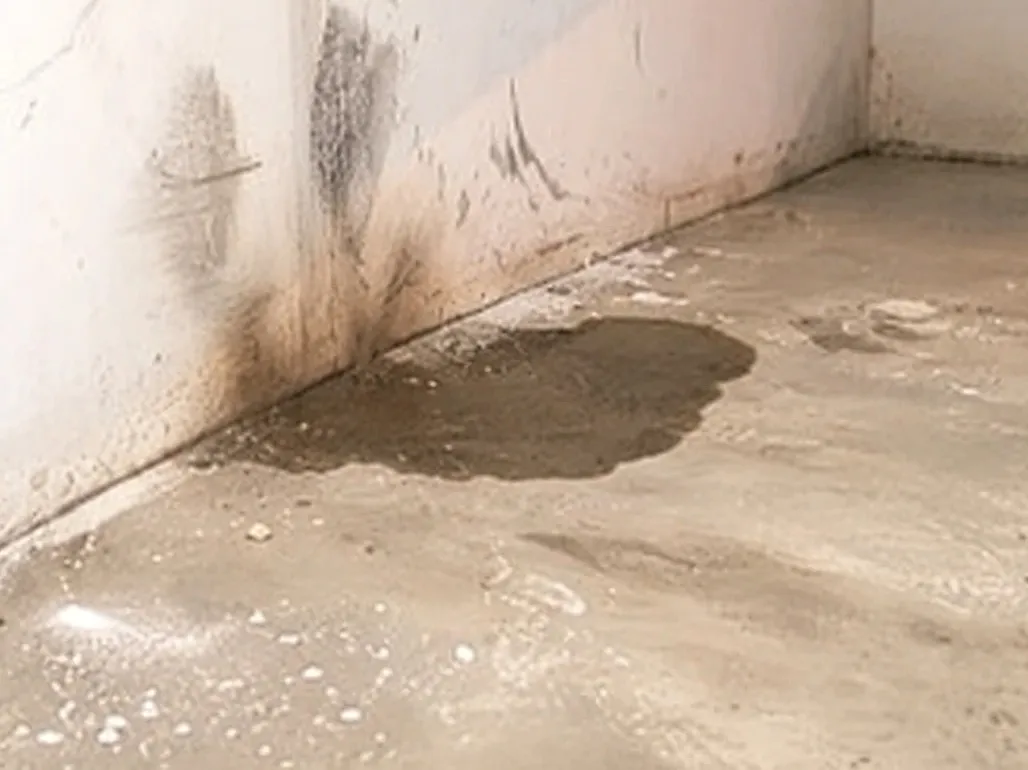
Mold does not follow a set clock. It depends on the material and how long it stays wet.
Watch the places that stay wet out of sight:
- Drywall behind a wet baseboard
- Carpet pad under carpet that feels dry
- Insulation above a ceiling stain
If the leak is fresh, drying comes first. See what happens during water damage restoration in Scottsdale. For more on timing, read how fast mold grows after water damage.
Is mold a problem in Arizona?
Yes, inside the home. Dry desert air does not dry a wet wall cavity. Mold can grow wherever a leak keeps water trapped indoors.

Hidden plumbing leaks
A leak in a wall or under the slab (the concrete floor your house sits on) can stay out of sight. A musty smell or a jump in your water bill may be the first clue. See hidden slab leak water damage.
AC condensate drains
Your AC pulls water out of the air and sends it down a drain line. The EPA's heating and cooling checklist warns that a clog in that line can cause water damage in the house. Phoenix sees 111 days a year at or above 100 F on average, the National Weather Service says. That is a lot of AC use.
Monsoon roof leaks
By National Weather Service dates, monsoon season lasts from June 15 through September 30. Storm water can get past a roof and soak hidden insulation. Live up north? Read about water damage in North Scottsdale.
Older homes
Census Bureau data shows 32% of Carefree homes were built before 1980. Older pipes and roofs are worth checking when a room smells musty.
Indoor humidity
The EPA suggests keeping indoor humidity below 60%, ideally 30 to 50%. A simple humidity meter shows where your home stands.
Can I remove mold myself?
Often, if the patch is small. The EPA says that under about 10 square feet, in most cases you can handle the job yourself.
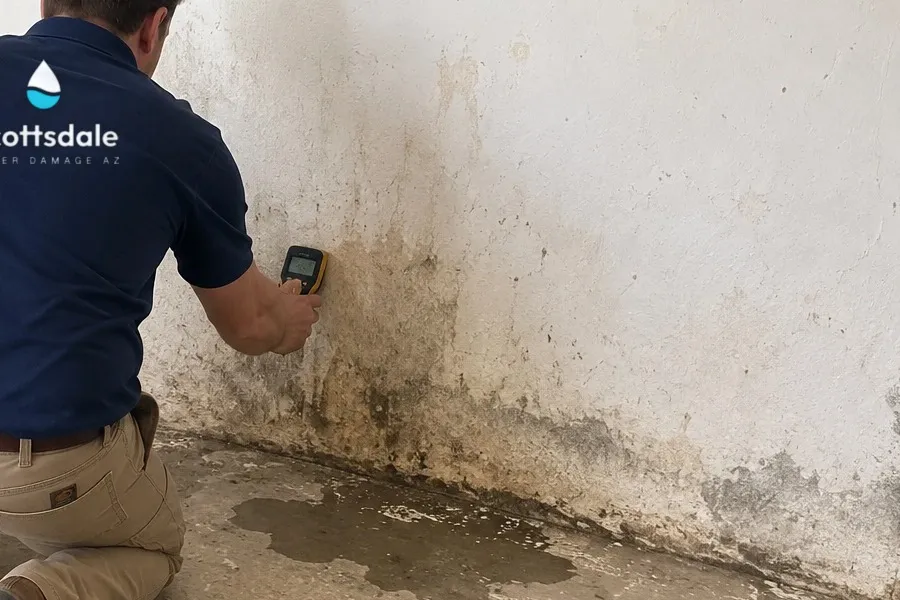
A small spot on a hard surface is the easier case. Fix the water first, or the mold can come back.
Get help when:
- The moldy area is larger than about 10 square feet, roughly 3 ft by 3 ft.
- You smell mold but can't see it. If you suspect hidden mold, the EPA suggests considering an experienced professional.
- The damage came from sewage or other contaminated water. The EPA recommends a professional with contaminated-water experience.
If floodwater got inside, start with flood cleanup.
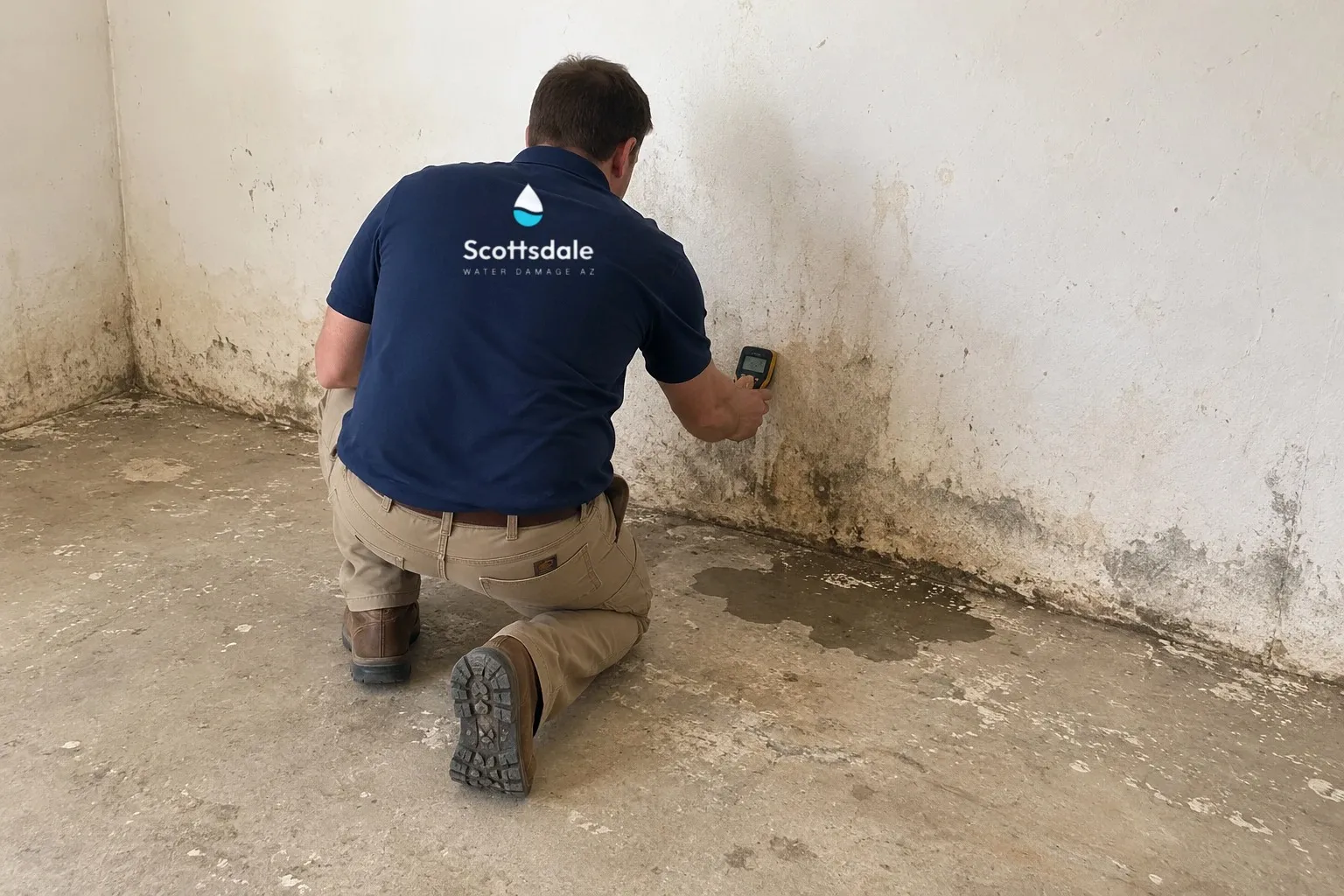
How mold remediation works in Scottsdale homes
Mold remediation means fixing the moisture, removing the growth and ruined materials, then drying and rebuilding. The EPA notes that no one can remove every mold spore indoors.
Find and fix the moisture
The leak, drain line or roof gets fixed first, often by a plumber or roofer. Skip this and mold can grow back.
Close off the work area
A remediation crew usually seals the room with plastic sheeting. That helps keep mold from spreading through the house.
Remove the mold and what it ruined
Moldy drywall is often cut out. The EPA says porous materials may have to be thrown away if moldy. Porous means it soaks things up, like carpet and ceiling tiles.
Clean what can be saved
Hard surfaces that can be saved get cleaned and dried.
Dry and check
Fans and dehumidifiers dry the area. Moisture readings show when walls are dry enough to close up.
Rebuild
New drywall, paint or flooring goes in last. You can check any contractor's license with the Arizona Registrar of Contractors.
Mold testing and inspection in Scottsdale
Some homeowners hire an independent mold inspector for testing. It can help when you smell mold but can't find where it is.
If you can see the mold and you know the leak, the fix starts the same way. Stop the water and remove the growth.
Testing can also help when stains keep coming back after a repair. Some homeowners pick an inspector who does not do the cleanup. That way, the person testing is not also selling the cleanup.
The Arizona Department of Health Services publishes a homeowner sheet called "Mold in My Home: What Do I Do?"
Hiring someone for mold cleanup? The EPA suggests checking references and making sure they have experience cleaning up mold.
How much does mold remediation cost?
It depends on how much mold there is, where it is, and what has to be torn out and rebuilt. A real price usually needs someone to see the damage first.
What moves the price:
- Size. A patch behind a sink is a smaller job than a whole wall.
- Location. Attics, wall cavities and AC ducts are harder to reach.
- Materials. Drywall, carpet pad and insulation may have to be thrown away.
- The leak repair. The plumbing, roof or AC drain fix may be a separate bill.
- Rebuild. New drywall, paint and flooring come last.
Drying early can keep the job smaller. Ask for a written estimate that lists each step, so you can compare.
Will insurance pay for mold remediation?
Your policy and the cause of the mold decide it. The Insurance Information Institute (Triple-I) says policies do not cover damage due to lack of maintenance, mold or infestation.

The cause matters. Triple-I lists accidental discharge or overflow of water from within a plumbing system among covered perils. A peril is a cause of damage. Your policy wording decides how that applies to you.
Mold after a flood is a separate case. According to Triple-I, standard homeowners and renters policies exclude flood damage.
Only your insurer can say how your policy applies. When you call, have photos of the mold, the stain and the leak, plus the date you found the water.
Be careful with anyone who says insurance will pay for the mold. That decision belongs to your insurer.
Questions people ask
What is the typical cost of mold remediation?
Every job is different, so there is no typical number. Size, location and what must be thrown away drive the price. The leak repair and rebuild add to it. A written estimate after someone sees the damage gives you a real number.
Is mold a big problem in Arizona?
It can be, indoors. Outdoor air is dry, but mold grows where water gets trapped inside. Hidden leaks, plugged AC drains and roof leaks can keep walls wet. The EPA says the key to mold control is moisture control.
Can mold ever be fully remediated?
Not down to zero. The EPA says it is impossible to get rid of all mold and mold spores indoors. The goal is to remove mold growth and fix the moisture behind it. Be careful with anyone who promises a mold-free home.
Can I remediate mold myself?
Often, if the patch is small. The EPA's line is about 10 square feet, roughly 3 ft by 3 ft. Under that, in most cases you can clean it yourself. For hidden mold or sewage water, the EPA points to an experienced professional.
Will my insurance pay for mold remediation?
Triple-I puts mold and lack of maintenance on its list of things policies do not cover. If an accidental plumbing leak came first, ask your insurer how your policy treats it.
How likely is mold after water damage?
The risk rises the longer things stay wet. The EPA says materials dried within 24 to 48 hours usually will not grow mold.
Water damage help near Scottsdale
Each area page covers local storm risks and what to do first when water gets into a home.
 ScottsdaleIndian Bend Wash Greenbelt: 11 miles of flood control.
- Paradise ValleyAbout 4.4 miles from Scottsdale City Hall, with four water providers and many properties on septic.
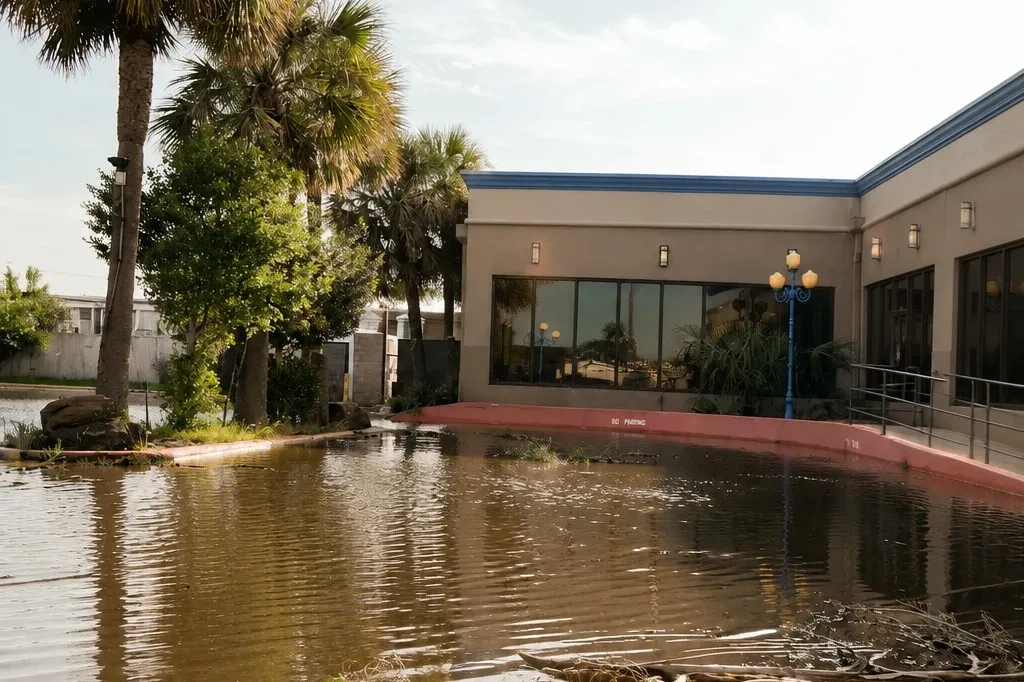 North ScottsdaleDC Ranch and Pinnacle Peak Park, about 16 to 21 miles from Scottsdale City Hall.
 Fountain HillsAbout 21 miles from Scottsdale City Hall. 58% of homes here were built from 1980 to 1999.
 Cave CreekFounded in 1870 as a mining and ranching community, about 29 miles from Scottsdale City Hall.
- CarefreeEasy Street and Ho Hum Road, about 27 miles from Scottsdale City Hall.