If you found ceiling water damage, what to do first is simple: get out from under it and catch the water. Then you can work out where the water comes from and who to call. This guide covers each step, in order, for Scottsdale homes.
What to do with a water leak in your ceiling
Get everyone out from under the wet spot, catch the drip and cut power to wet fixtures at the breaker. Then take photos of the damage.
In order:
- Step out from under it. Move people, pets, furniture and electronics away from the wet area. Stay out from under any part of the ceiling that sags or bulges.
- Catch the water. Put a bucket under the drip. Lay a tarp, a plastic sheet or old towels around it to protect the floor.
- Cut power to wet fixtures. If water is near a ceiling light or fan, switch off that circuit at the breaker panel. Do this only if you can reach the panel without standing in water. Never touch a wet fixture.
- Stop the water if you know the source. For a leaking pipe, close your main water shutoff. For a dripping AC, turn the system off at the thermostat. From inside, all you can do for a roof leak is keep catching the water.
- Drain a water bubble, only if it is safe. Sometimes water pools in a bulge in the drywall or paint. Is the bulge small, easy to reach and away from wiring? Then poke a small hole at its lowest point with a screwdriver. Stand to the side and let it drain into the bucket. If the ceiling sags, cracks or looks heavy, do not touch it. Leave the room.
- Take photos and notes. Photograph the ceiling, the stain, the floor and anything that got wet. Write down when you first saw the water. Call your insurer or agent to report the damage and ask what your policy covers.
Is a leaking ceiling an emergency?
A leaking ceiling is an emergency when it sags, bulges or cracks, or when water reaches a light, fan or outlet. A small stain that is not growing is less urgent, but it still needs attention soon.
Act now if you see any of these signs:
- The ceiling sags, bulges or has new cracks.
- Water drips from or near a light fixture, a fan or an outlet.
- The stain keeps spreading, or the drip gets heavier.
- The water smells like sewage, or it comes from a toilet above.
Stay out of any room where the ceiling sags. There is no safe way to guess how long a wet ceiling will hold.
Water from a toilet overflow or a sewer line may be contaminated. For damage from sewage or other contaminated water, the EPA says to call a professional experienced with that type of damage.
Even a slow drip is worth acting on today. The EPA says to dry water-damaged areas and items within 24 to 48 hours to prevent mold growth. Water can also soak the insulation above the drywall, where you cannot see it.
Why is my ceiling leaking? Roof, AC or pipe
Look at when the water shows up. Water after rain points to the roof. Water on hot days points to the AC drain. Water at any time points to plumbing.
Where the stain sits gives you a second clue. Look at what is above it: the roof, the AC unit or a bathroom.
Leaks after rain: the roof
If the stain grows after a storm, start with the roof. In Arizona, summer storms come with the monsoon. The National Weather Service defines the monsoon as June 15 through September 30.
Flat roofs need a closer look. Many drain through scuppers, the openings at the roof edge that let water run off. Rosie Romero, host of Rosie on the House, talked about this in a 2018 KTAR article. He said it does not take much leaf debris to clog a scupper.
When water pools on a roof, Romero said, it can get in through bathroom or kitchen exhaust fans. It can also enter at a plumbing vent pipe connection. He warned that the weight of that pooled water can cause structural failures.
So a stain around a bath fan is not always a plumbing problem. If it shows up after a storm, it may be roof water.
Leaks on hot days: the AC drain
Your AC pulls water out of the air as it cools your home. That water drips into a drain pan. Then it runs out through a condensate line, a small pipe that carries it away.
Phoenix averages 111 days a year at or above 100 degrees, according to the National Weather Service. In heat like that, the AC runs a lot, and so does its drain line.
The EPA’s heating and cooling maintenance checklist warns that a plugged condensate drain can cause water damage in the house. In some homes, the air handler (the indoor part of the AC) sits in the attic. Then a clog can overflow the pan and soak the ceiling below.
Signs it is the AC:
- The stain is near the air handler or an air vent.
- It shows up in the hot months.
- It stays dry when the AC is off.
Leaks at any time: plumbing
Water that shows up with no clear pattern often comes from a pipe. Check what sits above the stain: a bathroom, a laundry room, a water heater or supply lines.
A toilet above the ceiling is worth checking first. An older national study by the Insurance Institute for Business & Home Safety (IBHS) looked at home water damage. The Connecticut Insurance Department shared it.
In that study, toilet water damage cost $2,000 to $10,000 per incident. In 78% of those cases, the cause was a faulty supply line, flange, fill valve or overflow.
In plain words:
- The supply line is the small hose that feeds water to the toilet.
- The flange joins the toilet to the drain pipe in the floor.
- The fill valve is the part in the tank that refills it after each flush.
Showers, tubs and sinks can leak too. Some leaks only show up when the fixture above is in use.
A broken supply pipe is different. It keeps leaking until the water is shut off. If that is what you have, read what to do about a burst pipe in the ceiling.
Water damage on the ceiling but no leak
A stain with no drip often comes from a leak that comes and goes. It may show up only in rain, only when the AC runs hard, or only when someone uses the bathroom above.
It can also be an old stain from a leak that was fixed but never painted over. Before you guess, find out if the spot is still wet.
Ways to check at home:
- Mark it. Lightly trace the edge of the stain with a pencil and write the date. If it grows past the line, the leak is still active.
- Watch the timing. Look at the stain after a storm, after a hot afternoon and after someone showers upstairs.
- Check your water meter. Turn off every faucet and appliance that uses water. If the meter still moves, water is going somewhere.
- Look in the attic, if it is safe. Use a flashlight. Look for wet insulation, a full AC drain pan or stains under the roof. Step only on the wood framing, never on the drywall.
Touch is not a good test. Drywall can feel dry on the surface and still hold water inside.
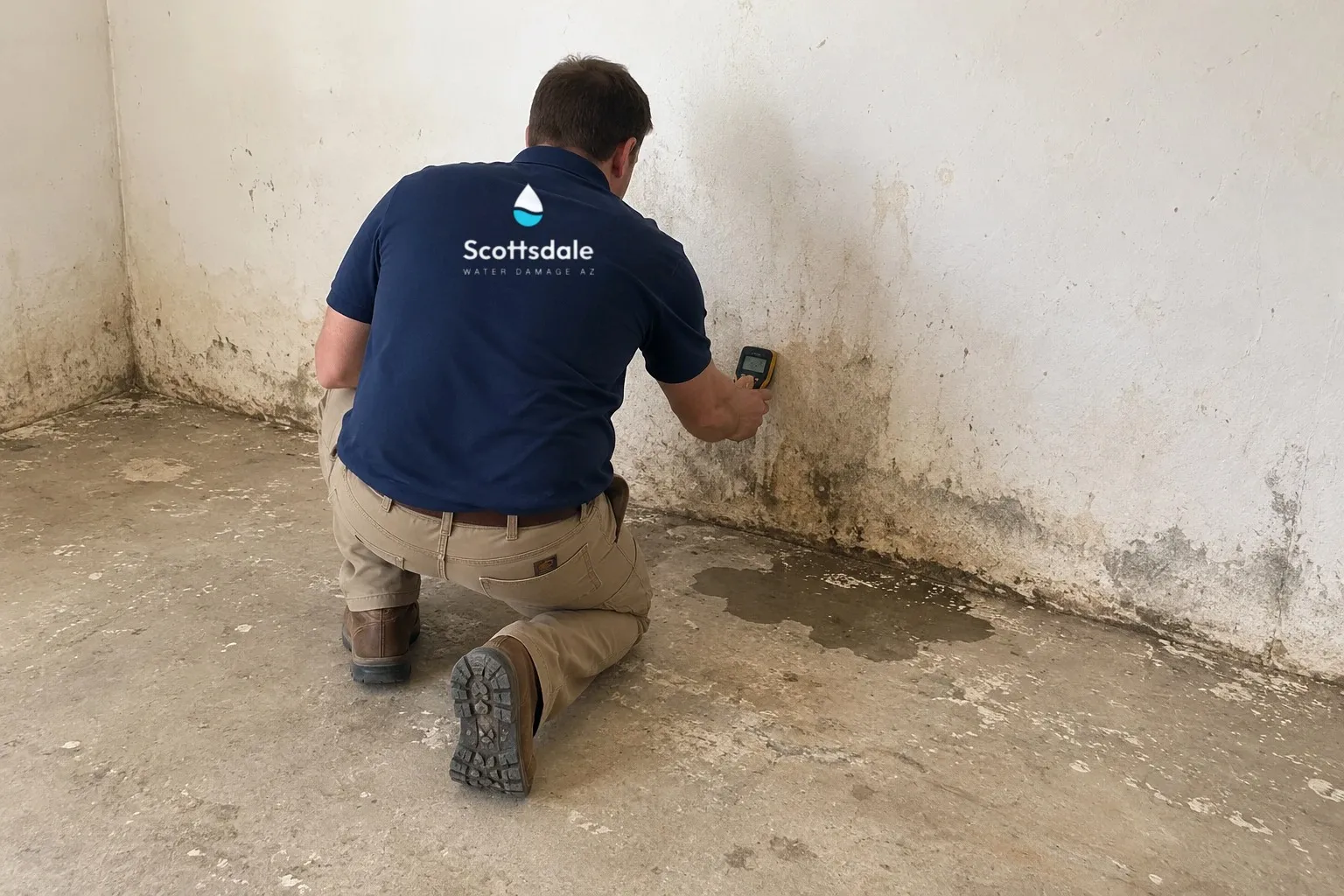
A moisture meter gives a clearer answer. It is a handheld tool that reads how much water is in drywall or wood. A restoration crew or a home inspector can use one to tell an old dry stain from a new wet one. It also shows how far the water spread past the stain you can see.
Who to call for water damage in a ceiling
Start with the trade that stops the water: a roofer, an HVAC technician or a plumber. Next, a water damage restoration company dries the area and repairs the ceiling.
Who does what:
- Roofer: finds and seals the spot where rain gets in.
- HVAC technician: clears the condensate drain and checks the drain pan.
- Plumber: repairs the pipe, toilet or fixture that leaks.
- Water damage restoration company: dries the ceiling and the space above it, then repairs the damaged drywall.
The plumber fixes the pipe. Drying the wet ceiling around it is a separate job. Our page on ceiling water damage repair explains the drying and repair steps.
Before you hire anyone, ask for their contractor license number. You can check any contractor’s license with the Arizona Registrar of Contractors.
Your insurance company decides what your policy covers. Your adjuster can explain your coverage.
If the ceiling stayed wet for a while, you may be asking: can water damage in a ceiling cause mold? Our mold guide covers how fast it grows and what to do.
Ceiling still dripping, or not sure where the water comes from? Call now for help with water damage restoration in Scottsdale.