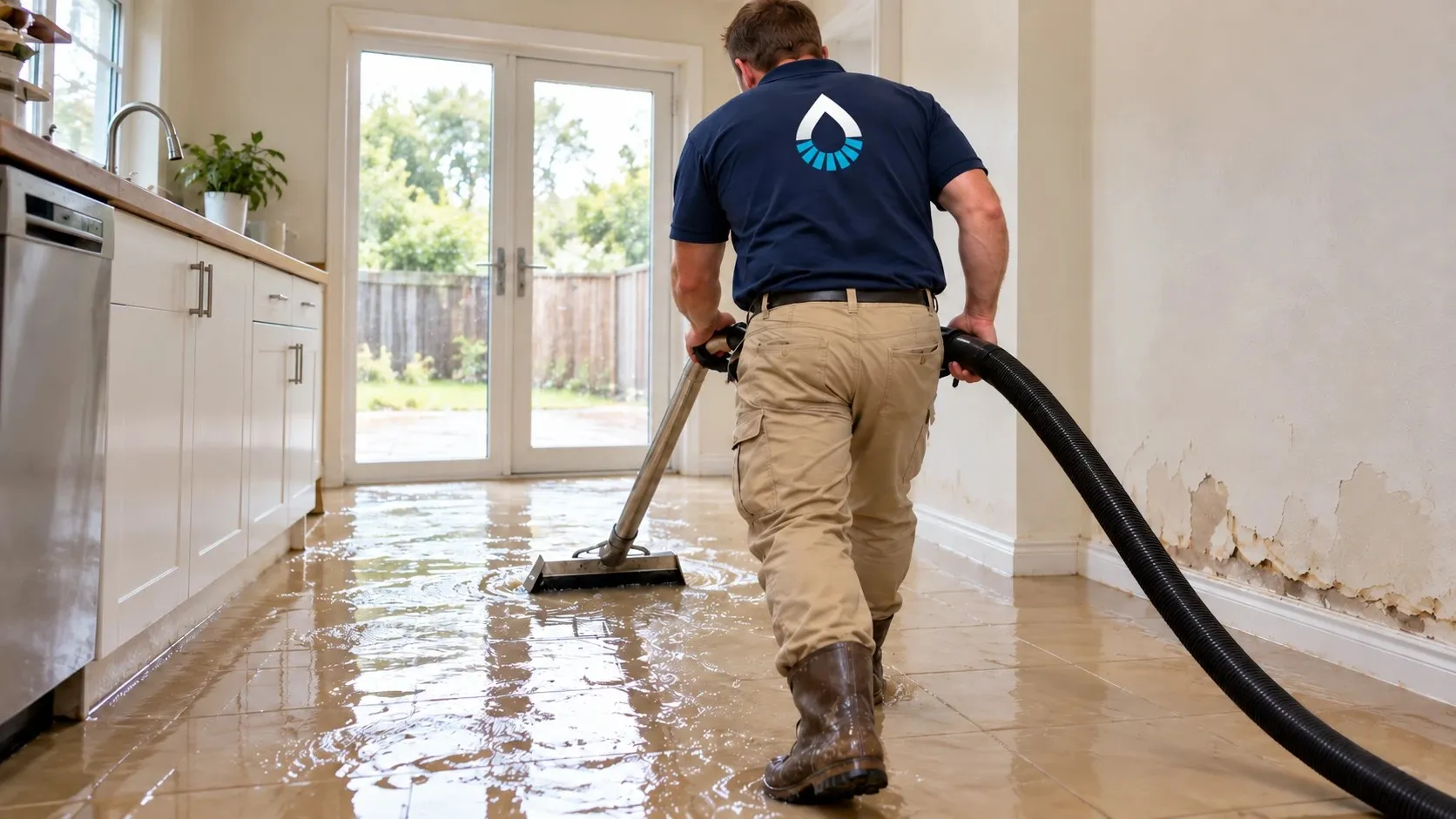
Emergency Water Extraction Services in Scottsdale, AZ
Water extraction services in Scottsdale pull standing water off floors and out of carpet, so drying can start. Here is what to do first and how the work goes.
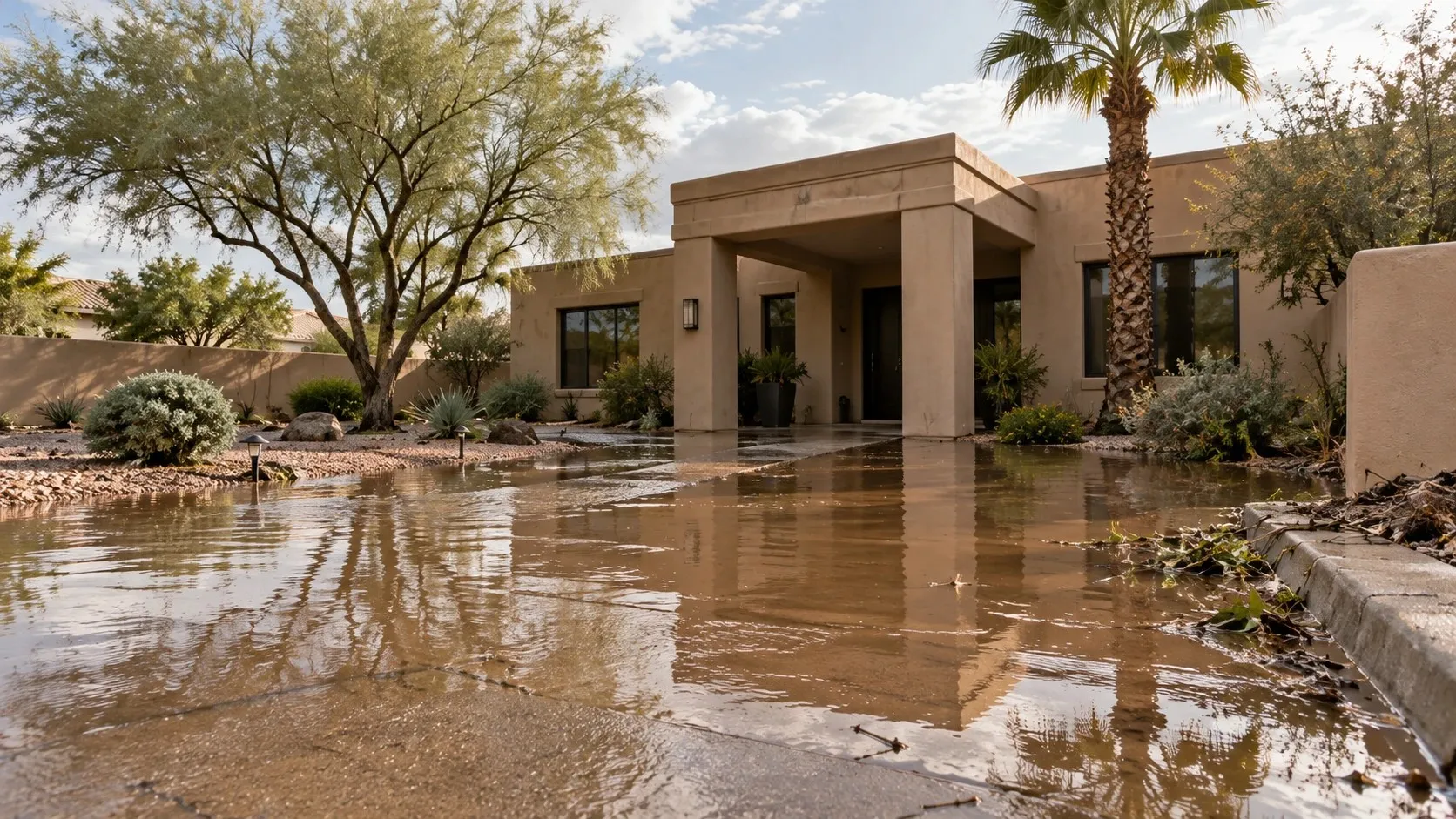
Standing water in your house? What to do first
Stop the water, cut power to wet rooms if it is safe and take photos. Then call for emergency water removal.
- 01
Shut off the water
Close the main water valve. For one leaking toilet or washer, its own small valve may be enough.
- 02
Cut power to wet rooms if safe
Use the breaker panel, and only from a dry spot. Never stand in water to reach it.
- 03
Take photos and video
Film the water and anything damaged before it is moved. Your insurer may ask for them.
- 04
Lift things off the wet floor
Move rugs, papers, electronics and small furniture to a dry room.
- 05
Hold off on fans if the water is dirty
The EPA says not to use fans before you know the water is clean or sanitary. Water from a toilet, a drain or outside may not be.
- 06
Call for help
Call now. Say where the water came from, how deep it is and which rooms got wet.
Is standing water an emergency?
Yes, because drying cannot start until the standing water is out. The EPA says to dry water-damaged areas and items within 24 to 48 hours to prevent mold growth.
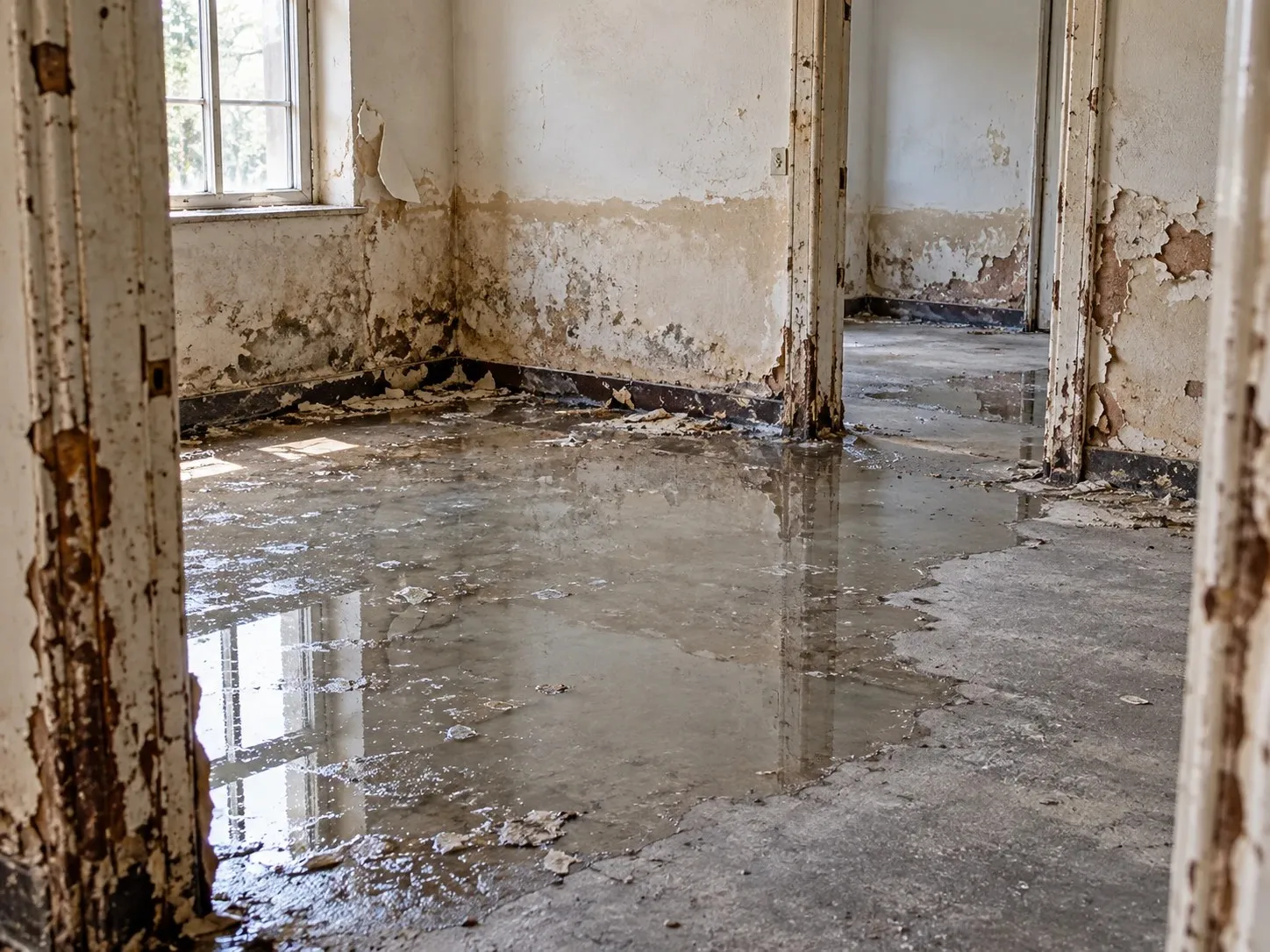
Water keeps moving after you find it. It runs under baseboards, climbs up drywall and soaks into carpet pad.
The EPA's water damage cleanup table lists wet carpet and backing as something to dry within 24 to 48 hours. Its steps are plain:
- Remove the water with a water extraction vacuum.
- Lower the humidity with a dehumidifier.
- Speed up drying with fans.
The EPA adds that mold will not always grow after 48 hours. The window is a guideline, not a countdown. Still, the sooner drying starts, the better.
The EPA lists the back side of drywall and the underside of carpets and pads among places where mold can hide. Read how fast mold grows after water damage.
Water came in from a storm or a wash? See flood and storm damage restoration. Live up north? Read about water damage in North Scottsdale. Away for the summer? See water extraction in Paradise Valley.
Water extraction vs water removal vs drying: what is the difference?
Water extraction and water removal mean the same first step: getting the standing water out. Drying, also called water mitigation, comes next and runs until readings show the materials are dry.
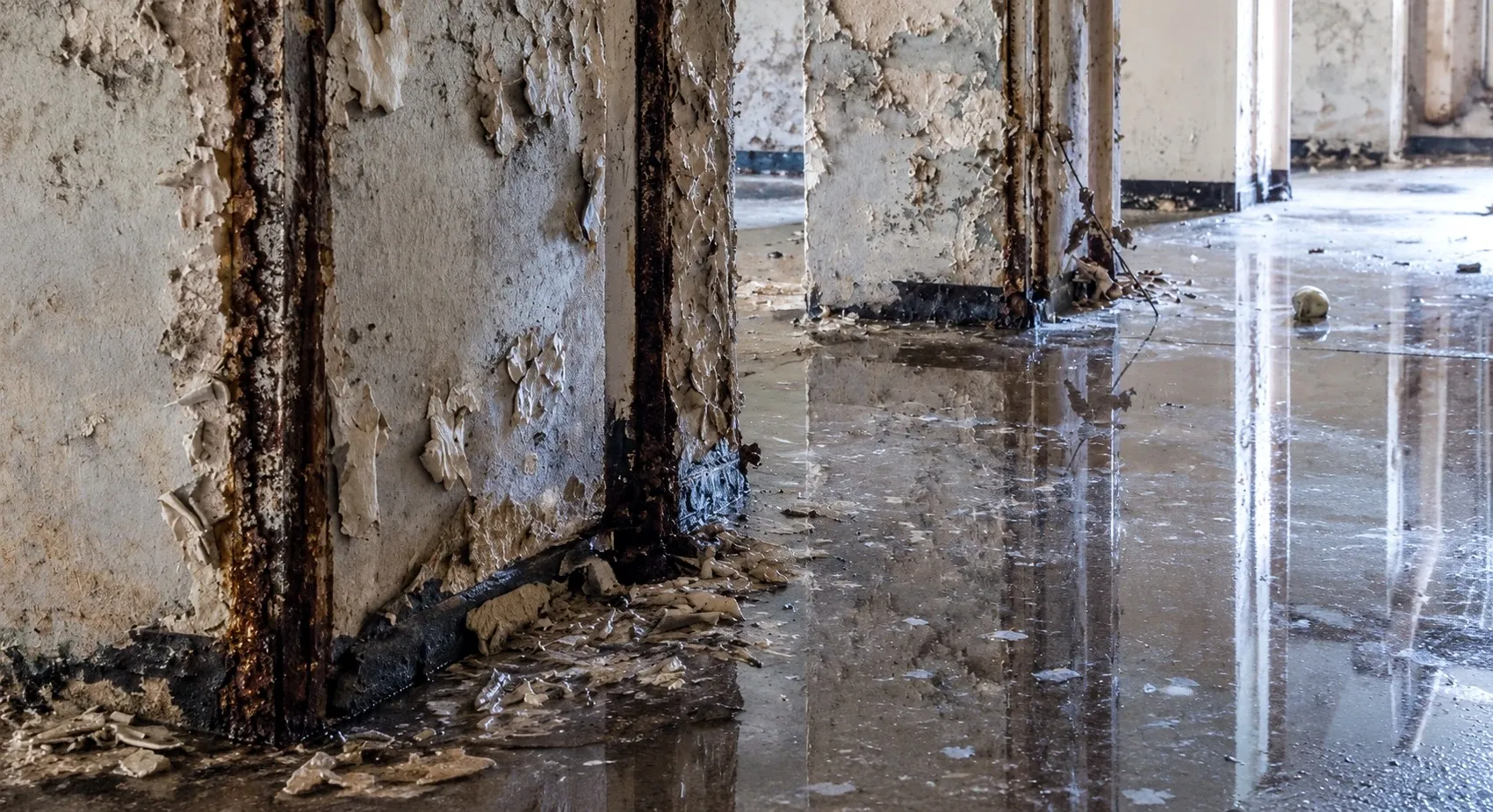
People use these words loosely. Here is what each one means:
- Water removal services and water extraction both mean pulling out standing water. Pumps handle deep water. Extractors (strong wet vacuums) pull water off hard floors and out of carpet.
- Structural drying means drying the building itself: the subfloor, walls, cabinets and framing. Air movers (strong fans) push air across the wet surfaces.
- Dehumidification means running dehumidifiers (machines that pull water out of the air), so the room does not stay damp.
- Water mitigation covers stopping the water and drying the house. Restoration is the repair and rebuild that comes after.
The EPA says firms that work on water-damaged buildings often use large fans and dehumidifiers. The goal is to dry wet buildings and items before mold has a chance to grow. In general, it says, more air circulation and a higher temperature speed up drying.
For the full job, from the leak to the rebuild, see water damage restoration in Scottsdale.
Flooded carpet drying: what can be saved?
With clean water, wet carpet can be extracted and dried with dehumidifiers and fans, per the EPA. With dirty water, the industry standard says contamination gets removed before any drying.
Clean water: Category 1
Water from a broken supply line or a sink or tub overflow starts clean. Restoration companies call it Category 1. The EPA's carpet drying steps were written for clean water.
Dirty water: Category 2 or 3
Washer or dishwasher overflow is usually called Category 2. Sewage and rising floodwater are Category 3 under the S500 standard. For both, that standard says remediation (removing the contamination) comes before drying. See sewage cleanup.
The carpet pad
The pad is the cushion under the carpet, and it holds water out of sight. The EPA lists the underside of carpets and pads among places where hidden mold can grow. A soaked pad may have to come out.
The subfloor underneath
The EPA's cleanup table says the subfloor under carpet or other flooring must also be cleaned and dried. Carpet that feels dry on top does not mean the floor below is dry.
Time and heat can change it
The S500 standard says time and temperature can change a water's category. Clean water left to sit may not stay clean.
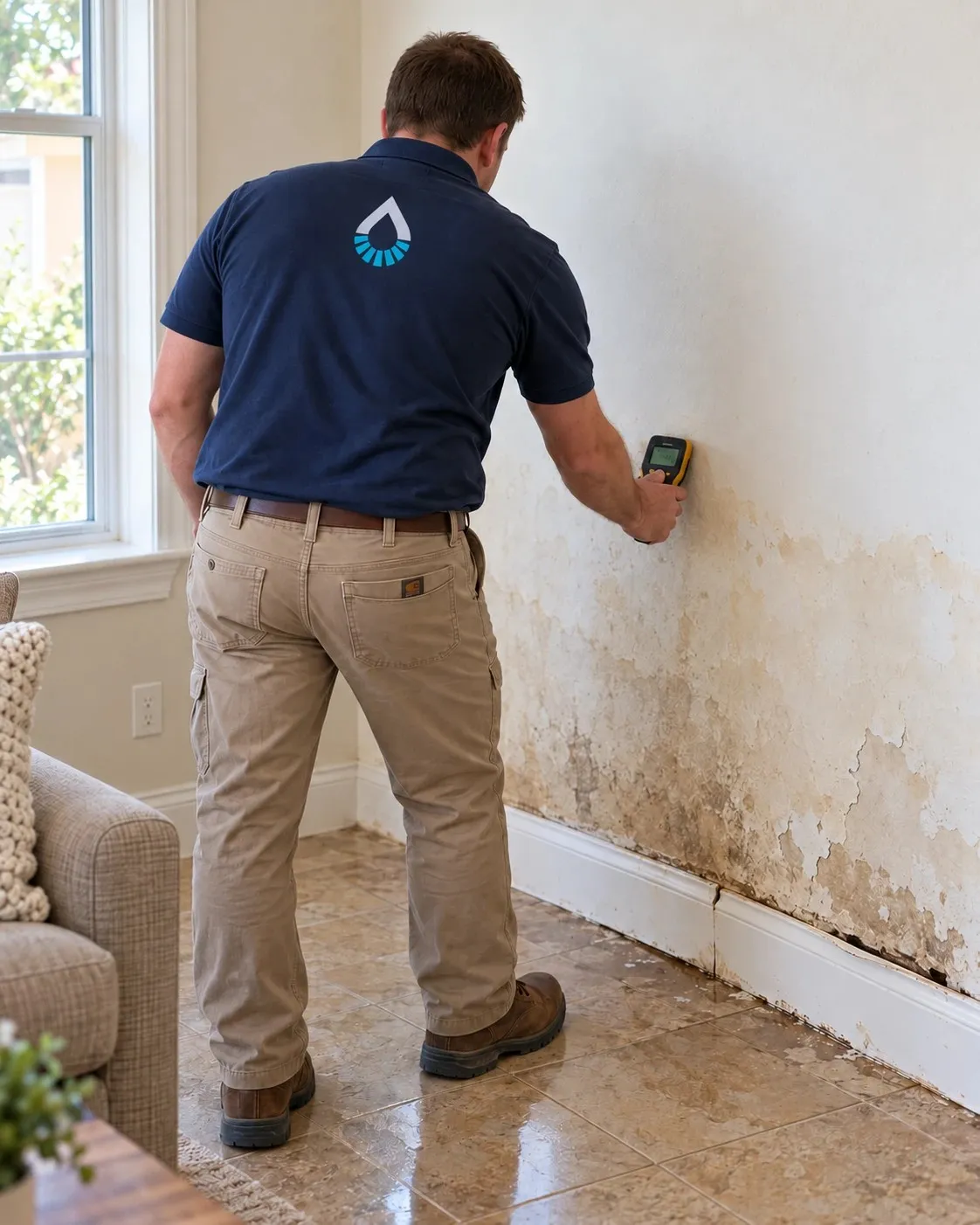
How water extraction and structural drying work
The usual order: stop the source, extract the water, map the moisture, dry the structure and check readings until it is dry. Repairs come last.
Stop the source
The leak gets fixed or the appliance gets shut off. For a broken pipe or a slab leak, that is a plumber's job. Drying a room that still leaks is wasted work.
Extract the standing water
Pumps take out deep water. Extractors (strong wet vacuums) pull water off tile and out of carpet. Soaked items get moved out of the way.
Map the moisture
A moisture meter (a handheld tool that reads how wet a material is) checks walls, floors and cabinets. Mapping the readings room by room shows how far the water spread.
Dry the structure
Air movers (strong fans) push air across wet surfaces. The EPA says wet drywall may be dried in place if it has no obvious swelling and the seams are intact. If not, it is cut out and replaced.
Run dehumidifiers
Dehumidifiers pull water out of the air as the materials dry. The EPA's cleanup table pairs dehumidifiers with fans for wet carpet, concrete and wood.
Check readings, then repair
Readings get taken until the materials are dry, whatever the surface looks like. Then removed drywall, baseboards and flooring get replaced.
How much do water extraction services cost?
There is no single price. Cost depends on how much got wet, how dirty the water was, how long it sat and what has to be removed and rebuilt.
What moves the price:
- Size: how many rooms and square feet got wet.
- Water category: clean supply line water is the simplest job. Dirty water means more removal and cleaning.
- Time: water soaks deeper the longer it sits.
- Materials: tile, carpet, pad, wood floors, drywall and cabinets each dry differently. Some have to come out.
- Drying equipment: more wet material means more air movers and dehumidifiers, for longer.
- Rebuild: new drywall, baseboards and flooring add to the total.
No one can give a fair price without seeing the damage. Ask for a written estimate before work starts, and ask what could change it.
Does homeowners insurance cover water extraction?
It depends on your policy and on where the water came from, and your insurer decides. Triple-I lists water that leaks or overflows by accident from a plumbing system among the perils homeowners policies cover.
A peril is a cause of damage that a policy names. Triple-I (the Insurance Information Institute) also says:
- Flood damage is excluded under standard homeowners and renters policies.
- Sewer backups are not covered under a typical homeowners policy, nor by flood insurance.
- Policies do not cover damage due to lack of maintenance, mold or infestation.
Call your insurer or agent to report the damage and ask what your policy covers. Keep your photos and any plumber's invoice together.
No one can promise what your insurer will pay. Be careful with anyone who does. The full guide: does homeowners insurance cover water damage.
Related water damage pages
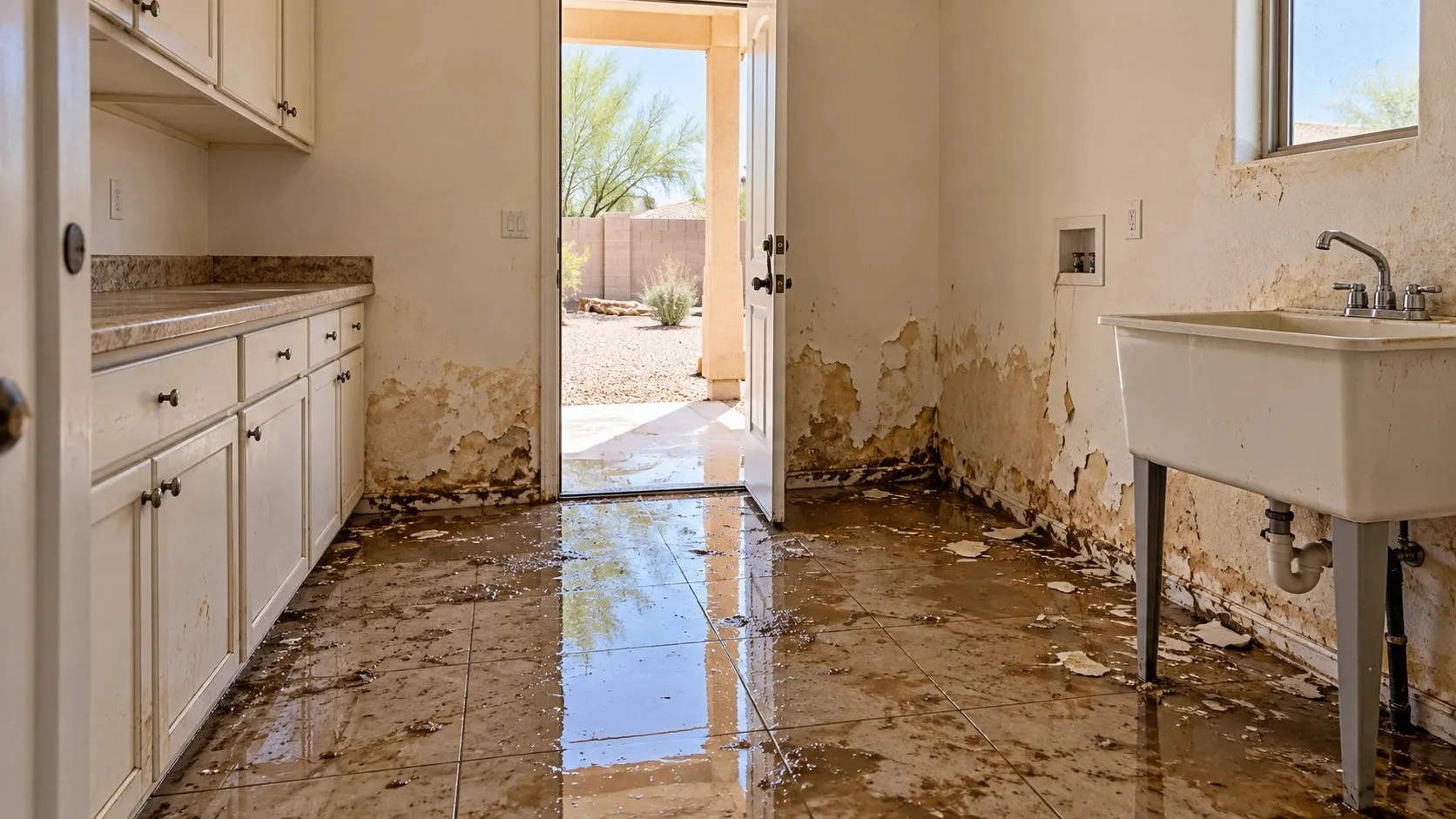 Slab leak & burst pipeSlab leak, burst pipe or a leaking water heater: what to do first and who fixes what.
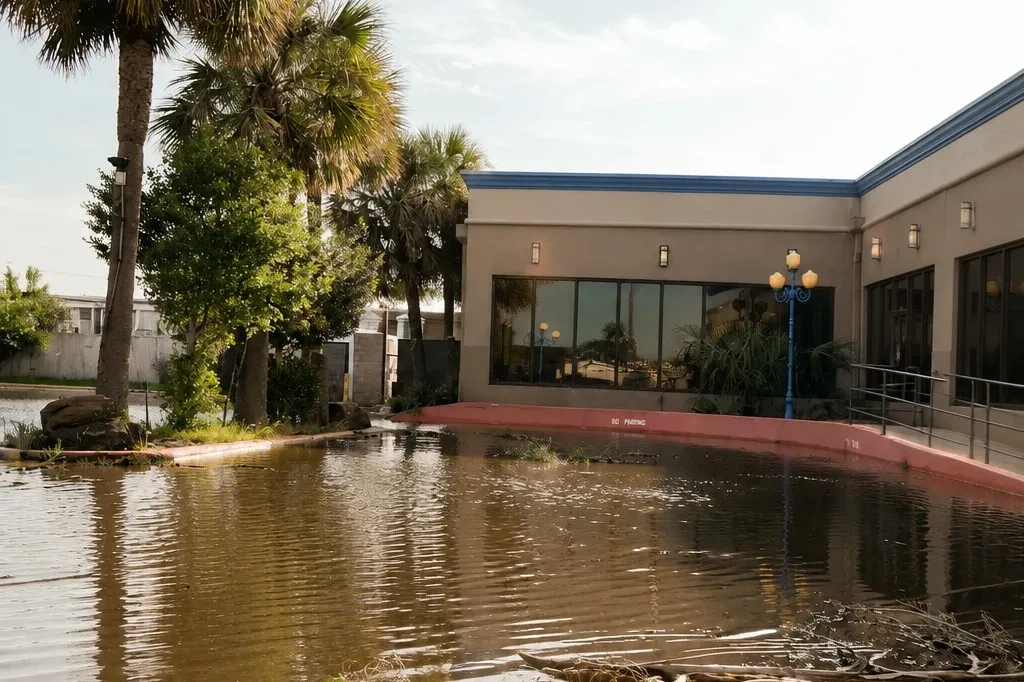 Flood & storm damageMonsoon flooding, a roof leak or water dripping from the ceiling after a storm.
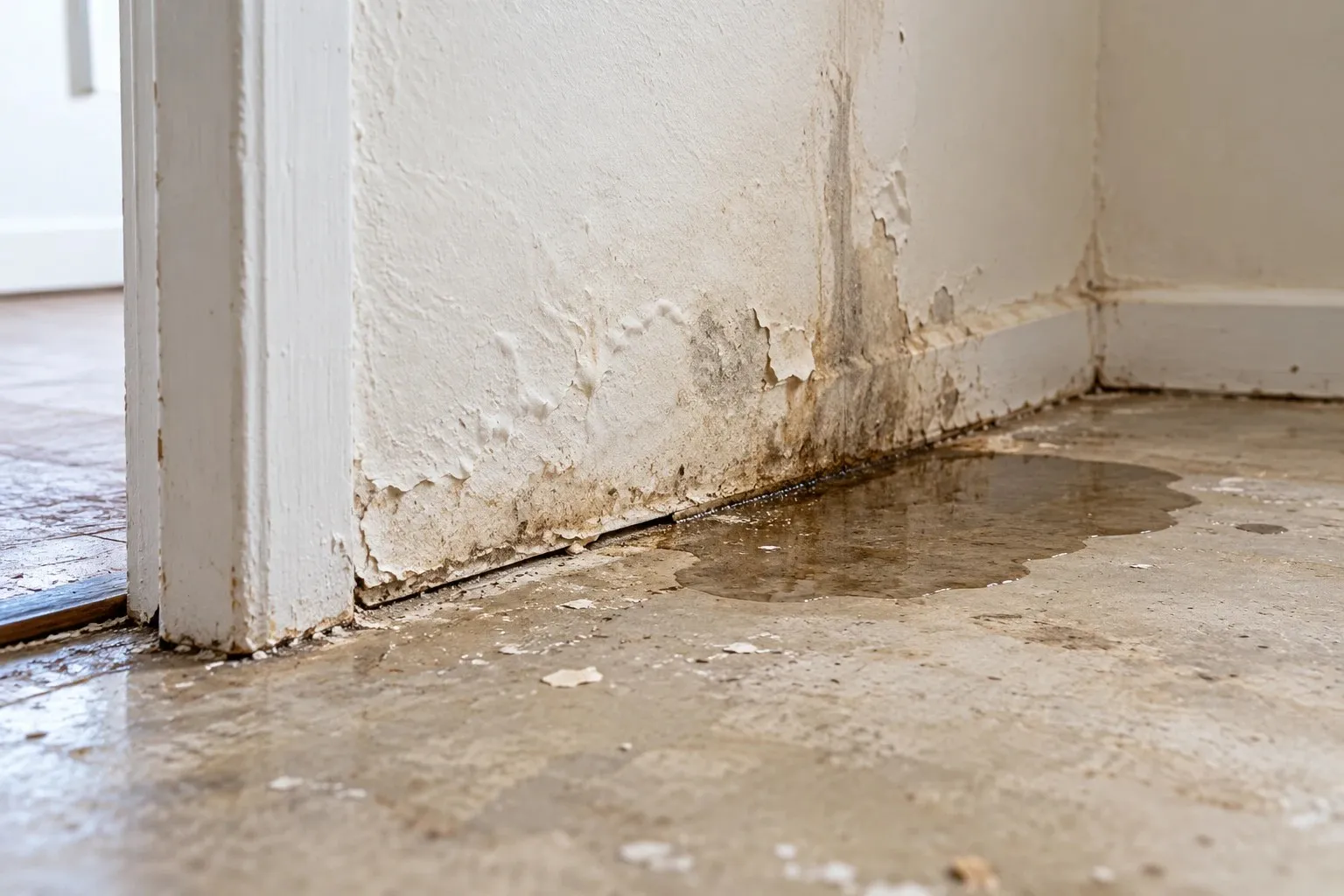 Mold remediation & testingMold or a musty smell after a leak: when testing helps and how mold remediation works.
Questions people ask
How do I find water extraction services near me?
In Scottsdale or a nearby town, call now. Say how much water there is, where it came from and which rooms got wet.
Can I do water extraction myself?
A wet vacuum can handle a small puddle of clean water on tile. Larger jobs are different, because water hides in carpet pad, under flooring and inside walls. If the water came from sewage or another dirty source, the EPA says to call a professional experienced with that type of damage.
How long does water extraction and drying take?
It depends on how much water there was, how long it sat and what it soaked into. Drying runs until moisture readings show the materials are dry, not until the surface looks dry. Ask how the readings will be tracked.
Can flooded carpet be saved?
It can be, if the water was clean and drying starts early. The EPA's steps for wet carpet are to extract the water, then dry it with dehumidifiers and fans within 24 to 48 hours. Carpet soaked by sewage or floodwater is a different case.
Does homeowners insurance pay for emergency water removal?
Your insurer decides, based on your policy and the cause. Triple-I lists water that leaks or overflows by accident from plumbing among covered perils, and says flood damage is excluded under standard policies. Report the damage early and keep your photos.
How much does emergency water removal cost?
It depends on the size of the wet area, the water category, how long it sat and what has to be rebuilt. No one can give a fair price without seeing the damage. Get a written estimate before work starts.
What if I already smell mold?
Mold can grow where materials stay wet. Fix the water and dry the area first. Then see how mold remediation and testing works.
Water damage help near Scottsdale
Each area page covers local storm risks and what to do first when water gets into a home.
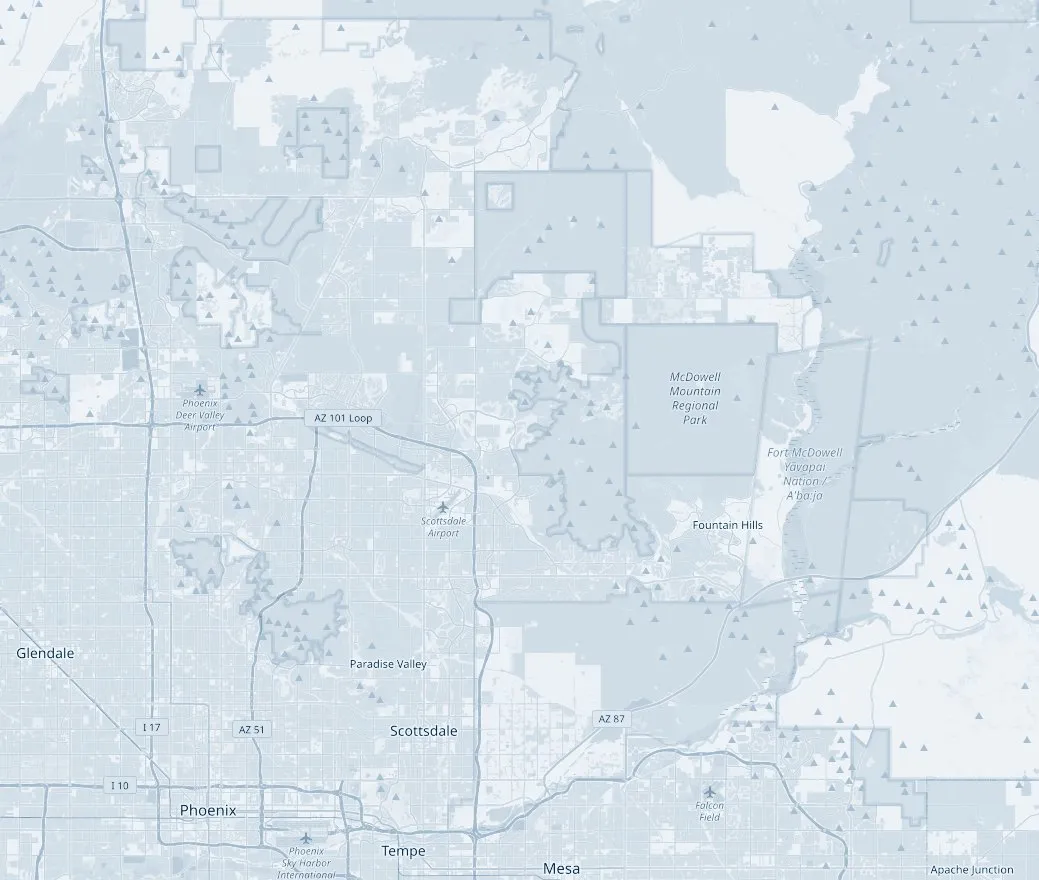 ScottsdaleParadise ValleyNorth ScottsdaleFountain HillsCave CreekCarefree
- ScottsdaleIndian Bend Wash Greenbelt: 11 miles of flood control.
- Paradise ValleyAbout 4.4 miles from Scottsdale City Hall, with four water providers and many properties on septic.
- North ScottsdaleDC Ranch and Pinnacle Peak Park, about 16 to 21 miles from Scottsdale City Hall.
- Fountain HillsAbout 21 miles from Scottsdale City Hall. 58% of homes here were built from 1980 to 1999.
- Cave CreekFounded in 1870 as a mining and ranching community, about 29 miles from Scottsdale City Hall.
- CarefreeEasy Street and Ho Hum Road, about 27 miles from Scottsdale City Hall.