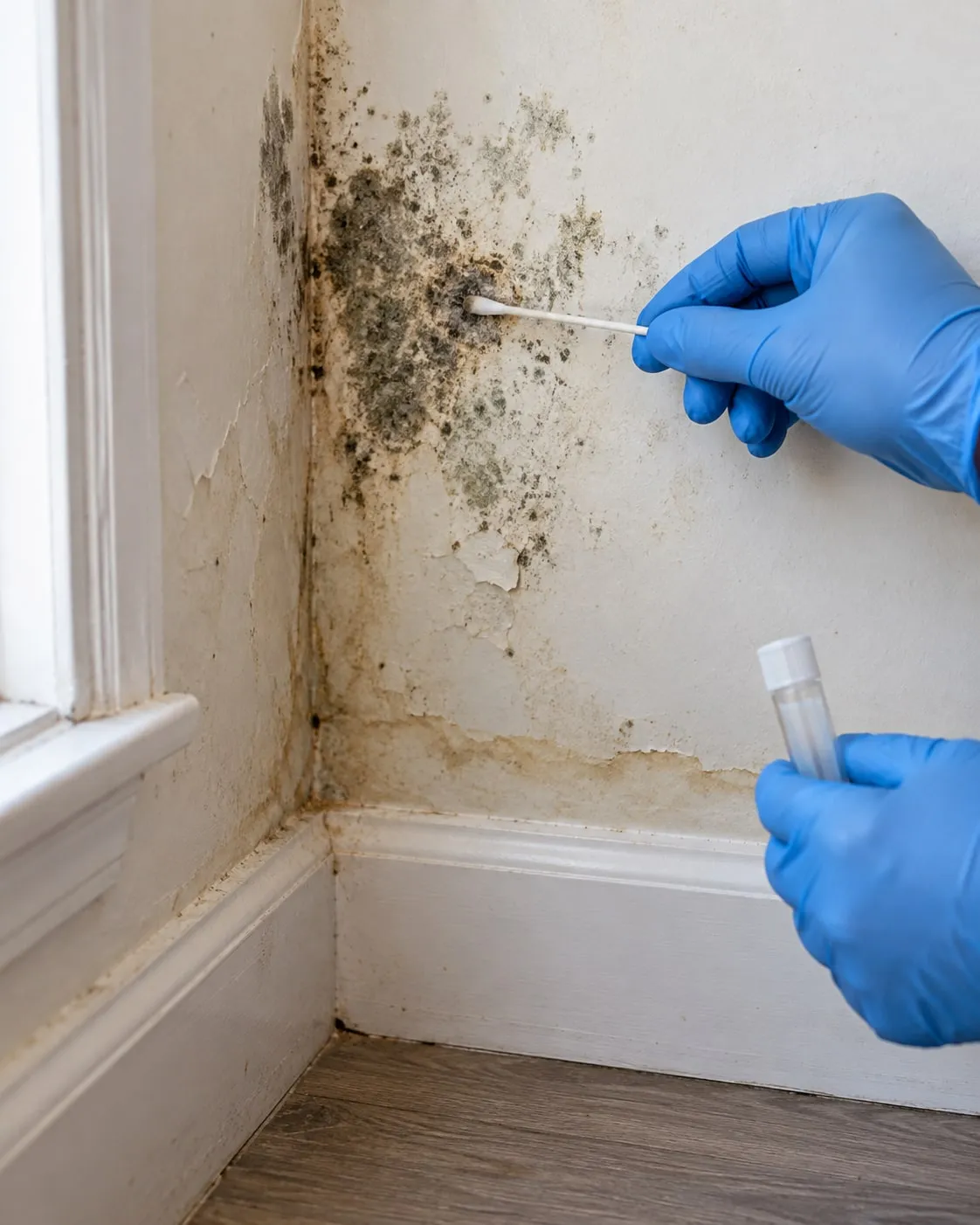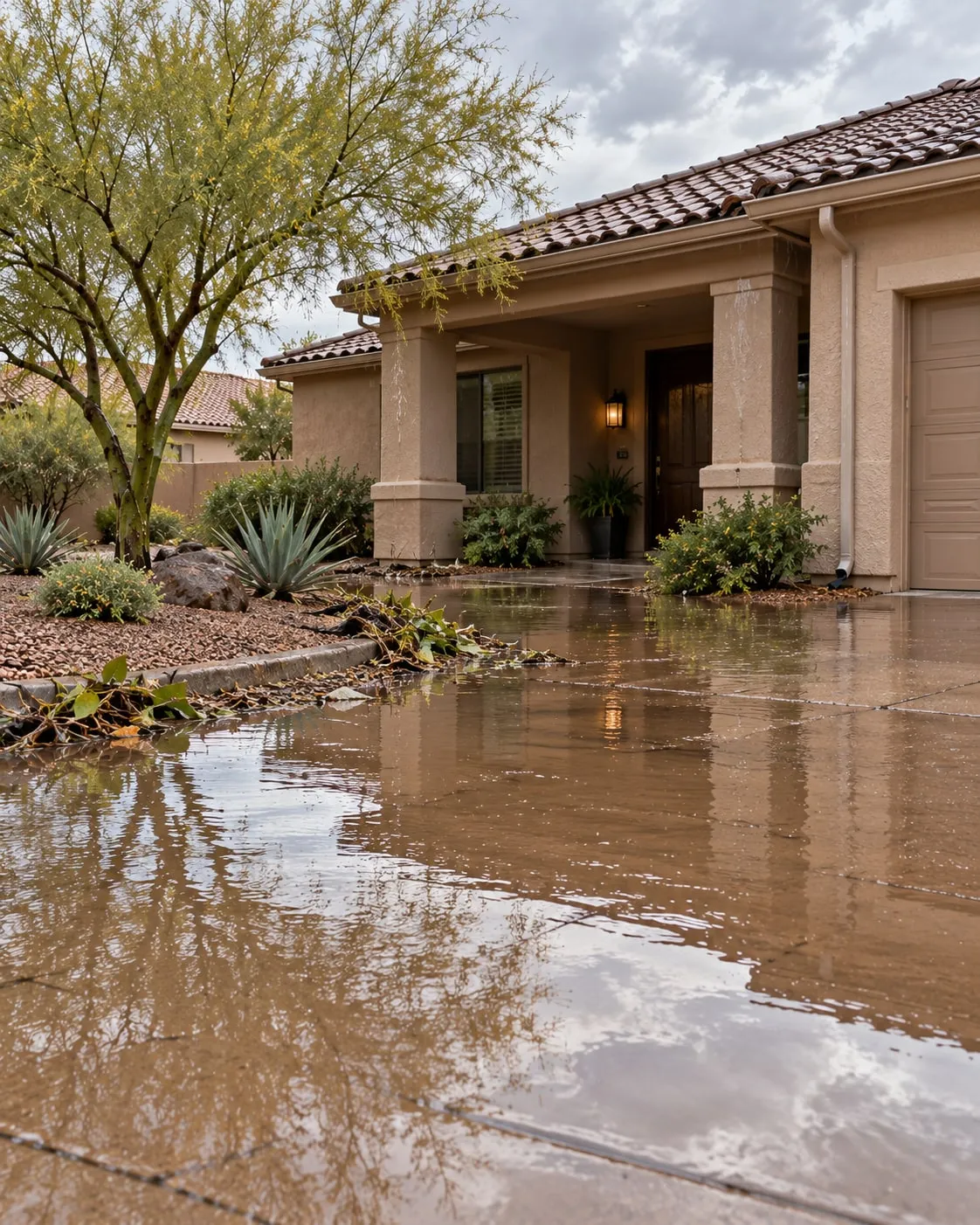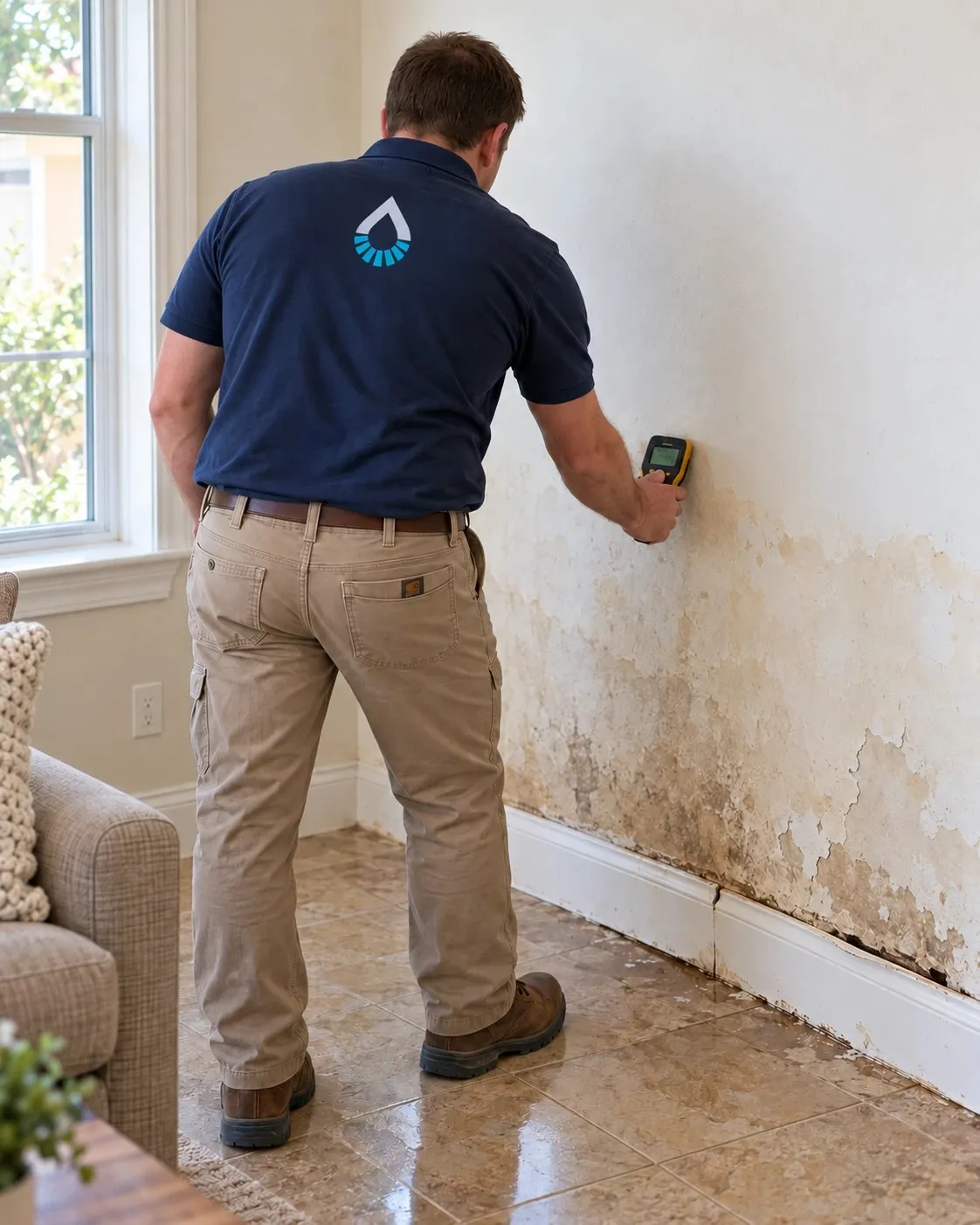
Category 1 water is clean: a supply line, a tub overflow, water straight from the pipe. Category 2 is gray water, water that picked up contaminants on its way to your floor. The category decides what gets dried and what gets thrown out.
The short answer
The category is a contamination label, and it drives the entire scope. Category 1 means clean at the source, and most materials can dry in place. Category 2 means significant contamination, and porous material comes out. Which category you are dealing with depends on the source of the water, what it crossed, and how long it sat, which in a Scottsdale summer can turn a clean leak into a gray one fast.
Category 1: what it actually is
Category 1 is water that is clean when it is released. A supply line that lets go. A tub left running with clean tap water. A water heater. A melted ice maker line. Nothing has touched it, so it has not picked up soil, detergent, or waste.
The cleanup math changes with that label. Clean water mostly means extract and dry. Carpet pad might still come out because it dries badly, but drywall and framing can often be saved if the equipment gets on it quickly and runs to the dry standard. The job is still serious. It is just less destructive.
The label also sets the salvage line. Clean water means most hard goods survive, and the drywall decision comes down to how far the water wicked, not what the water carried. The clock matters more than anything else, because clean water does not stay clean forever once it sits.
Category 2: what it actually is
Category 2 is gray water, water with meaningful contamination but not sewage. A washing machine that overflowed. A dishwasher that backed up. Condensate that sat in a dirty pan before it dripped. A toilet that overflowed with urine only. The water carries dissolved and suspended things that belong in a drain, not in your house.
The scope shifts hard. Porous materials that absorbed category 2 water, carpet pad, insulation, drywall that wicked it, generally come out instead of drying in place. Hard surfaces get cleaned and dried. The point is that contamination does not dry away. It stays in the material and feeds whatever grows there. See how the distinction plays out on our water damage vs flood damage page.
The category also decides the protective gear and the containment. Gray water jobs get plastic and negative air where a clean-water job gets fans. If a crew shows up for a washing machine overflow with no containment and no gear, the category was never actually assessed.
Where category 1 fails here
The classic Scottsdale failure is treating clean water as if it cannot become a problem. A supply line drips in a second home in DC Ranch while the owners are away for the season, and clean category 1 water sits in a warm wall for a month. Time degrades water. What started as category 1 becomes category 2 just by sitting, because stagnant water grows things. The label is a snapshot of the source, not a promise about what grew afterward.
The other failure is category confusion. Clean supply-line water and contaminated ground water get treated the same, so contamination spreads. If the first company in does not name the category, the drying plan is a guess.
There is also the quiet leak problem. A supply line inside a wall, in a house that sits empty through the summer, releases category 1 water for weeks without anyone knowing. By the time the stain appears, the category has degraded, and the material that could have been saved at hour one is on the cut list at week three.
Where category 2 fails here
Monsoon water is the Scottsdale gray water nobody thinks about. It comes through flat roofs and parapets, past scuppers clogged with dust and debris, picking up whatever sat in the pond on the roof. It crosses the yard and picks up soil. That water is category 2 at minimum by the time it enters, and the cleanup has to treat it that way.
AC condensate lines are the quiet version. A line in the ceiling drips into a dirty pan for a summer in an empty house in Carefree, and the water that finally reaches the ceiling is not clean anymore. It looks like a small ceiling stain. The scope is larger than the stain.
Flat roofs and parapets do the same thing from above. A monsoon pond sits on the roof, picks up dust and droppings, and enters through the flashing as gray water. The stain on the ceiling is the last clue, not the first one. Treating that water as clean because it looks clean is how contamination spreads through a house that was only wet in one room.
What it costs and what drives the number
Category 2 costs more than category 1 because there is more demolition, more disposal, and more containment. The number moves with how much porous material comes out and how far the water traveled inside the wall. See the cost breakdown for how these pieces add up. Ranges swing, and anyone who prices before opening the wall is estimating the middle of a wide range. The gap between the two categories on the same square footage is real money, mostly in the disposal and containment lines, and it is the reason the category has to be named before the first cut, not after the invoice.
What good work looks like in Scottsdale
- The water category gets named in writing before work starts.
- The plan changes when the category changes, instead of drying everything the same way.
- Photos and readings get taken before anything is cut, so the claim matches what actually happened.
- The label gets explained for your specific wall, your slab, your roof. The playbook starts on the home page.
Water that has been sitting, water that came through the roof, water you cannot trace. Call (480) 386-9277 and tell us what you know, or see our complaints policy if the first attempt already went wrong.
Get the category named before the saw comes out. Call (480) 386-9277.