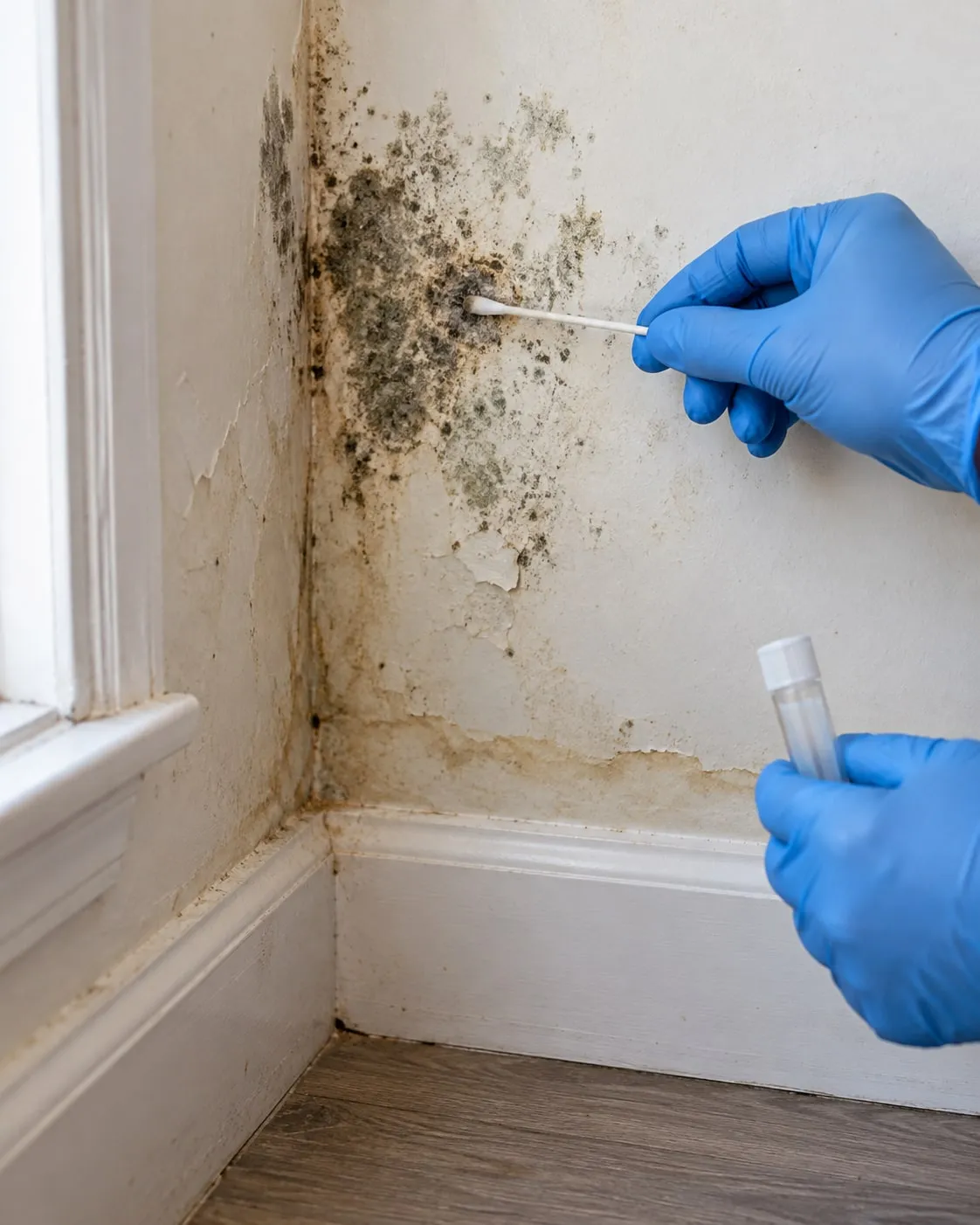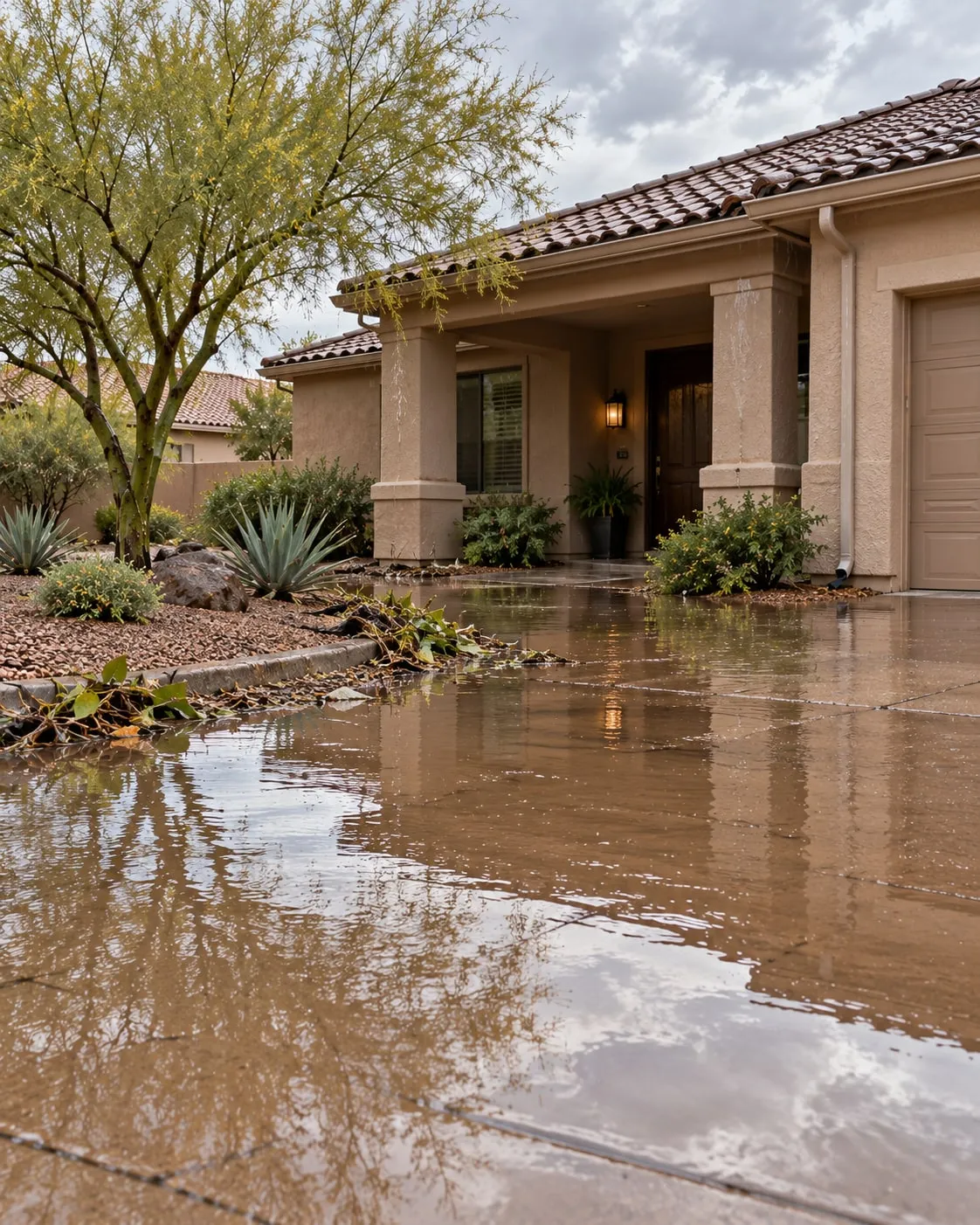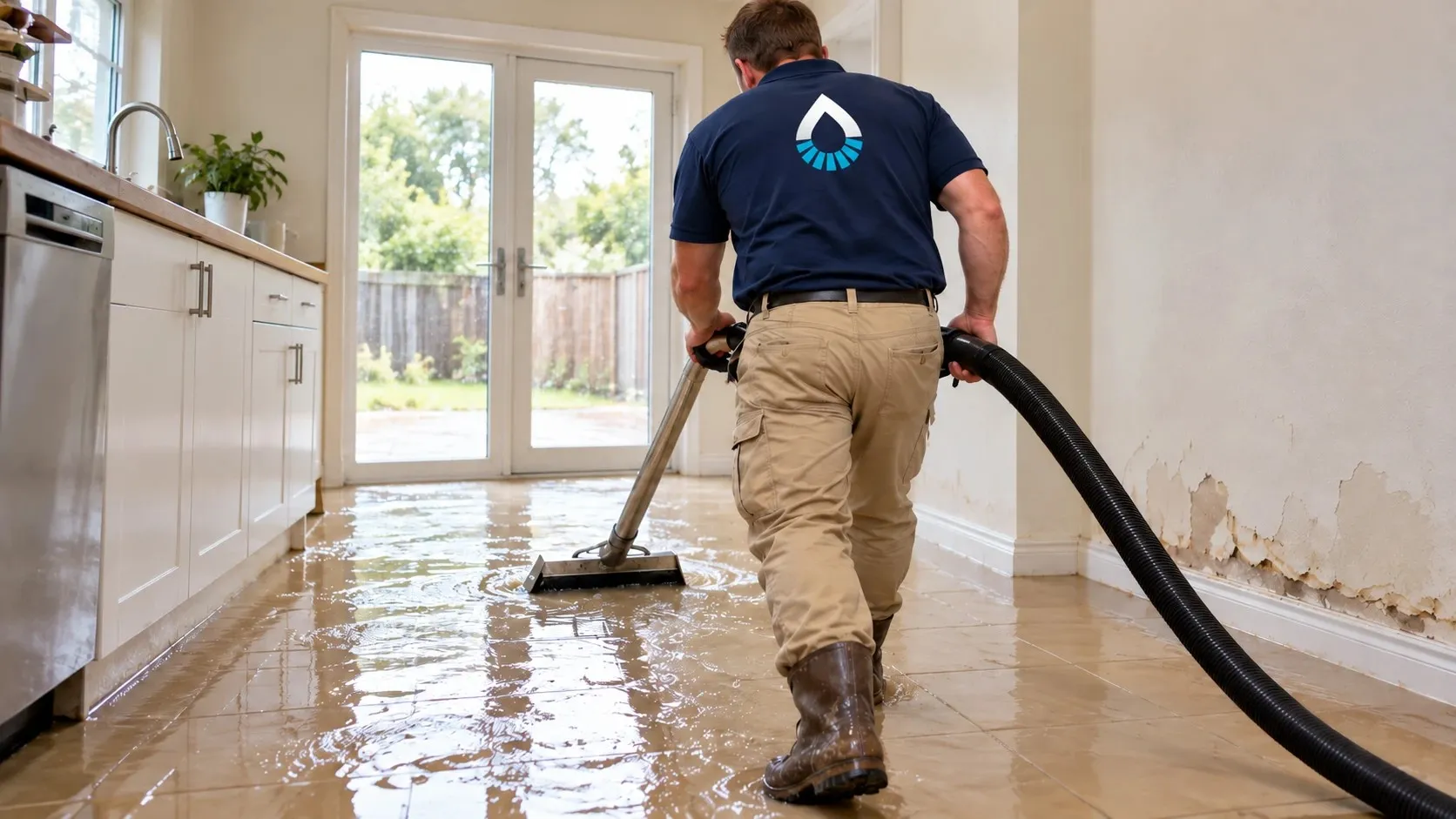
Water damage starts inside the house: a supply line, a water heater, an AC condensate line. Flood damage is outside water coming in: monsoon sheet flow, a scupper that stopped draining, the storm sent back at your foundation. Same water, different problem.
The short answer
Water damage usually means clean water from a known source inside the building, and much of it can be dried in place. Flood damage means ground water, and ground water is never clean. The distinction decides what gets dried and what gets thrown out. The right approach depends on the slab, the wall, the roof, and where the water crossed before it reached you.
Water damage: what it actually is
Water damage is the inside leak. A supply line lets go behind a wall. A water heater rusts through in the garage. An AC condensate line backs up and drips into the ceiling. The water is clean, or close to it, because it came straight from a pipe. The cleanup is mostly extraction and drying, and a lot of the material can be saved if the response is fast.
The mechanism is simple. Clean water damages by soaking, wicking, and feeding mold on the paper faces of drywall. Stop the source, extract, dry to the dry standard, and the structure is usually fine. The discipline is in the drying, not the demolition. The failure to dry completely is where clean-water jobs turn into mold jobs, and in a warm house that turnaround can take weeks, not months.
Flood damage: what it actually is
Flood damage is the outside water that got inside. In Scottsdale, that means monsoon water. A burst of rain hits the flat roof faster than the scuppers can drain, the parapet holds it, and it finds the flashing. Or the rain runs off the roof and the packed yard faster than the soil absorbs it, pools against the stucco wall, and seeps under the door or into the slab edge.
That water is not clean. It crossed the roof, picking up dust, droppings, and whatever sat in the pond. It crossed the yard, picking up soil, fertilizer, and the neighbor’s runoff. Ground water is at least category 2 by the time it enters, and it brings contamination with it. See our category 1 vs category 2 water page for how that changes the scope.
Timing is part of the definition. Monsoon rain arrives from July through September in short intense bursts, faster than the desert soil can absorb it. The water runs along the surface and finds every low point, and the low point is often your door, your parapet seam, or the seam where your slab meets the wall. What enters is whatever the storm picked up on the way.
Where water damage fails here
Scottsdale’s inside leaks go unnoticed longer than they should. Second homes in DC Ranch and Carefree sit empty through the storm season, and a supply line that drips for a month before anyone opens the door has done a month of damage. AC condensate lines run through ceilings, and a slow clog in an empty house means water dripping through drywall, not onto a floor where someone would see it.
The second failure is category confusion. Clean supply-line water and contaminated ground water get treated the same, so contamination spreads. If the company that shows up does not distinguish what kind of water it is, the drying plan is wrong from the first day.
A supply line lets go in a wall or a garage and runs for a weekend while a house sits empty. That is still clean water, and it is still a serious loss, because a weekend of clean water wicks through drywall exactly like a storm would. The difference is what can be saved, not what got wet.
Where flood damage fails here
Monsoon water plays to the house’s weaknesses. Flat roofs and parapets hold the pond. Scuppers clog with dust and monsoon debris. The water runs along the surface, finds every low point, and pools against walls. In an empty second home, the pond sits for weeks before anyone finds it.
Caliche makes the outside worse. The cemented layer under much of the East Valley stops water from soaking in, so monsoon water stays on the surface and runs at the foundation. Water that sits against a slab edge works its way under, and the drying job starts with the slab, which releases moisture slowly for weeks.
An empty second home turns a storm into a time bomb. The pond forms on the flat roof, the scuppers sit clogged, and the water has the whole month to find the flashing before anyone opens the door. By discovery, the flood damage is weeks old, and weeks of standing water is a different job than an hour of it.
What it costs and what drives the number
Flood cleanup costs more than a clean-water cleanup because there is more to throw away. Contaminated carpet pad, drywall, insulation all come out, and the containment and disposal add to the bill. A clean supply-line loss is mostly drying time. The full restoration cost picture varies with how much material comes out, and the category drives that number more than anything else. The difference shows up fastest in the disposal line and the containment line, and both grow with how long the water sat before it was found, which is why a storm loss found in September costs more than the same storm found in July.
What good work looks like in Scottsdale
Everything here follows the playbook on the home page.
- The two problems get separated before anyone starts pricing, because the scope is different from day one.
- The water category gets named in writing.
- Documentation comes before demolition. Photos first, then the saw.
- Drying runs until the slab and the framing read dry, not until the calendar says done.
A pond on the roof, water at the slab edge, or a ceiling down after a monsoon night. Call (480) 386-9277 and tell us where the water came from, or read our complaints policy if a job is already going sideways.
If you are not sure which kind of water you have, that is the first thing to sort out. Call (480) 386-9277.