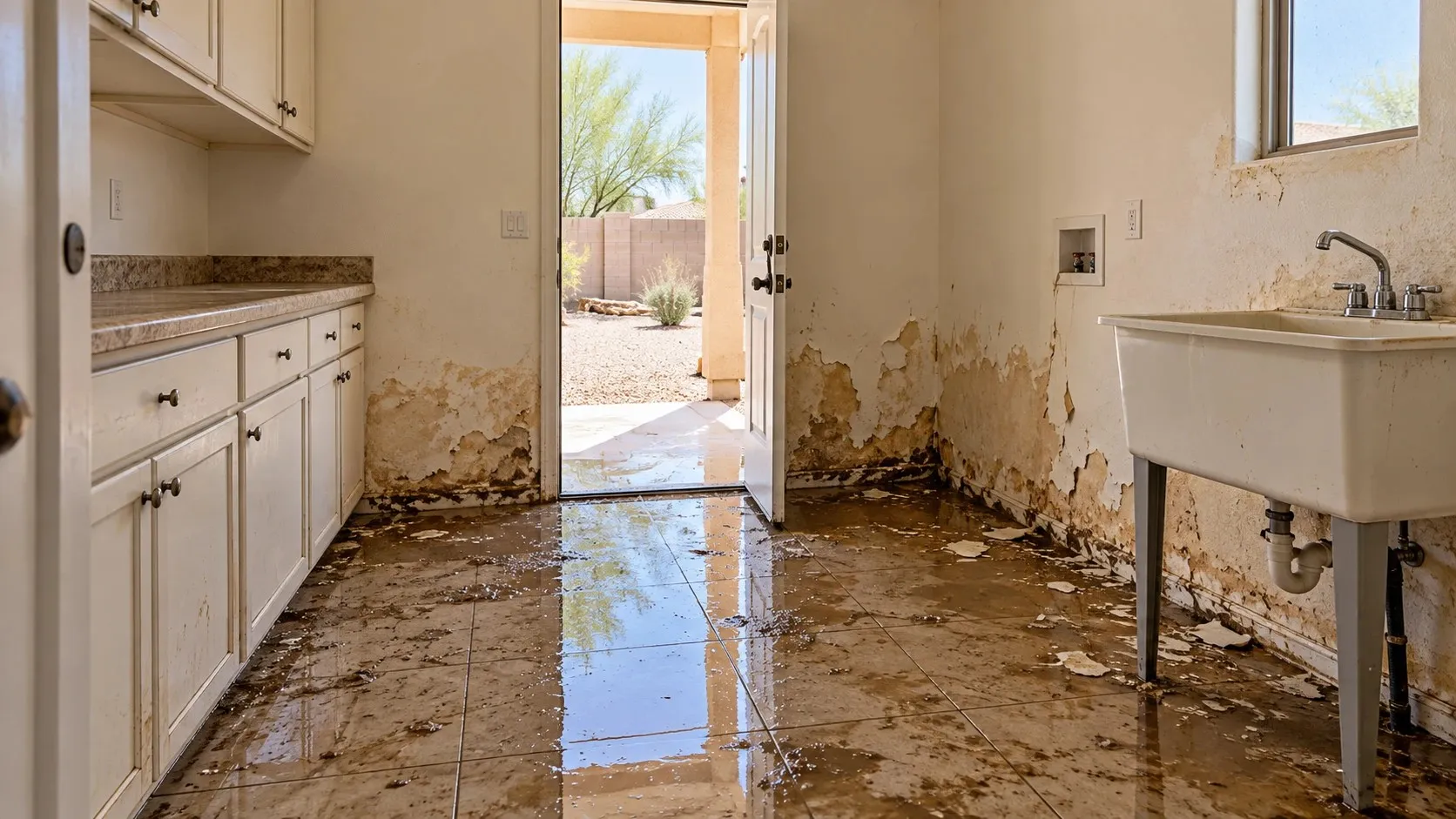
Water in your Scottsdale home starts a clock. Shut off the water, stay safe, take photos, then read how drying works and what happens to wet drywall, carpet and belongings. Water still coming in? Call now, day or night.
Water damage in your home? What to do in the first 10 minutes
Stop the water at the main shut-off valve first. Then stay clear of wet outlets, take photos, move your things and call.
- Shut off the water. Turn off the main shut-off valve for the house. If the leak is at the meter or in the street, Scottsdale Water customers can call the City at 480-312-5650.
- Stay safe around power. Do not touch outlets, cords or appliances that sit in water (Ready.gov warns about the shock risk). Turn off power to wet rooms only if you can reach the breaker without standing in water.
- Take photos and video. Photograph the water, the source and anything damaged before you move it. These pictures help when you talk to your insurer.
- Move your things to a dry spot. Lift rugs, electronics, papers and small furniture out of the water. Put them in a dry room.
- Call for help. Call for help with water damage in Scottsdale. The sooner drying starts, the better.
Why water removal and drying cannot wait
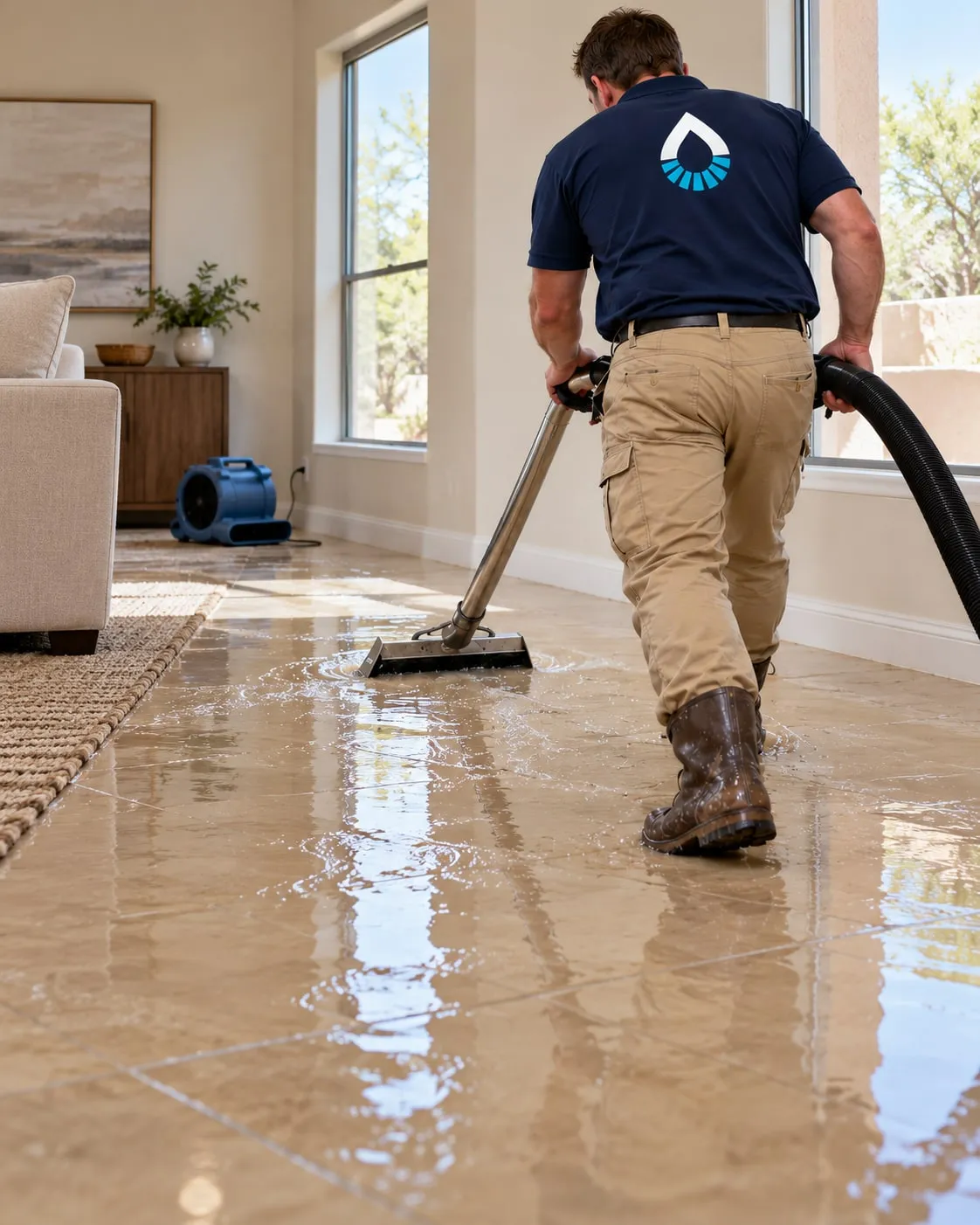
Standing water comes out first, with pumps and extractors (strong wet vacuums). Then drying starts: the EPA says to dry water-damaged areas and items within 24 to 48 hours to prevent mold growth. See how emergency water extraction works.
Why drying cannot wait
The EPA says the key to mold control is moisture control. Read how fast mold grows after water damage.
Water out, then dry
Pumps and extractors pull the standing water out. Fans and dehumidifiers then dry what the water soaked into.
Mitigation or restoration
Water mitigation means stopping the water and drying the house. Restoration means repairing and rebuilding what got damaged.
The water you cannot see
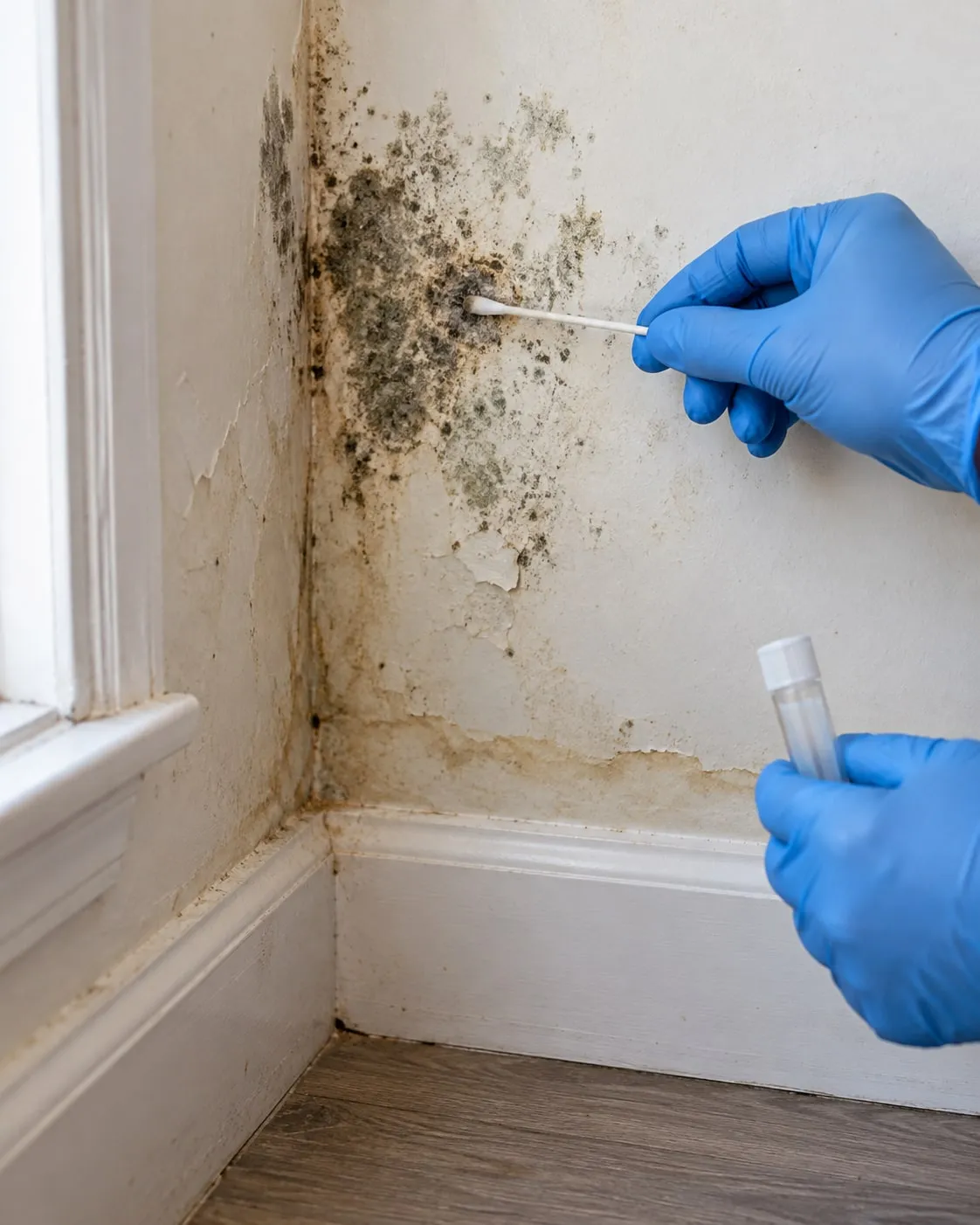
Water runs under flooring and into walls, where it can stay wet for a long time. If mold grows there, removing it is called mold remediation.
What does water damage restoration include?
Water damage restoration follows five steps: find the source, remove standing water, measure moisture, dry the structure, then repair.
- Find the source. The water has to stop before drying can work. A plumber fixes a broken pipe. A roofer fixes a roof leak.
- Remove standing water. Pumps and extractors pull water off the floor and out of carpet. Soaked items get moved out of the way.
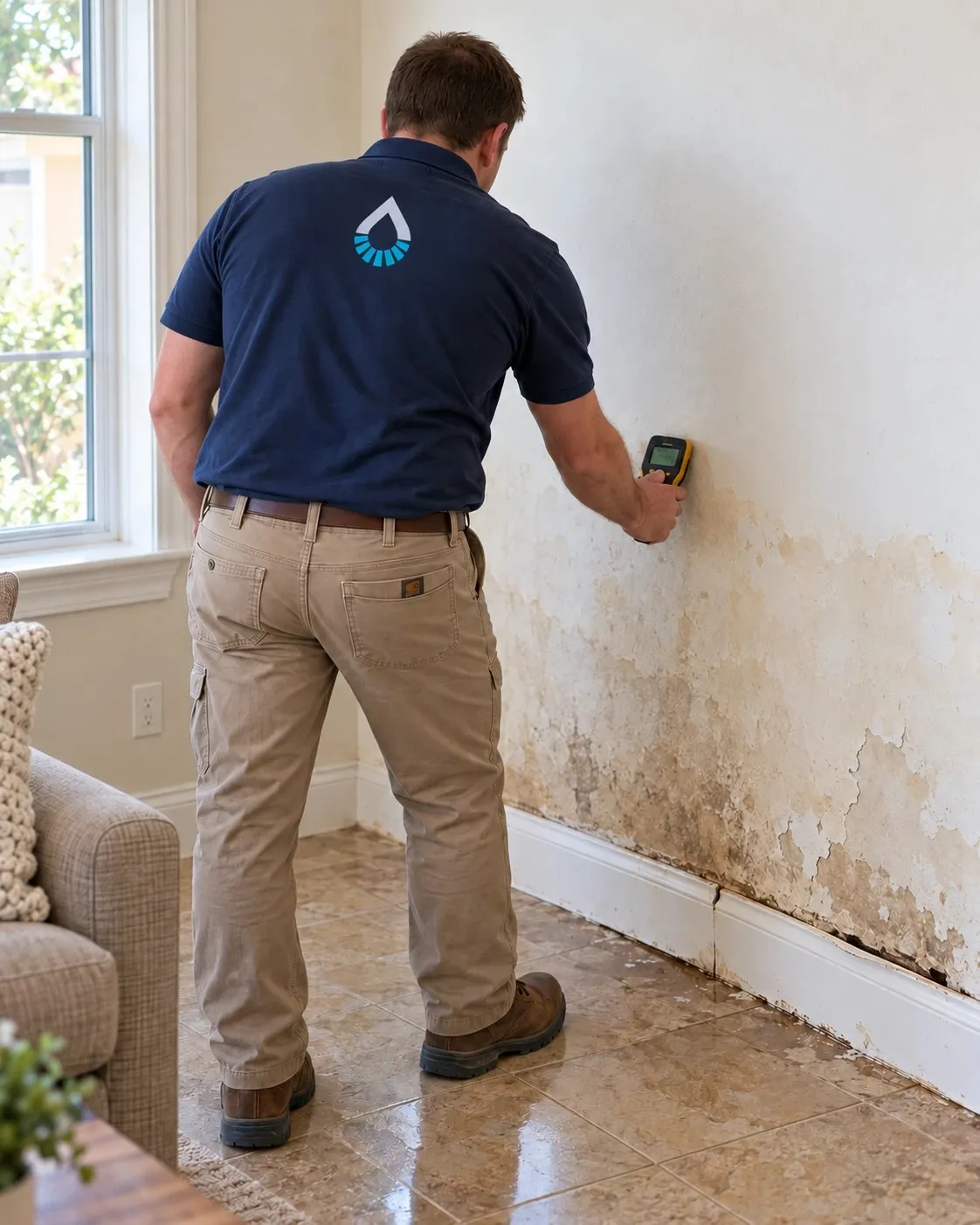
- Measure moisture. A moisture meter shows how wet a wall, floor or cabinet is, even when it looks dry. Mapping these readings room by room is called moisture mapping.
- Dry the structure. Air movers (strong fans) and dehumidifiers dry the walls, floors and air. Sometimes wet drywall is cut open so the space behind it can dry.
- Repair. Once the readings show dry, damaged drywall, flooring and trim get repaired or replaced. This is the restoration part.
Who do you call first: a plumber or water damage help?
It depends on whether the water is still coming. If it is, close the main shut-off valve first; that stops the damage from growing while you make calls. A plumber fixes what failed: a burst pipe, a cracked supply line, a leaking water heater, a slab leak.
Water damage work is the next job: getting the standing water out, measuring how far it spread, and drying the floors, walls and cabinets. The two jobs often overlap. If water is on the floor or in the walls, call for drying help even before the plumber finishes, because the EPA says to dry wet areas within 24 to 48 hours to prevent mold growth.
A roof or an AC drain follows the same order: stop the source, then dry. The shut-off valve guide shows where your valve usually is, and emergency water extraction explains the first part of the drying work.
How do you find hidden water damage?
A moisture meter answers this. Walls, floors and cabinets can look dry on the surface and still hold water behind them. A technician takes readings with the meter, then records the numbers room by room on a moisture map, so the drying is measured instead of guessed.
Common hiding spots: under the baseboards, inside wall cavities, under the flooring, inside the cabinet base, and in the ceiling below a bathroom or laundry room. Thermal cameras can point to cool spots behind tile and stucco, which the meter then confirms. Before anyone arrives, feel for soft spots in the floor and look for dark or swollen baseboards.
Water from a slow drip can travel well away from where it started before it shows. The structural drying page shows how the readings work.
What should you move out of the way first?
Start with the things water ruins fastest: electronics, papers, medicine, art, area rugs, and anything sitting on the floor. Lift wood furniture onto foil or blocks so the legs do not stain wet carpet. Take photos before you move anything, because your insurer may ask what was where.
Do not carry heavy furniture alone, and do not walk back into a room if the water might be near outlets or appliances. Rugs and upholstery can often be saved when they get dried quickly, so do not bag anything that looks ruined until someone has looked at it. Once the urgent items are out, leave the heavy pieces where they are until the drying starts.
Can you stay in your home while it dries?
Often, yes. Drying equipment is loud, and the rooms being dried should stay off limits while it runs. Expect air movers and dehumidifiers running day and night, and keep children and pets out of the work area.
The exceptions: after a sewage backup or flood water, or when a room cannot be made safe, the area, or the home, may need to stay empty until the water is out. Keep outside doors and windows closed while the equipment runs, because dehumidifiers dry a closed room faster. Ask each morning what has changed.
If anyone in the home has asthma or allergies, say so on the first call, since it changes how the work areas are separated from the rest of the house.
How long does water damage drying take?
Plan on days, not hours. Restoration companies commonly quote 3 to 5 days for most homes, with the right number of air movers and dehumidifiers, and heavier materials like wet hardwood or plaster can take longer. The clock is not the rule; the readings are.
A proper drying job records moisture readings every day and stops when those readings reach the dry standard for each material, the approach the industry’s S500 standard spells out. Dry means the numbers say dry, not that it looks dry. The EPA notes that more air movement and a higher temperature speed up drying; how far to push that is decided on site, based on the materials.
What happens if wet drywall is left alone?
Nothing good, and almost all of it happens out of sight. The EPA says to dry wet materials within 24 to 48 hours to prevent mold growth, and water trapped inside a wall easily misses that window. It softens drywall and trim, rusts fasteners, and can start rot in the framing over the following weeks.
The first visible signs are a musty smell, bubbling paint, or a baseboard that swells and separates. By the time a stain reaches the surface, the moisture has usually been there a while. That is why the fix is measurements, not looks: a meter reads inside the cavity, and air movers plus a dehumidifier dry it on purpose.
If mold has already grown inside, drying alone is not enough and the affected material usually has to come out. See mold remediation for that path.
Which belongings can be saved after water damage?
Often more than you would think, if the drying starts quickly. Hard surfaces like tile, countertops, metal and glass clean up well. Clothing, bedding and towels that got clean water usually come through a prompt wash.
Solid wood furniture usually dries well with care, though veneer can lift if it dries unevenly. These are usually lost: carpet pad, soaked particle board, wet drywall and insulation, and anything porous that sat in contaminated water. The category of the water matters here.
Clean water from a supply line is a different job than a sewage backup, where porous items the sewage touched are usually thrown out. When in doubt, do not throw items out before your insurer has seen them, and photograph them first.
Can wet carpet be dried, or does it have to come out?
It depends on the water and the clock. With clean water, like a broken supply line, the EPA’s cleanup steps say wet carpet can be dried: remove the water with a water extraction vacuum, lower the humidity with a dehumidifier, and speed up drying with fans, within 24 to 48 hours. With dirty water, like a washer overflow or a sewage backup, the industry’s S500 standard says the contamination gets removed before any drying starts.
The pad underneath is the weak point. It holds water out of sight, and a soaked pad may have to come out even when the carpet on top can stay. The subfloor below must be cleaned and dried too, the EPA adds.
If mold has already grown, the EPA says porous materials like carpet may have to be thrown away. Flooded carpet drying breaks down each case.
How do you document water damage for insurance?
Treat the first hour like evidence gathering. Photograph the source, the water line on the walls, and every damaged item before anything moves. Take a short video walking through the rooms.
Keep a list of what is wet and where things were moved. Put damaged materials in a pile outside the wet area instead of throwing them out, at least until the adjuster has seen them. Save receipts for hotel nights, fans, or rented equipment.
The Insurance Information Institute (Triple-I) lists accidental discharge or overflow of water from a plumbing system among the perils standard homeowners policies cover, and says flood damage needs a separate flood policy. More in does homeowners insurance cover water damage.
The water bill jumped but nothing looks wet. Where is it going?
Start at the meter. Turn off every fixture and appliance, including the irrigation, then watch the small leak dial. If it moves, water is escaping somewhere.
Common culprits in a Scottsdale home: a toilet flapper that never seats, an irrigation line leaking under the yard, a pool auto-fill valve that stopped closing, and a slab leak under the floor. The City of Scottsdale says the largest leaks can happen outdoors and go unseen, and its free WaterSmart portal sends leak alerts based on hourly water use. A plumber fixes the leak; drying comes next once the water is stopped, because a slab leak can wet the concrete and the flooring above it for weeks before anyone sees it.
The slab leak and burst pipe page covers both steps.
Why do AC drain lines cause water damage in Scottsdale?
Because the AC runs for so much of the year. The National Weather Service counts an average of 111 days a year at or above 100 degrees in Phoenix, and the last 100 degree day comes around October 5 on average, so most Scottsdale systems work hard from May into October. An air conditioner pulls water out of the air and sends it down a condensate drain line.
When that line clogs, the water backs up into the drain pan and spills over, often in an attic or a closet where nobody sees it. The ENERGY STAR maintenance checklist warns that a plugged drain can cause water damage in the house and affect indoor humidity levels. The first signs are usually a ceiling stain under the air handler, a damp closet floor, or a musty smell.
Have the drain line checked before summer. If a stain is already there, ceiling water damage: what to do covers the next steps.
Does Scottsdale’s hard water shorten a water heater’s life?
It can wear one down faster. The City’s 2026 Water Quality Report puts Scottsdale water at about 13 to 17 grains per gallon of hardness (215 to 290 mg/L), and the USGS calls water above 180 mg/L very hard. When hard water is heated, the USGS says, calcium carbonate deposits form, and that scale can reduce the life of equipment and lower the efficiency of electric water heaters.
A study by the Insurance Institute for Business and Home Safety (IBHS) found that the chance of a water heater leak or burst starts to rise sharply at 5 years old, and that sediment builds up faster where water is hard. The same study suggests flushing the tank every 6 months. The City advises setting the water heater to 120 to 125 degrees.
Hardness is not a health concern, the City says; it is a wear concern. More causes are in what causes water damage in Scottsdale.
How do you protect a Scottsdale home you leave for the summer?
Plan for a leak that nobody sees for weeks. Close the main shut-off valve before you leave. If the irrigation or a pool auto-fill runs off the same line, ask a plumber how to keep those running with the house side shut.
Have the AC drain line checked before you go, since the AC keeps running through the hottest months. Ask someone to walk through the house every week or two and look under the sinks, around the water heater, and at the ceilings below the AC. Scottsdale Water customers can sign up for the City’s free WaterSmart portal, which sends leak alerts based on hourly water use, so a running toilet or a broken line gets noticed even when the house is empty.
A leak that sits for a month in a closed, hot house is how a small repair turns into mold remediation.