The truck pulled away, the walls are back, the paint is dry. Then the invoice shows up, and it is addressed to you. Not the carrier. You. You thought the company was handling the claim. They thought you were paying for the work. Somewhere between those two thoughts, the billing question nobody answered got answered the expensive way.
This happens in Scottsdale constantly, and it is rarely an accident. It is a known pattern in the water damage trade, and once you see how it works, you can stop it before it starts.
The promise nobody put in writing
It usually begins with the words every homeowner wants to hear in the middle of a ceiling collapse. “We handle insurance.” “We work with your carrier.” “You will not pay a thing.” The company shows up fast, gets the water out, and everyone feels saved.
Then the weeks pass. The adjuster wants documents. The carrier has questions. The company gets busy with the next monsoon. And the bill, the one that was supposed to go to the carrier, lands in your mailbox with your name on it. The promise was real. The paperwork behind it was not.
The mechanism is simple, and it is worth understanding before the next storm. A restoration company has a contract with whoever signs for the work. That is almost always you. The carrier never signed anything. A company cannot bill a carrier it has no agreement with, and saying “we handle insurance” is not a billing agreement. It is a sales line. Direct billing happens only when the adjuster approves the scope and the carrier agrees, in writing, to pay the company directly. If that never happened, the bill is yours, and the company will point to the signature page to prove it.
How the dance works
The trade has a name for this. It is the insurance dance, and it has a choreography.
Step one, the company overpromises. Handling the claim sounds like a favor. It is also the hook that gets the signature while you are standing in water. Step two, the company under-documents. Walls get opened before anything is photographed, because documentation slows down a crew that has another call waiting. Step three, the claim comes back short. The carrier pays for what it can verify, and unphotographed damage is not verifiable. Step four, the gap lands on you. The company bills you for the difference between its invoice and what the carrier actually paid, and the promise from day one is suddenly nobody’s memory.
Kickbacks sit at the edges of the same dance. A plumber finds the leak, recommends one restoration firm, and leaves. The homeowner never learns that the recommendation came with an understanding. The plumber’s recommendation is not a quality signal. It is a lead, and sometimes a paid one.
Then there is the contents problem. Belongings get packed out and never inventoried. Six months later you cannot prove what was damaged, the carrier cannot pay for what was not listed, and the company’s invoice still has every line item on it. The claim shrinks. The bill does not.
See the full breakdown of how this plays out in our insurance claim vs paying out of pocket page.
Why Scottsdale makes the dance easy
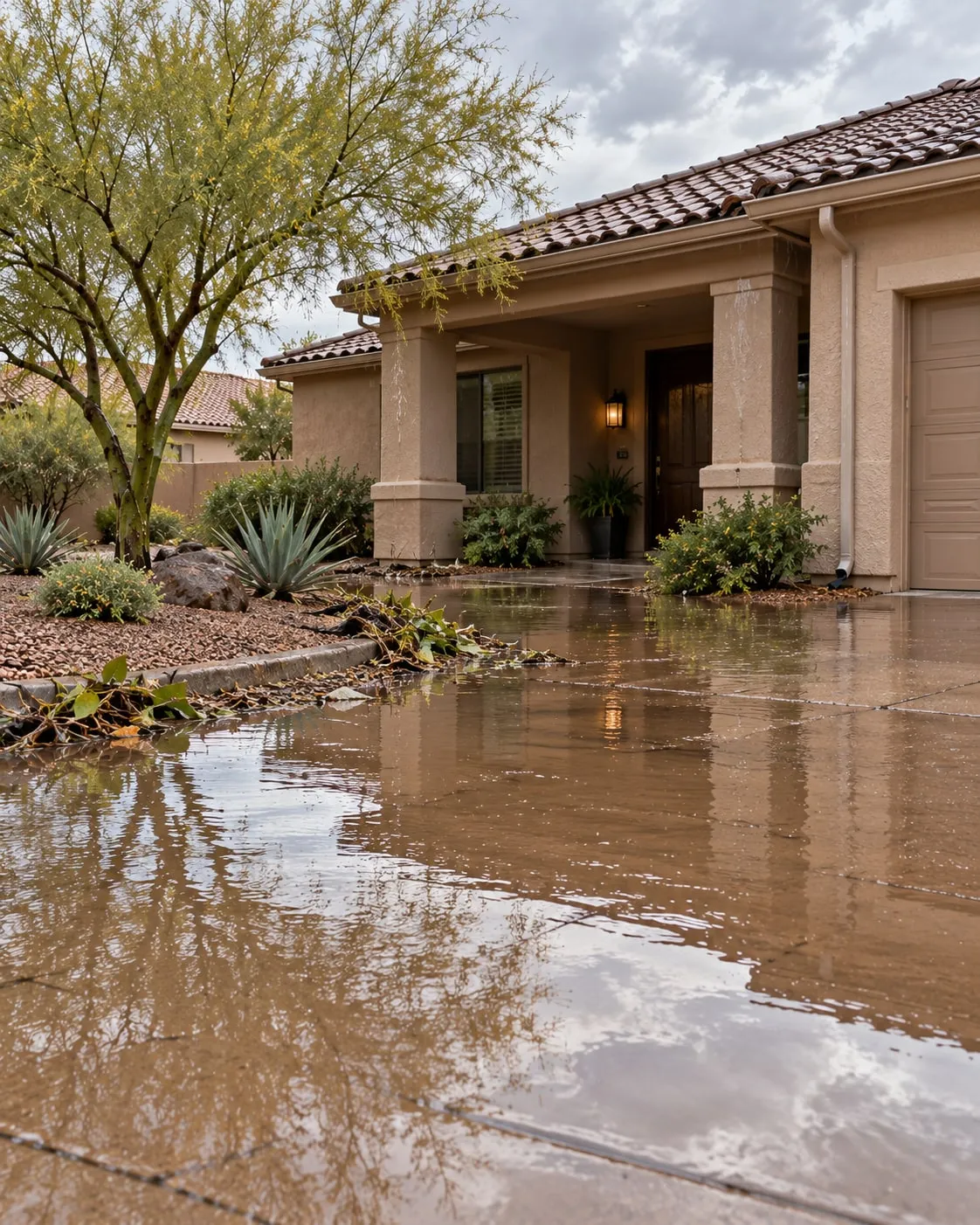
Scottsdale hands this pattern a natural stage. The storm season is compressed. Monsoon storms from July through September hit fast, and in the first week of a bad stretch, every restoration company in the Valley is busy. Speed becomes the sales pitch, and speed is exactly what the dance needs, because nobody reads the paperwork while the ceiling is on the floor.
Second homes make it worse. A house in DC Ranch or Carefree that sat empty through a monsoon week is often dealt with by phone from another state. The owner never meets the company, never walks the wet rooms, never sees what got opened before the photos were taken. An absentee claim is the softest target the dance has.
What to check before work starts
None of this requires you to become an adjuster. Four checks cover most of it.
Who bills whom, in writing. Before the first fan starts, ask for one sentence: who pays this invoice, and who signed what. If the answer is “the carrier will pay,” ask where the carrier agreed to that in writing. If the agreement does not exist, you are the payer, and you should know that on day one, not day sixty.
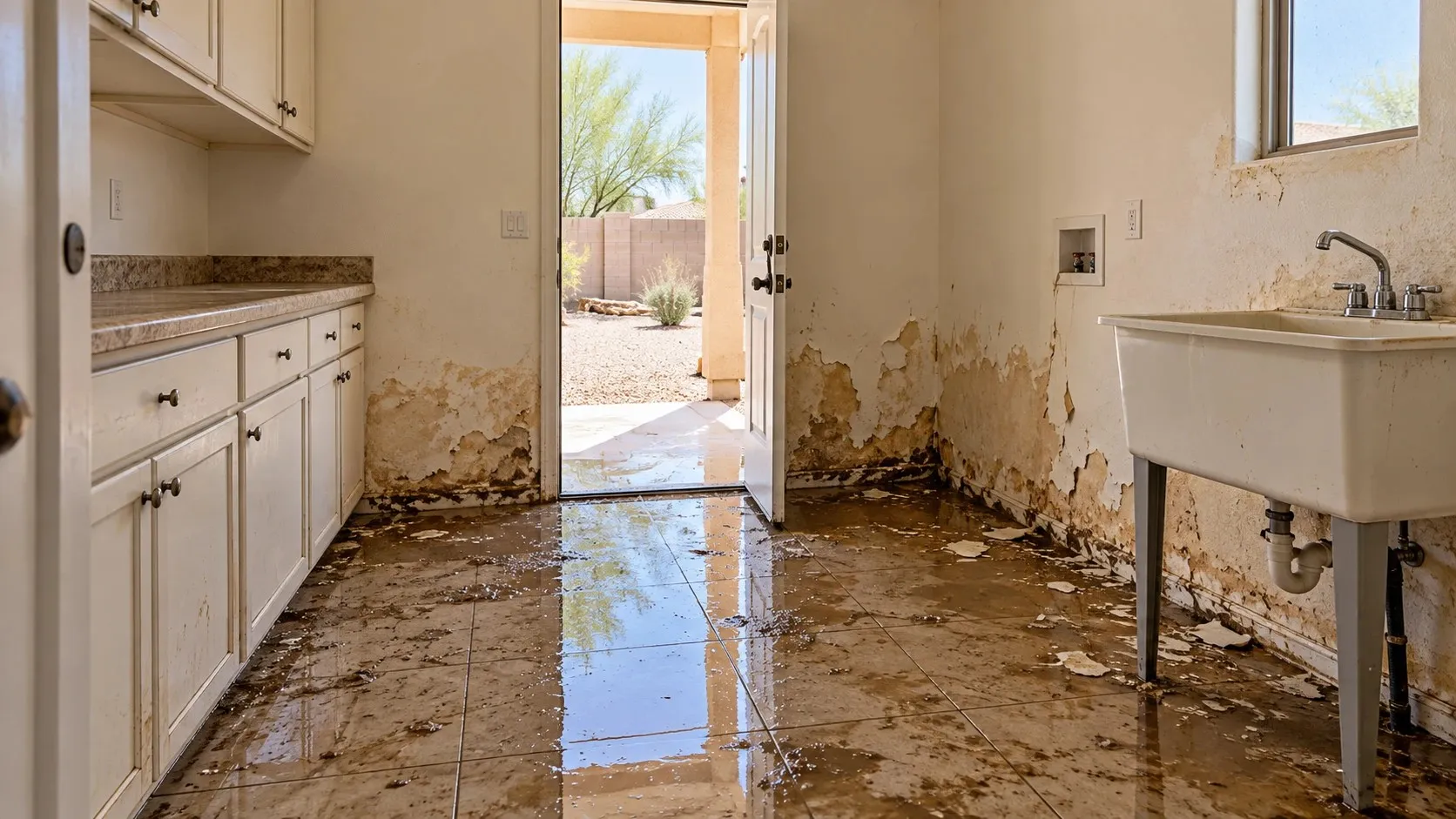
Photos before demolition. Walls opened before anything is photographed weaken a claim, because the damage becomes the company’s word. Insist on photos of the wet areas, the readings, and the source, before the saw comes out.
The two scopes. The adjuster will write a scope. The company will write a scope. They should be read side by side, line by line, before work starts. What the adjuster did not include is what the company will bill you for. That gap is the dance floor.
The contents list. Anything packed out gets written down, room by room. An inventory done in the first week is worth more than one reconstructed in month six.
If the company will not put who-bills-whom in writing, that is your answer about how the job will end. Our complaints policy explains what happens when a company does not hold up its end.
What the bill actually pays for
The invoice itself is worth reading once, because the water damage restoration cost hides in plain sight. Mitigation is one scope, the emergency extraction and drying. Restoration is another, the rebuild. The water category changes what gets thrown out, see category 1 vs category 2 water. A bill that does not separate these things, that does not list what was removed and why, is a bill designed to survive a quick look, not a careful one.
What good work looks like in Scottsdale
Good work puts the billing arrangement in writing before work starts, documents before it demolishes, and separates the two scopes on paper. The claim gets walked through step by step, so you are never signing something you only half read.
If a company already billed you and the carrier never paid a cent of it, call (480) 386-9277 and tell us what the invoice says and what the carrier said. Someone from the team will call you back to go over who should have paid what, and whether the paperwork can still be fixed.
If the ceiling is down right now and a company is in the driveway, call (480) 386-9277 before anything gets signed.