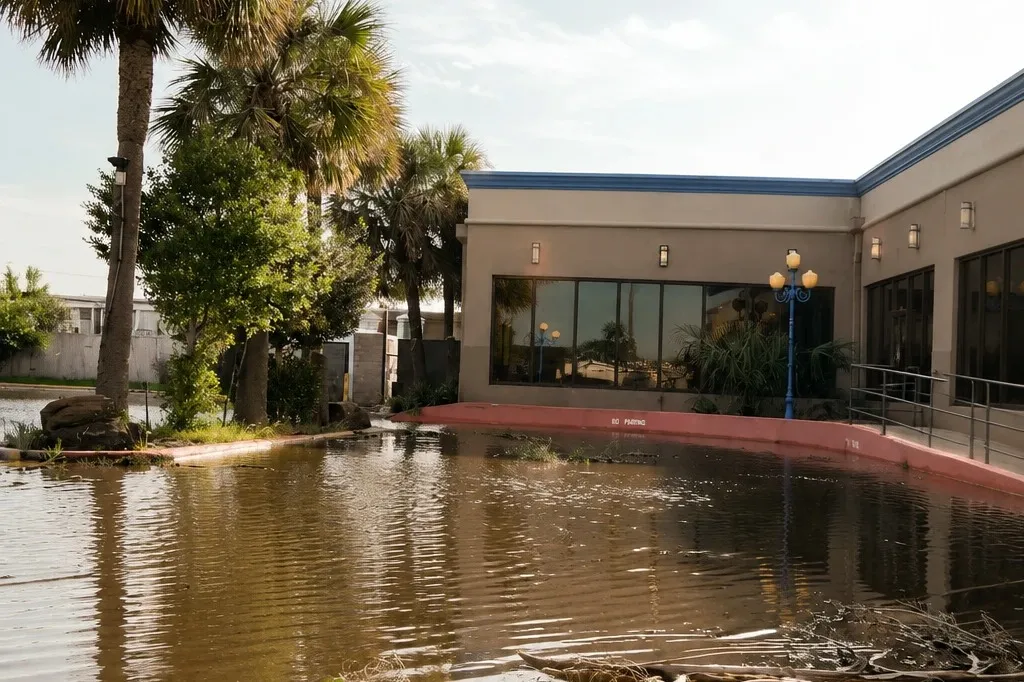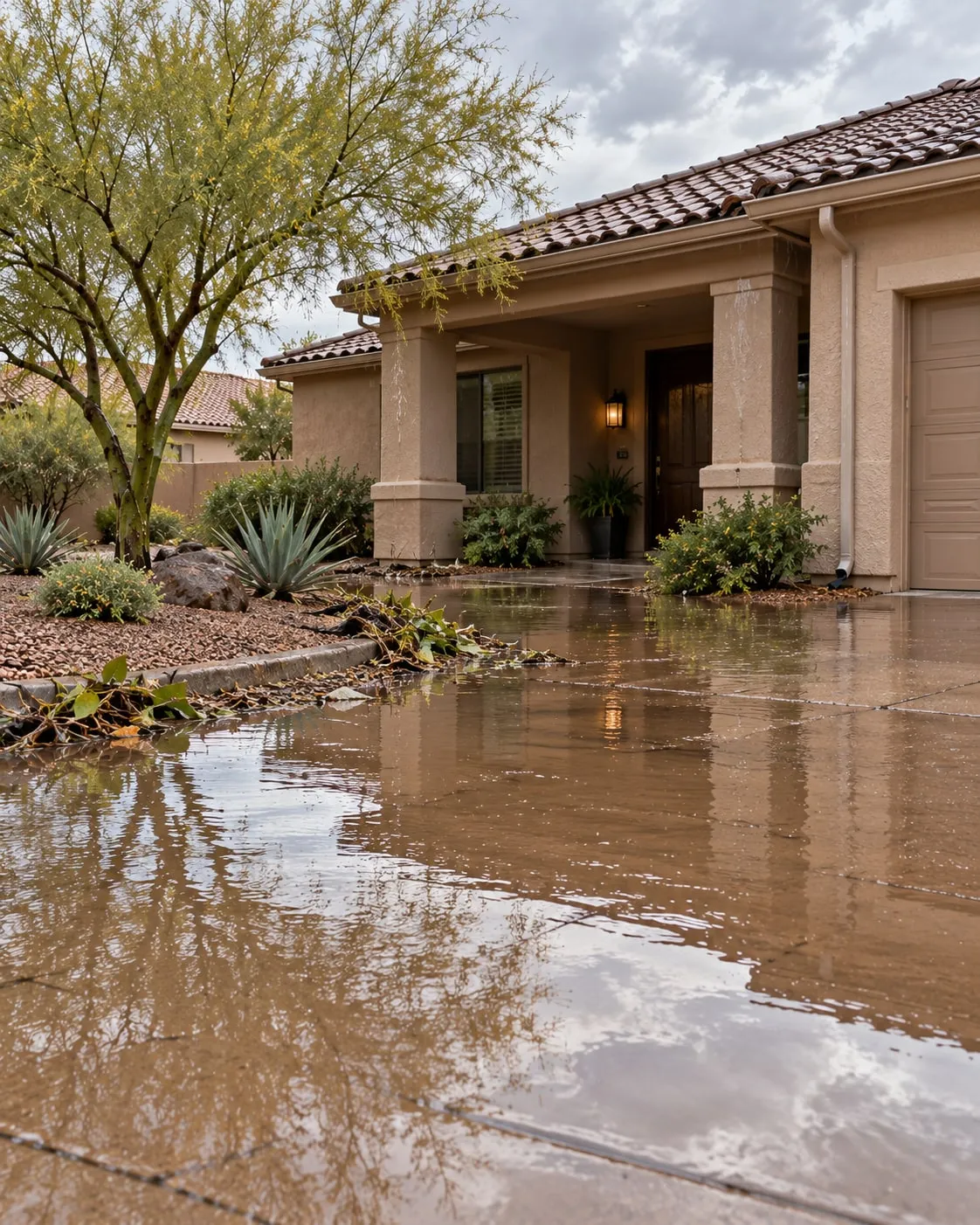
A claim means the carrier pays for covered damage, minus your deductible. Out of pocket means you pay the restoration company directly. In Scottsdale, the right answer depends on the size of the loss, the deductible, and who bills whom.
The short answer
Big losses, claims. Small losses, cash. But the water business has a habit of blurring that line, because a company that would rather bill you than deal with an adjuster will steer you toward your own checkbook. The right choice depends on the damage, the policy, and the state of the walls.
An insurance claim: what it actually is
A claim is a contract with your carrier. You report the loss, an adjuster sets a scope, and the carrier pays for covered work up to the policy limits, minus the deductible. The paperwork is the price of admission: photos, readings, a scope, receipts. Done properly, a claim means the financial pain is the deductible, not the whole rebuild. The deductible is the part that stays yours no matter what, and it is the number the whole decision hinges on.
The mechanics matter. The carrier pays for work that is covered and documented. Undocumented demolition weakens a claim, because once the wall is open and the board is in the dumpster, the adjuster has only the company’s word for what was wet. That is why photos come before the saw. The adjuster is a professional reader of scopes, and the scope is a document. The more of the loss that is documented with photos and readings, the more of the scope gets approved. A claim that arrives as a story instead of a file gets paid as a story, partially.
Paying out of pocket: what it actually is
Out of pocket means you are the payer, the project manager, and the adjuster, all at once. You approve the scope, you watch the work, and you write the checks. For a small loss, under or near the deductible, it is often the simpler path. No claim on the record, no adjuster on the phone.
The risk is that you are the only one watching. There is no carrier checking whether the drying ran long enough, whether the category was named right, whether the scope matches the damage. If the equipment leaves early, nobody catches it but you. See water mitigation vs restoration for what the drying actually needs to be. On a loss with a slab involved, you are also paying for drying time you cannot verify, and that is the line that grows fastest when nobody checks the readings.
Where a claim fails here
Scottsdale is the insurance dance. A restoration company bills the homeowner instead of the carrier, or promises to handle the claim and then does not. The promise is the trap: handling the claim is the adjuster’s job, and a company that says it will take care of everything is often just taking care of its own billing. The full writeup is in why a restoration company bills you, not your insurer.
The dance has backup dancers. Demolition without documentation, walls opened before anything is photographed, weakens the claim before it is filed. Contents get packed out and never inventoried, and the loss grows things you cannot prove later. Kickbacks lurk too: a plumber refers one restoration firm, and the homeowner never learns why. Sequencing matters too. A company that starts demolition before the claim is opened burns the evidence, and the carrier’s answer to missing evidence is a smaller scope. Homeowners who skip the paperwork to save time convert claim money into their own bill.
Where out of pocket fails here
You pay out of pocket and the same shortcuts find you. Drying that stops too early, because nobody is auditing the readings. Mold quotes that swing wildly for the same room, because you cannot tell what is being priced. A company that bills you for restoration while the walls are still wet. Paying cash does not protect you from any of it. It just means the mistake is fully yours. The kickback problem does not care how you pay, either. A plumber who sends a restoration firm your way for a reason you were never told has priced that reason into your invoice, whether the carrier sees it or not. Cash buyers get every one of these failures and nobody auditing the work.
Second homes make it worse. A loss in an empty DC Ranch house is often discovered late, which means more damage, which means the out of pocket number is bigger than the deductible was ever going to be. And a house in Carefree with a flat roof ponding through a monsoon is not a small loss, however small the stain looks.
What it costs and what drives the number
The claim path costs you the deductible plus whatever the adjuster does not cover. The cash path costs you the whole job. Where the two cross depends on the size of the loss and the restoration cost itself, and that varies with the water category, the square footage, and the drying time. The rule of thumb: if the honest estimate is well above the deductible, the claim is usually the answer. The deductible is the known cost of the claim path, and it is usually the cheapest line on the whole job. What makes the cash path expensive is not the materials. It is paying for scope mistakes and short drying that a carrier audit would have caught.
What good work looks like in Scottsdale
- Who bills whom is in writing before work starts, every time.
- Everything gets photographed before anything moves, because documentation is the claim.
- The adjuster’s scope gets read against the company’s scope, line by line.
- Companies that dance are a warning sign. The home page has the whole approach.
A company that wants your checkbook before it wants your adjuster, a quote that arrived without a scope, a second home with a ceiling down in September. Call (480) 386-9277 and tell us where you are in the mess, or read our complaints policy if a company already took the money and went quiet.
Know who pays before the first fan starts. Call (480) 386-9277.