Monsoon storms do not give much warning, and the National Weather Service dates the season from June 15 to September 30. Here is the checklist, in the order it should be done.
Before the season starts
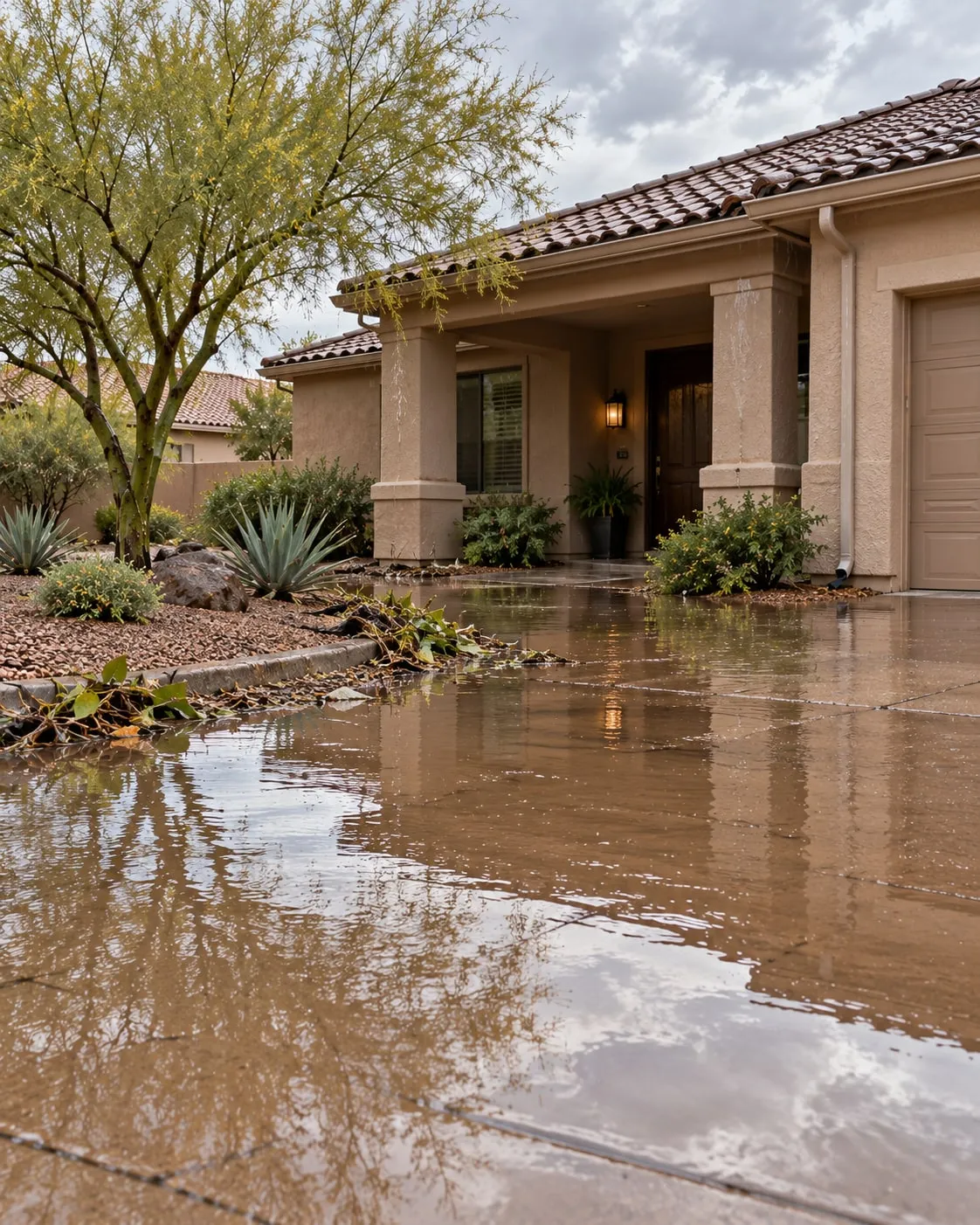
Check the roof, clear the gutters and scuppers, make sure the ground slopes away from the house, and photograph the outside of your home. Three things to watch: a blocked drain path, loose objects in the yard, and a roof detail that was already failing.
The roof. Walk it or have it looked at. Look for cracked or lifted flashing, worn sealant around vents, and tiles or shingles that have moved. An IBHS study suggests a professional roof inspection every year, with a report on the flashing, the roof covering, parapets and the drainage system. It says repairs are needed if pooling water is present.
Flat roofs. Many drain through scuppers, the openings at the roof edge that let water run off. Rosie Romero, host of Rosie on the House, said in a 2018 KTAR article that it does not take much leaf debris to clog a scupper. He said pooled water can get in through bath or kitchen exhaust fans or a plumbing vent pipe connection.
Gutters and downspouts. Clean them, and check just as closely where the water comes out. A downspout that empties against the house can become a wall leak in the first big storm.
The grade. Soil should fall away from the slab, not toward it. The Arizona Geological Survey notes that some clay soils swell when wet, using a monsoon storm as its example, and shrink in summer heat. Its advice is to water less around your home’s foundation.
Drains and openings. Test the yard drains. Look at the door thresholds and the weep screed, the metal strip at the bottom of a stucco wall, and reseal what has opened up.
Photos. Photograph the outside of the house now. That gives you a baseline if you ever need to show your insurer what changed.
Before the storm arrives
Secure anything that can blow around, charge your phones, move valuables off the floor, and know where your water shutoff and electrical panel are.
- Secure loose items. Patio furniture, umbrellas, planters, pool equipment covers, trash bins and toys can all become projectiles. Move what you can into the garage.
- Charge up. Charge phones and power banks, and put a flashlight where you can find it in the dark.
- Lift what matters. Move documents, electronics and anything you cannot replace off the floor and away from windows.
- Know your shutoffs. A storm is exactly when you will not want to be looking for the main water valve or the breaker panel. The guide on how to shut off your water in an emergency shows where to look.
- Check any drainage equipment. If your property relies on a pump or other equipment to move water off the lot, make sure it runs, and check any backup battery.
During the storm
Stay off the roads, stay away from washes, and watch the usual entry points for water.
Never drive into a flooded wash or across running water. Ready.gov says not to walk, swim or drive through flood waters. The National Weather Service warns that it is particularly dangerous to be in a low-lying area or near a wash.
Inside the house:
- Close the doors and windows, and keep away from glass.
- If the power fails, unplug sensitive electronics.
- Watch for water coming in at door thresholds, at the base of exterior walls, at the weep screed, around windows, and at the ceiling near the AC unit.
If water starts coming in, photograph it right away. Where it came from and how much came in both matter when you talk to your insurer.
If water gets in during the storm
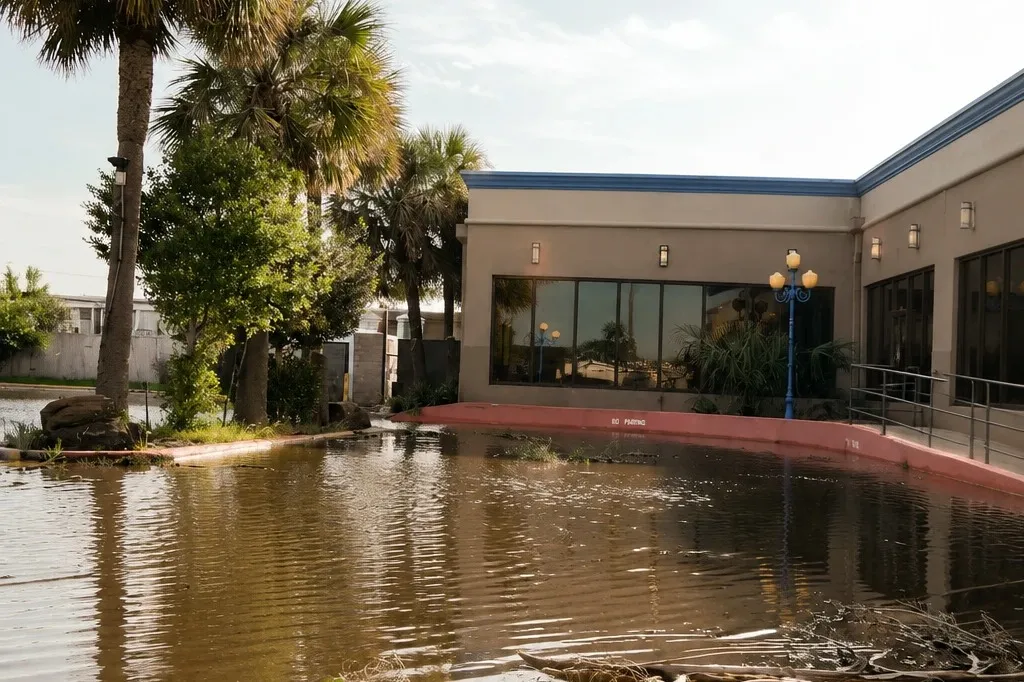
Stop the water if the source is a supply line. If it came in from outside, treat it as dirty water, keep away from wet outlets, and start drying once the storm passes.
Know where the water came from. Water from a broken supply line is usually treated as clean. Water that rose or ran in from outside is a different case. Ready.gov warns that floodwater can be contaminated and contain dangerous debris. The industry’s S500 standard calls rising water from rivers or streams grossly contaminated, its highest category. Rain that comes in through a roof is not automatically put in that class.
Stay safe around power. Do not wade into a room where water could reach outlets or cords. Turn off the electricity only if it is safe to do so.
Lift what you can. Move rugs, electronics and furniture off the wet floor. Porous materials that soaked up dirty water may have to come out rather than be dried in place.
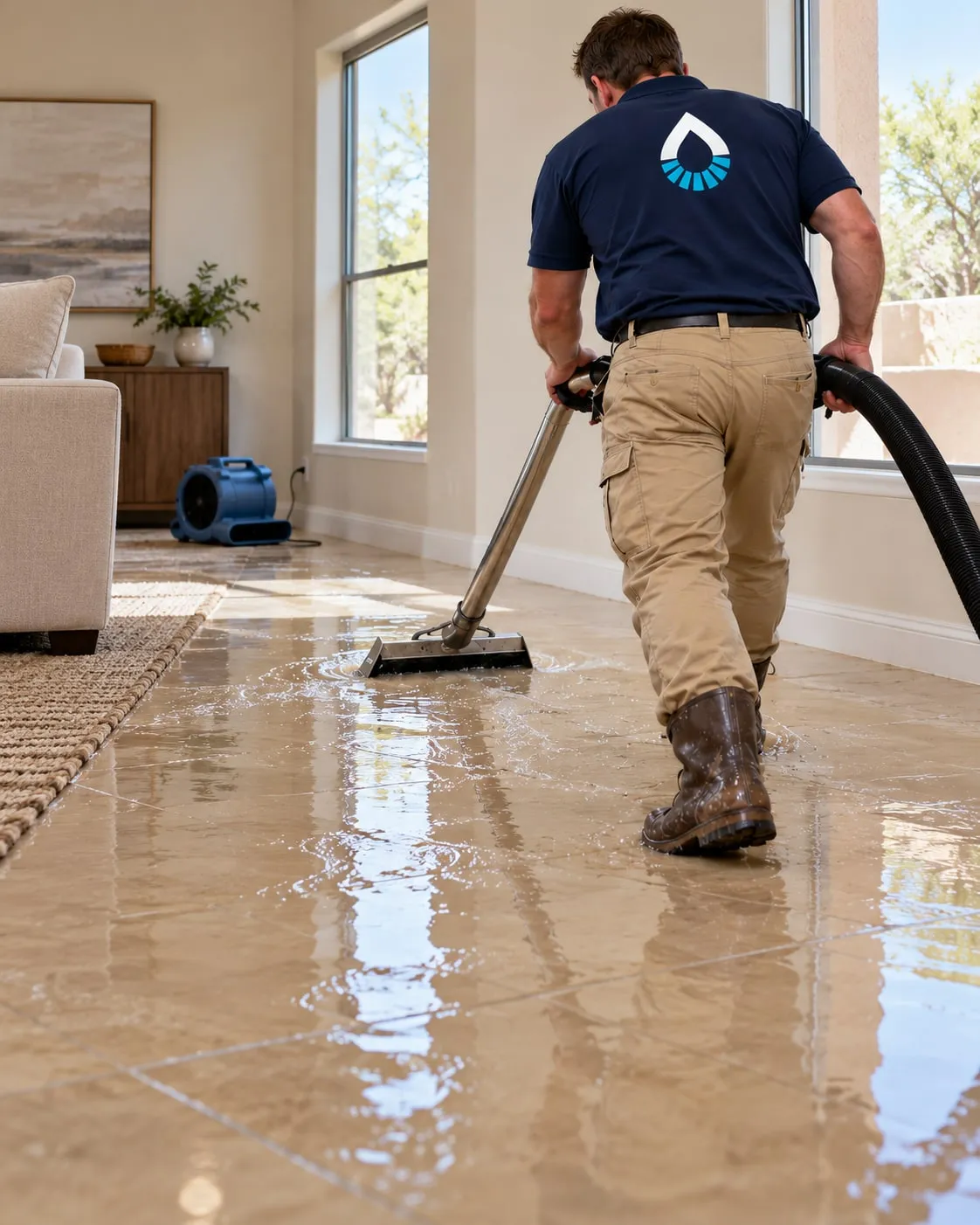
Do not wait for it to dry on its own. The EPA says to dry water-damaged areas and items within 24 to 48 hours to prevent mold growth. Once the storm passes, call about the wet rooms.
If the water is coming through the ceiling, read what to do about ceiling water damage.
After the storm
Look for damage from a safe distance, photograph everything before you clean, report the damage to your insurer, and get the wet areas measured.
- Look from a safe distance first. Check the roof from the ground, with binoculars if you have them, before anyone climbs.
- Photograph and video everything before you move or clean anything, from the water line on a wall to the debris outside.
- Tarp an opening only if it can be done safely.
- Report the damage early. Call your insurer or agent, even if you are not sure it is covered, and ask what your policy covers.
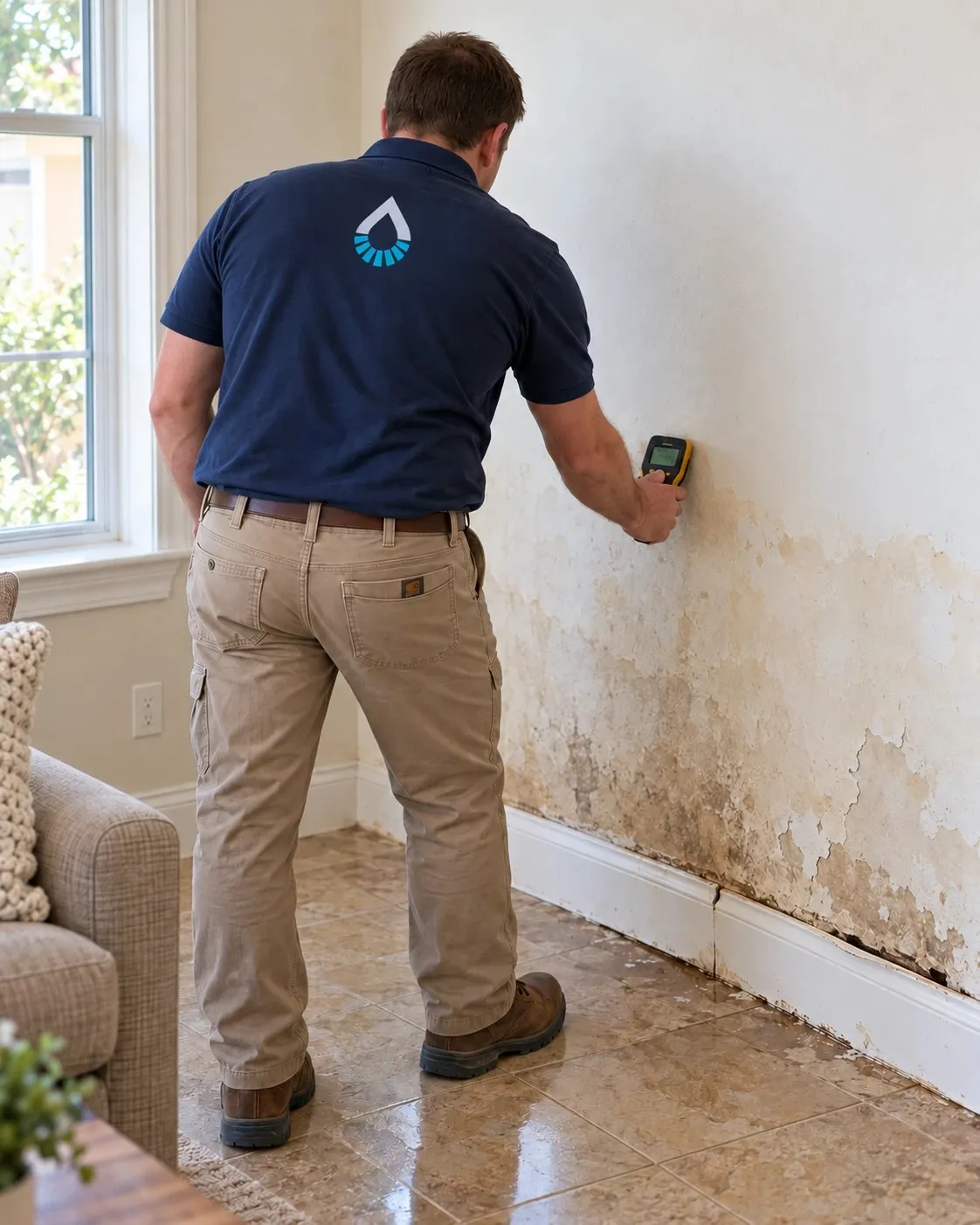
- Get the wet areas measured. Moisture readings show how far the water spread inside walls and under floors. That gives you and your insurer a record of what got wet.
See how flood and storm damage cleanup works, from removing mud and water to drying the structure.
What insurance may cover, and what it usually does not
It depends on your policy and the cause, and your insurer decides. Flood damage is excluded under standard homeowners policies, so water that rose or ran in from outside usually needs a separate flood policy.
What Triple-I, the Insurance Information Institute, says:
- Plumbing leaks. Water that leaks or overflows by accident from a plumbing system is among the perils homeowners policies cover.
- Flood. Flood damage is excluded under standard homeowners and renters policies.
- Sewer backup. A sewer backup is not covered under a typical homeowners policy, and flood insurance does not cover it either.
FEMA’s flood insurance program also says most homeowners and renters policies do not cover flood damage.
Wind and roof damage are a separate question. Ask your insurer how your policy treats them. Check the actual policy wording before the season, not after, so you know which kind of event you are dealing with. The guide does homeowners insurance cover water damage goes into more detail.
Keep this list where you can find it
Print this checklist and keep it in a drawer, not only on a phone that might be dead when the power is out.
A checklist is most useful when you are not thinking clearly. Next season starts June 15. Do the roof and drainage checks in the spring, and keep the storm steps on paper.
If storm water gets inside, take photos, stay away from wet outlets and call about the wet rooms.