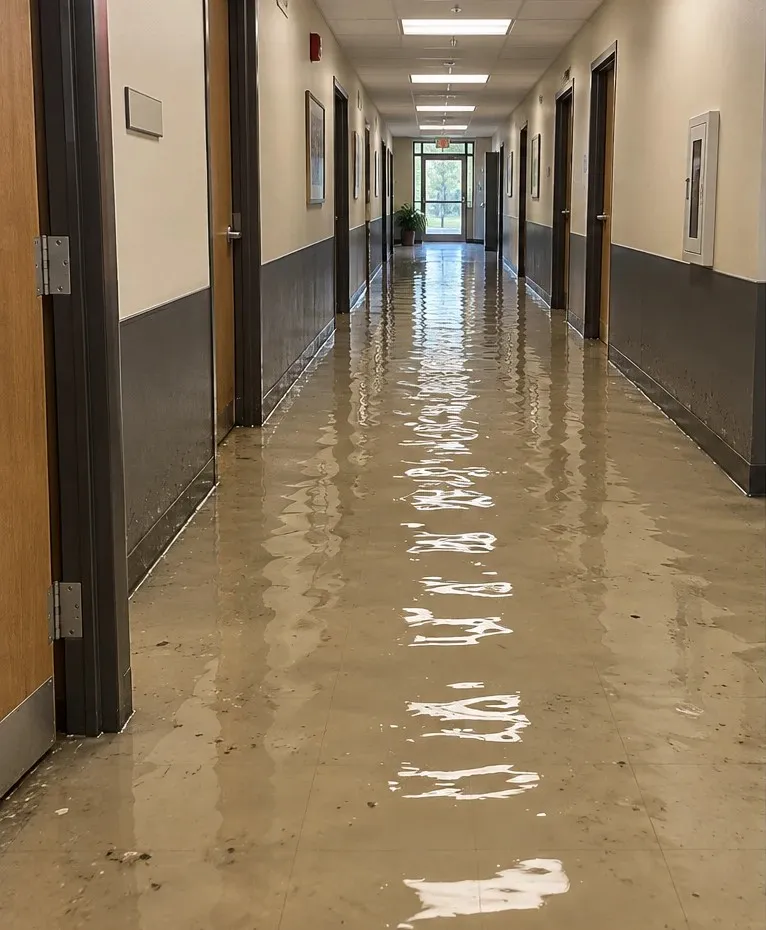
Repair means drying the floor in place and fixing what can be saved. Replace means pulling the flooring out and putting new down. On a Scottsdale slab, the concrete underneath usually makes the decision for you.
The short answer
Carpet and pad usually come out. Tile can often stay if the slab dries. Engineered wood and laminate rarely forgive a soaking. The right call depends on the flooring type, the slab, and how long the water sat, and in a monsoon house the water often traveled further than the wet spot suggests.
Repair: what it actually is
Repair is dry in place. Extraction, then mat systems or targeted equipment that pull moisture out through the flooring, then a refinish or a patch where the surface took damage. For tile over a slab, this can work well: the tile does not absorb much, and once the slab reads dry, the floor is back to normal.
The limit is the material. Wood that cupped will not un-cup. Carpet pad is a sponge that dries badly and holds contamination. Laminate swells at the seams and stays swollen. Repair only works where the material can actually return to what it was, and where the water was clean. See category 1 vs category 2 water for when clean is the deciding word. Carpet is the exception that proves the rule. The face of a carpet can dry while the pad underneath stays a wet sponge, and a dried sponge that once held gray water still holds what the water carried. Carpet repair almost always means pad replacement, and usually carpet too.
Replace: what it actually is
Replace means the floor comes out, the slab gets dried and read, and new flooring goes down. The access is the point. With the floor out, the slab is exposed and can be dried directly, and any water that ran under the baseboards and into the wall becomes visible instead of hidden. The order matters: floor out, slab dried to the standard, readings written down, then new floor. Skipping the middle step is the most expensive shortcut in the trade.
The risk sits at the end of the job: new flooring over a slab that never got dry. The slab releases moisture for weeks, and a new floor locks it in. That is how a fresh floor turns into a fresh problem. The same wet plate logic applies to walls, see drywall repair vs replace. The slab is the difference between flooring and every other surface in the house. Walls dry into the room. A slab dries in two directions, and the bottom half has nowhere to go, so it takes the longest. Every flooring decision in a Scottsdale slab house runs through that fact.
Where repair fails here
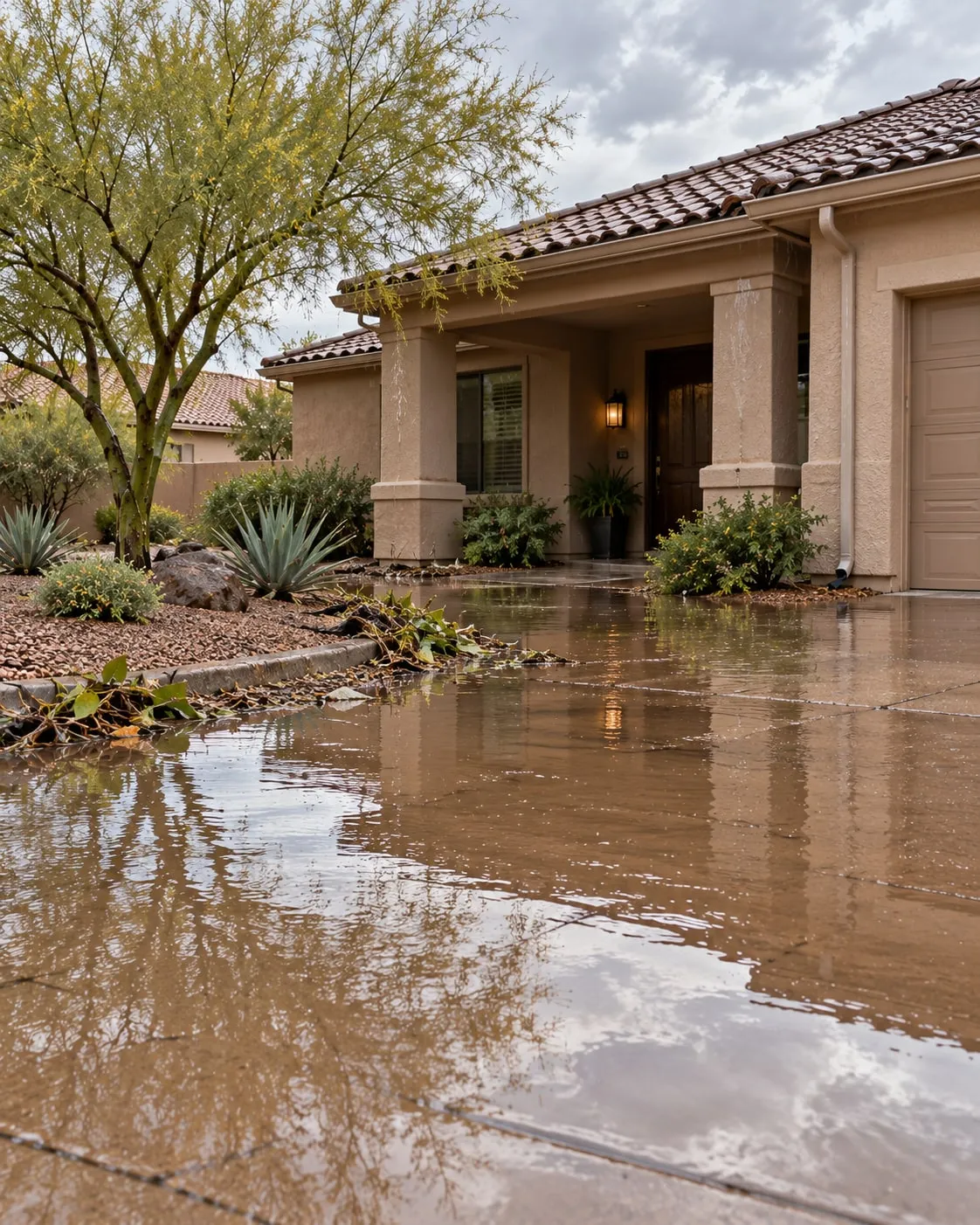
Scottsdale water does not stay in one room. Monsoon water that comes through a flat roof runs down inside walls and spreads under the flooring, and what looked like one wet corner is actually the whole room’s slab. Repair the corner and the rest keeps releasing moisture into the new patch.
The second failure is the clock. In a second home in DC Ranch or Carefree that sat empty through the storm season, the water had weeks under the floor before anyone found it. Cupped wood, swollen seams, adhesive that let go, by the time the door opens, repair is not a real option anymore. Monsoon water through a flat roof often hits the ceiling and the slab edge at the same time. Fix the ceiling, replace the floor, and the wall between them is still holding water. Repair versus replace is per surface, and each surface answers separately.
Where replace fails here
Replacement fails when the slab is not dry before the new floor lands. The old floor comes out, the slab is given days instead of weeks, and the new flooring goes down over moisture that has not finished leaving. In monsoon humidity, a slab takes longer to dry, not shorter.
The other failure is matching. Scottsdale homes run to higher-end finishes, and a replacement room that does not match the rest of the house is visible forever. Material that is backordered or discontinued turns a two-week floor into a two-month negotiation, and the whole restoration cost moves with it. High-end flooring in Scottsdale is often ordered, not stocked, and a room that has to match a discontinued plank sits torn out for weeks. The drying should use that time, not fight it.
What it costs and what drives the number
Repair is cheaper when it works, refinish and patch versus square footage of new material. Replacement moves with the flooring type, the square footage, and the drying time. The slab is the wild card: a slab that needs weeks of drying pushes both the price and the calendar, and in a monsoon year, weeks is the honest estimate, not the slow one. Ranges vary, and the honest number requires knowing what is under the floor, which requires the floor up. The material drives the flooring number more than the labor. Carpet is the cheap end and it comes out fast. Tile over a dry slab can cost nothing beyond the drying. Hardwood and stone replacement in a larger Scottsdale home is where the numbers get serious, and they vary with the room.
What good work looks like in Scottsdale
- The slab gets read before anyone recommends, and the readings go in writing.
- The slab dries before the new floor goes down, not after.
- Water under the flooring gets found before it gets covered. The playbook starts on the home page.
- Repair versus replace gets decided with the material, not the stain, doing the talking.
A floor that feels fine and smells wrong, a slab that is still cold weeks after the storm, a second home where the water had the whole monsoon to work. Call (480) 386-9277 and tell us what you are looking at, or see our complaints policy if a flooring job already went sideways.
Do not lay new floor over a slab that has not been read. Call (480) 386-9277 first.