Repair means patching, mudding, and painting the board you already have. Replace means cutting out the wet drywall and hanging new. If water touched it, the decision comes down to what a moisture meter says inside the wall.
The short answer
If the cavity is dry and the board is sound, a patch is a legitimate fix. If the drywall wicked water, the paper face is compromised, or the plate behind it is still wet, it comes out. The right call depends on the wall, the slab, and where the water came from, which in Scottsdale is usually a roof.
Drywall repair: what it actually is
Repair is surface work. Cut out the damaged section back to clean edges, screw in a patch, tape and mud the joints, sand, texture, paint. For a dent, a nail pop, or a small dry stain, it is fast and cheap, and the wall is as good as it was.
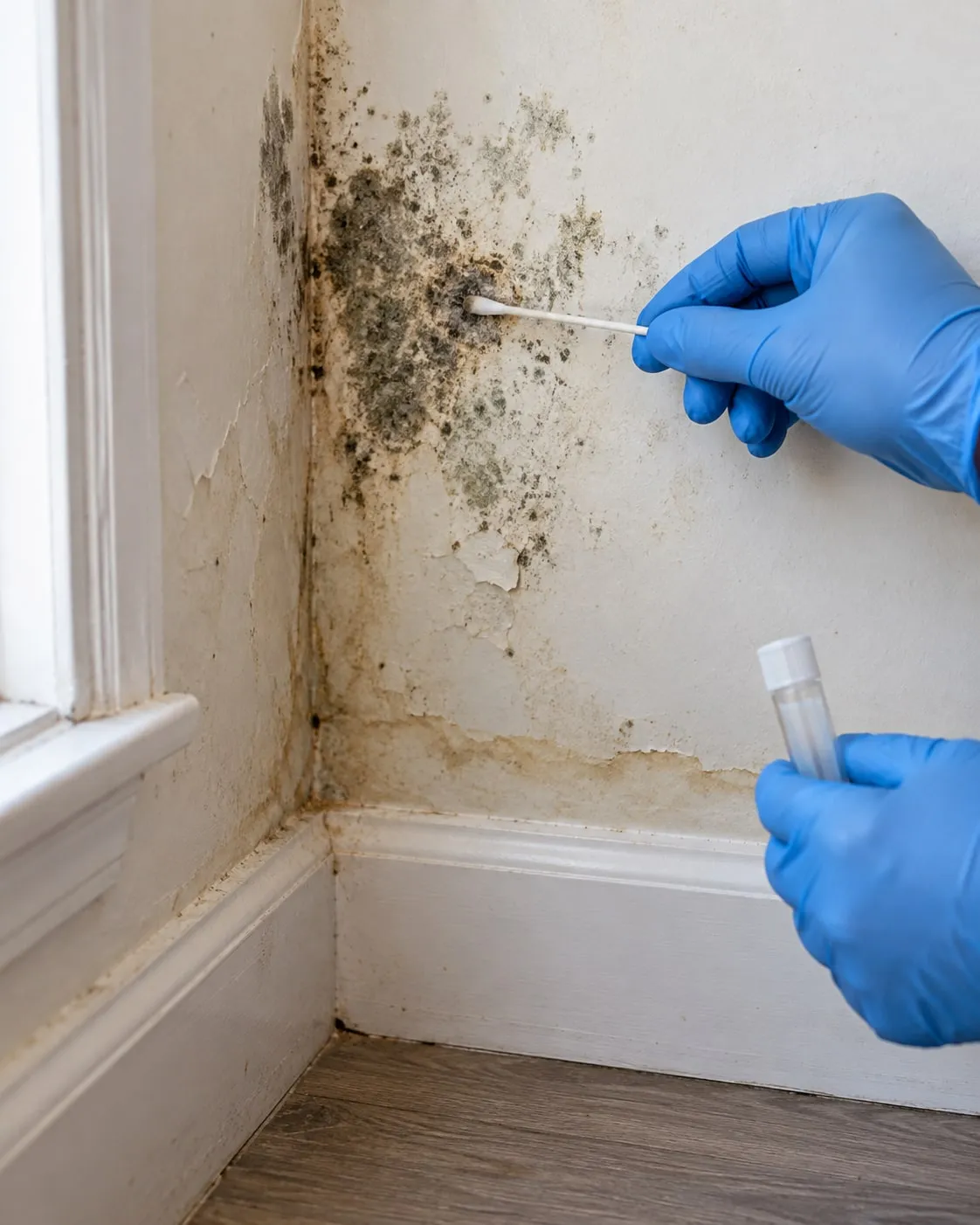
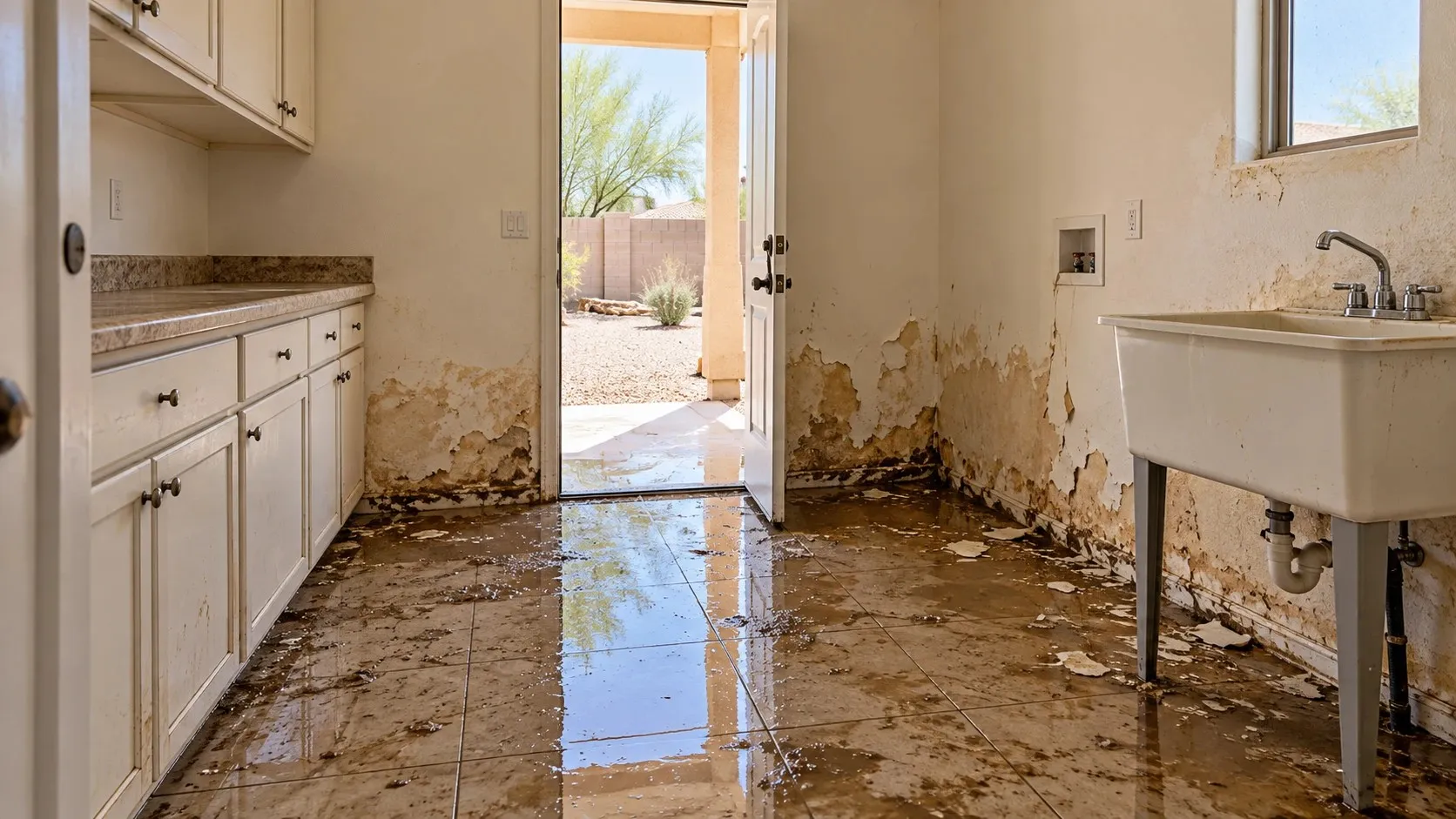
The catch with water is that drywall does not have to look wet to be wet. A monsoon leak at a parapet flashing can run down inside the wall, soak the insulation and the bottom plate, and leave only a faint ring on the ceiling. The board wicks moisture up from the plate long after the surface dried. A patch over that is paint over a problem.
The wicking is the part to respect. Gypsum pulls water upward and sideways, so the wet zone is always bigger than the stain. The paper face is food for mold once it stays wet, and a patched paper face that was wet for a week in a warm house is a colony waiting for its three-week birthday. Repair assumes the board behind the paint is sound, and after water, that assumption needs a meter to back it up.
Drywall replace: what it actually is
Replacement opens the wall. Cut the wet board out, typically back to the studs, and the cavity is exposed. Then the real work happens: the structure gets dried to the dry standard, the insulation comes out if it soaked water, and the framing gets read with a moisture meter before anything goes back. New board, tape, mud, texture, paint.
The point of replacement is not the new drywall. It is the drying you get to do because the old drywall is gone. The board is cheap. The access is what matters. See how the drying half works in water mitigation vs restoration.
Replacement also exposes what the water did behind the board: which studs are stained, whether the insulation is a wet sponge, whether the plate reads wet. Those discoveries change the scope, and they are only possible because the wall is open. A repair never gets to make them.
Where drywall repair fails here
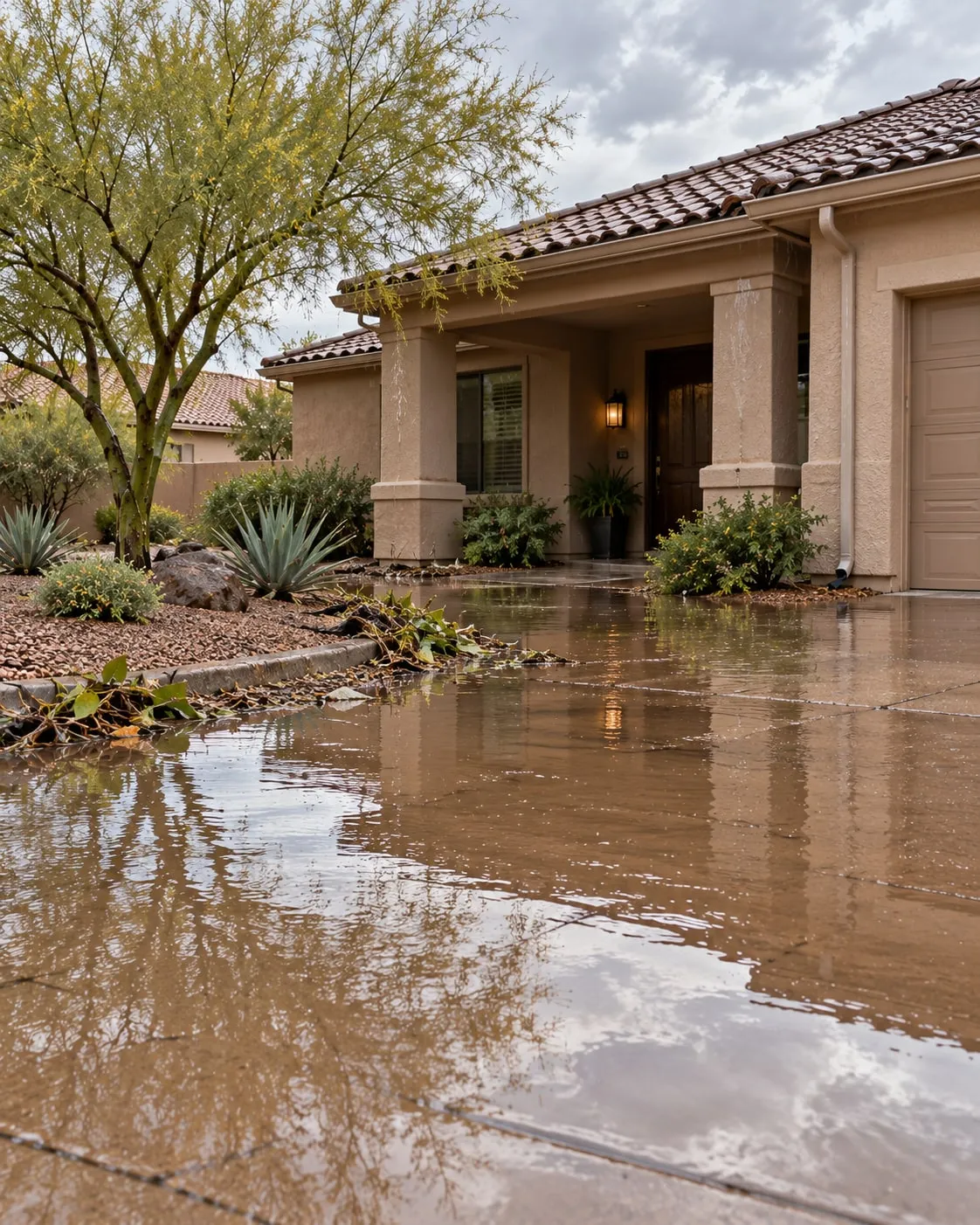
Scottsdale gives repair two ways to fail. First, the water source is usually the roof. A flat roof pond in a July monsoon, a parapet that holds water, a scupper that clogged, and the water enters at the flashing and runs down inside the wall. The stain on the ceiling is small. The wet cavity behind it is not. A patch fixes the stain and leaves the cavity wet.
Second, the empty second home. A house in DC Ranch or Carefree sits closed through the storm season, and a small leak gets weeks to wick through a wall instead of hours. By the time anyone sees the stain, the board has been wet for most of a month, and repair is not on the table anymore.
Then there is the finish question. Scottsdale’s higher-end homes carry texture and paint that are hard to match, and a patch in the wrong texture is a permanent reminder of the leak. If the finish has to be redone anyway, the extra cost of cutting the board out and doing it right shrinks, and repair stops being the cheaper option.
Where drywall replace fails here
Replacement fails when the drying gets skipped. The old wet board comes out, new board goes on, and the bottom plate is still wet because nobody read it. That is the mold-at-week-three story, and the rebuild makes it worse because the wall is closed again. Our piece on equipment pulled too early walks through exactly how that plays out.
The other Scottsdale failure is the finish. These are not all beige boxes. Larger rooms, custom textures, paint that has to match what is already on the walls. Cheap patch work and bad texture matching stand out, and redoing a finish costs more than doing it once.
A replacement done without a moisture read on the framing is the expensive version of the same mistake. The new board is cosmetic until the cavity behind it is dry, and a meter on the studs is the only evidence that it is. Anything less is a guess with drywall over the top of it.
What it costs and what drives the number
Repair is the cheap end, a patch and paint. Replacement moves with how much board comes out, whether insulation is involved, and the drying time. Texture matching in a higher-end house adds to the finish cost. The full restoration cost varies with all of it, and the honest number depends on what is behind the stain. A useful way to think about it: repair prices the surface, replacement prices the cavity. The surface number is always smaller, and the cavity number is the one that tells you what actually happened to your wall.
What good work looks like in Scottsdale
- The wall gets read before anyone recommends repair or replace, and the readings go in writing.
- The cut goes to clean edges and the cavity gets dried, instead of hanging board over a wet plate.
- Documentation holds the line: photos before the saw, readings before the mud.
- The right scope depends on the house. Start with the home page if you want the whole picture.
A ring on the ceiling after a monsoon, a wall that smells when you lean close, a second home you opened and wished you had not. Call (480) 386-9277 and tell us what you are looking at, or read our complaints policy if a job already went sideways.
Do not let anyone hang board over a wall that has not been read. Call (480) 386-9277 first.