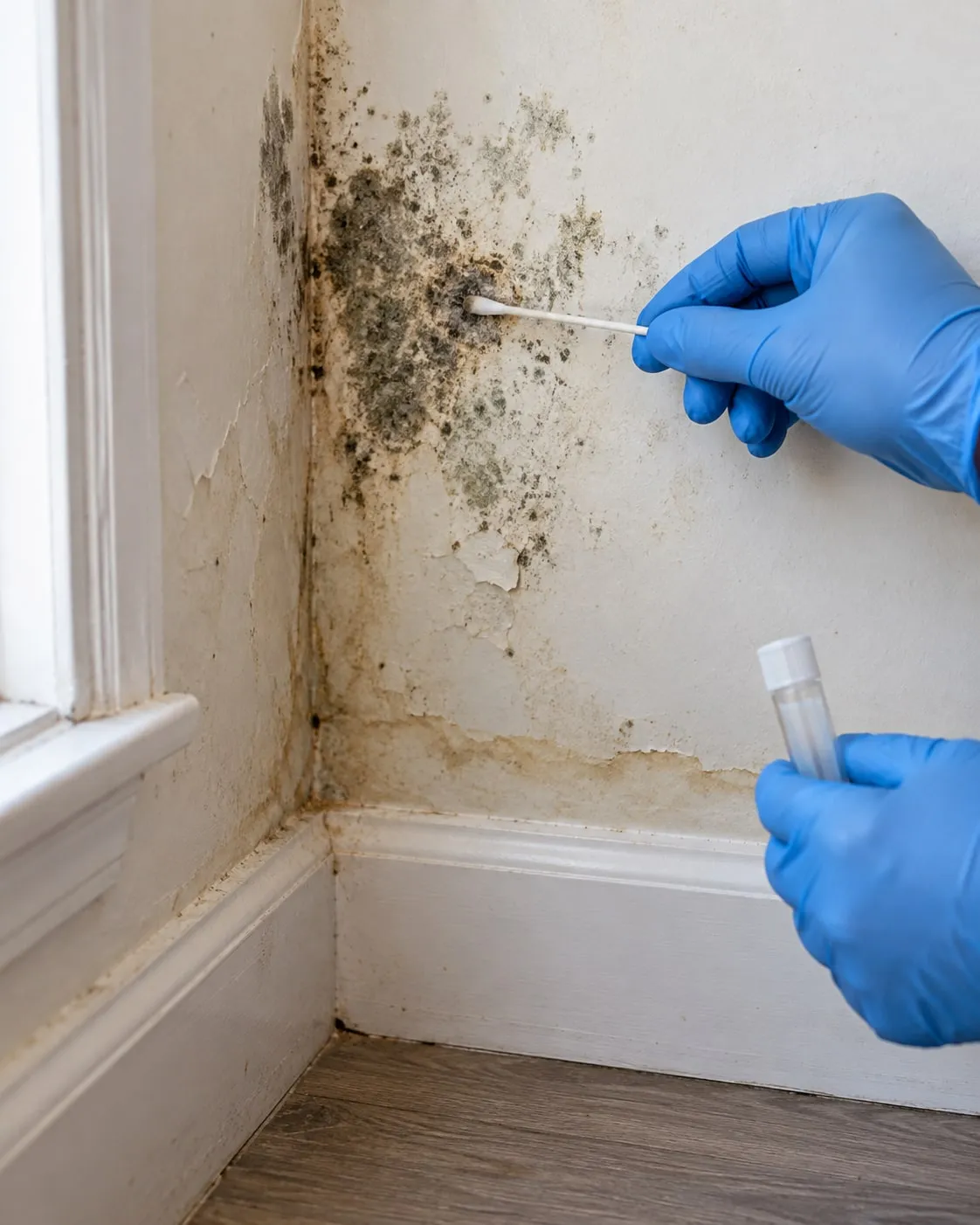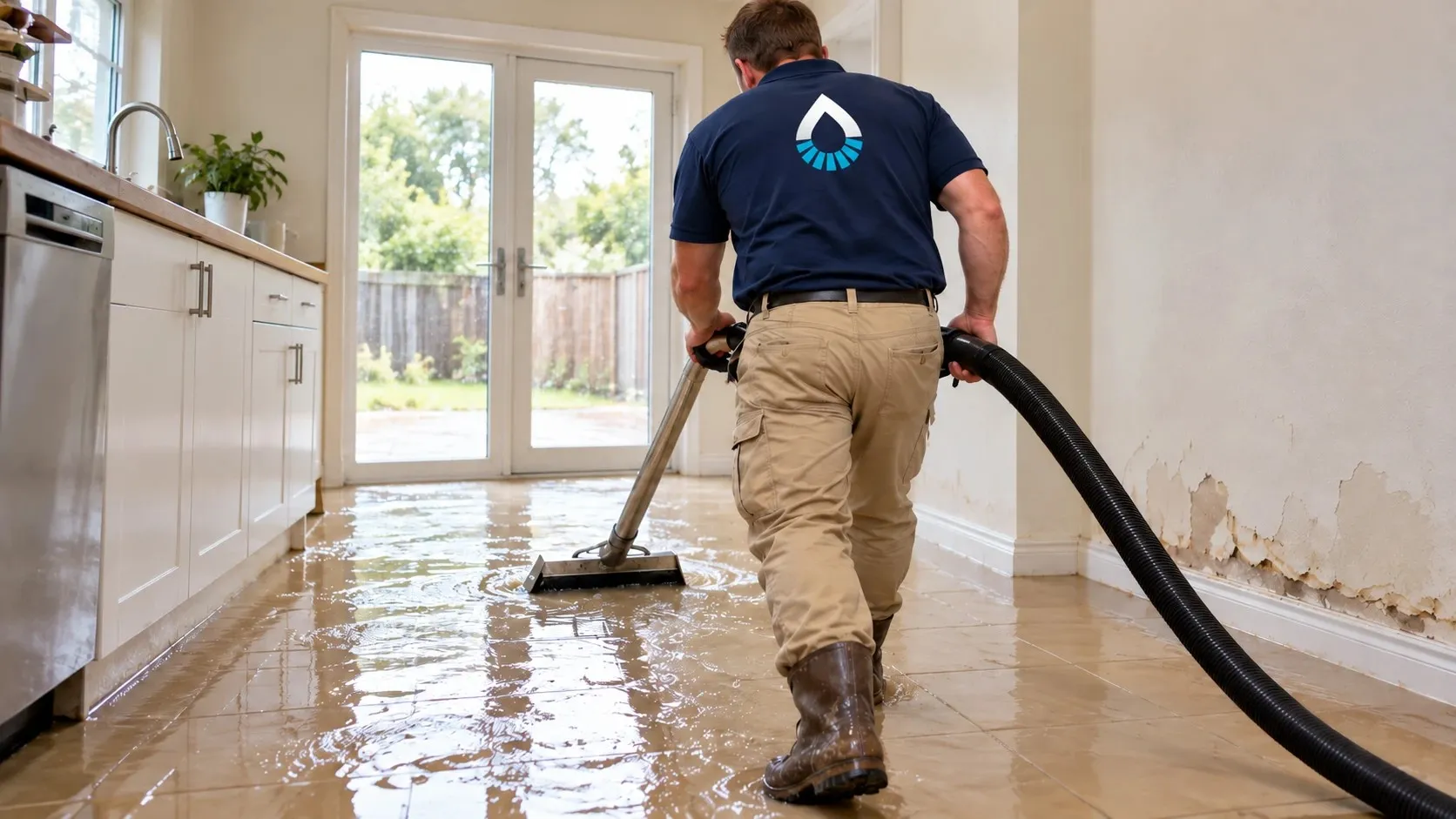
The fans ran for three days. The floor looked dry, the company packed the equipment up, and the rebuild started. Then, about three weeks later, the smell showed up. The baseboard bloomed. The fresh paint bubbled. Three weeks is not a coincidence. It is how long mold needs when the wall was never actually dry.
This is one of the most common complaints in Scottsdale water damage work, and it has a precise mechanical cause. The equipment did not fail. The stopwatch did.
Drying that stops at the surface
Here is what actually happens inside a wet wall. Water soaks into the drywall, the insulation, the bottom plate, the slab. The fans evaporate the surface moisture fast. The wall looks dry in a couple of days because the face of it is dry. That is when the meters should decide the job, and that is when they often get skipped.
Beneath the dry face, the cavity is still wet. The plate is wet. The slab is wet. The equipment leaves anyway, because the job is scheduled to end on day three, and the company has another house waiting. The wall goes from damp to dry on the surface, and everyone calls it done. Then the rebuild starts, and the wet cavity gets sealed behind fresh drywall, fresh paint, fresh baseboard. That is not the end of the job. It is the start of the mold’s job.
Mold does not appear overnight. In a warm Arizona wall, a colony needs time to establish itself, spread through the paper face of the drywall, and reach the surface where you can see it. That timeline, wet plate to visible bloom, lands right around three weeks. Which is why the smell and the spots show up exactly then, weeks after everyone declared the house dry. Our page on mold remediation vs mold removal covers what the fix looks like once the colony is visible.
What a dry standard actually is
The trade runs on a phrase you should hear out loud: the dry standard. It means the structure is dry when the materials read dry on a meter, not when they look dry to an eye. Wood, drywall, and slab all have target numbers. The equipment stays until the numbers hit the target, checked day after day, and the final readings get written down.
A job that ends on a calendar date instead of a reading is a job that ends early. Three days is a schedule, not a measurement. A Scottsdale slab that took monsoon water can keep releasing moisture for weeks, and a wall built on that slab keeps soaking it back up. The fans can run perfectly for three days and accomplish nothing against that.
See how the machines themselves are supposed to work together in our dehumidifier vs air mover page.
Why Scottsdale houses hide the moisture
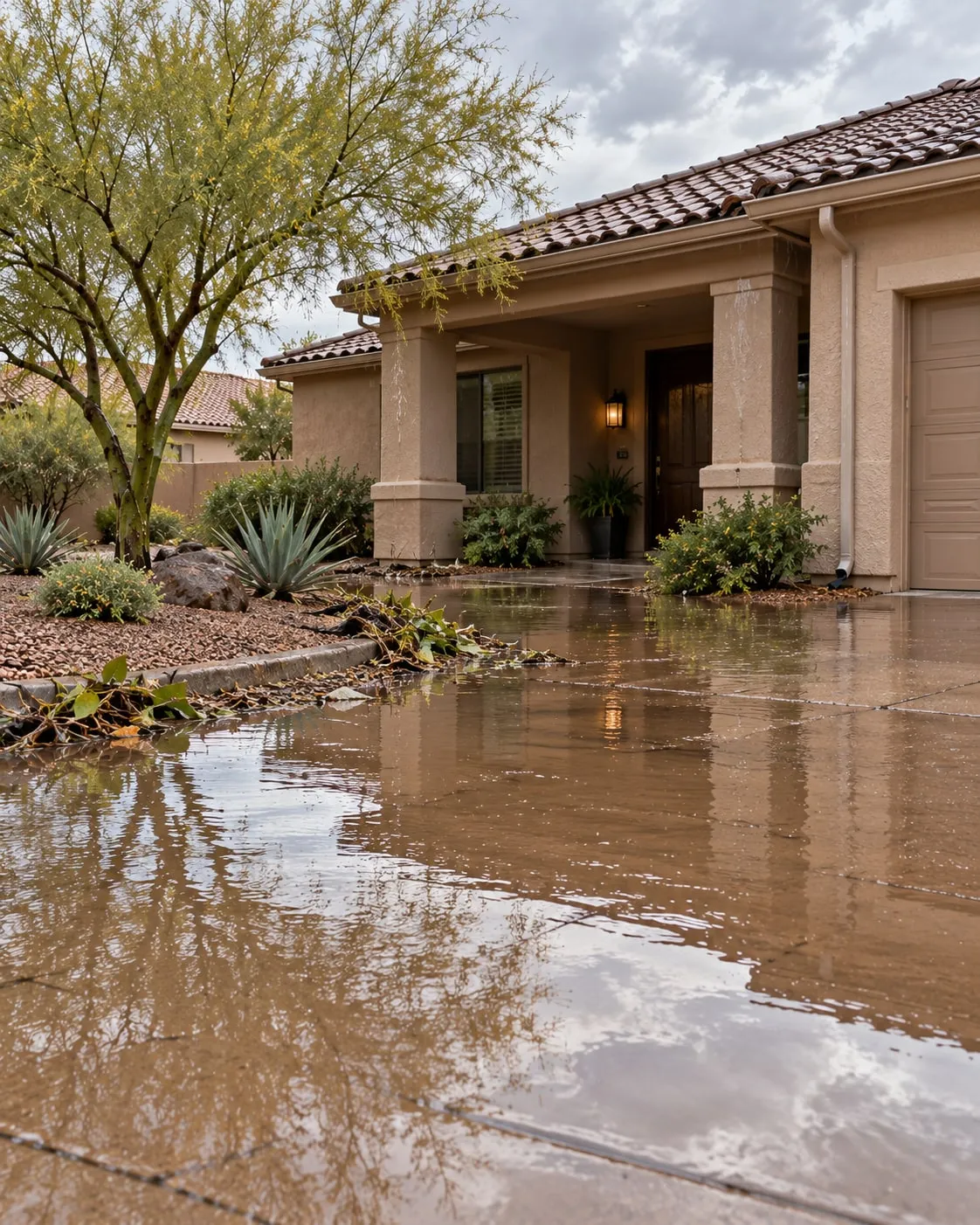
Scottsdale’s climate is the reason this failure is so common here. Monsoon storms from July through September dump water fast, and the houses that take that water have two features that hide it. Flat roofs and parapets hold the pond, and the water enters at the flashing and runs down inside walls, where nobody sees it. Second homes sit empty through the storm season, so the water has days or weeks of quiet time before anyone even finds the loss. By the time the company arrives, the water has soaked deeper than a fresh leak ever would.
Then the heat works against the drying. Warm air holds more vapor, so a wall can feel dry to the touch while the air and the cavity are still carrying moisture. A hand on the paint says nothing. A meter on the plate says everything. In an empty house, in DC Ranch or Carefree, there is not even a hand on the paint, just a schedule and a truck that has to leave.
AC condensate lines make the ceiling version of the same story. A line that drips slowly into a ceiling cavity for a month, in a house closed up for the summer, wets a ceiling the same way a roof leak does. The cleanup gets scheduled, the equipment comes and goes, and the moisture that was in the cavity for a month is not gone because three days of fans passed through.
What to check before the equipment leaves
You do not need to operate the meters yourself. You need the company to prove the drying happened, and most of that proof fits in three questions.
Ask for the readings. Every day of drying should have numbers attached: what the wood read, what the drywall read, what the slab read, and what the target was. A company that cannot show readings is asking you to trust a schedule.
Ask which rooms were wet. The scope should list every affected room, and the readings should cover every one of them. A wall behind a baseboard in the room next to the visible loss is still a wet wall.
Ask what happens next. If the rebuild starts before the final readings are written down, that is the mold clock starting. New drywall over a wet plate is not a finish. It is a time bomb with a three-week fuse.
The water damage restoration cost you were quoted includes drying time. Days of equipment are a line item. When a company cuts that line item short, it is not saving you money. It is moving the cost forward, and you pay it later as mold, as demo, as a second restoration, usually without a second check from the carrier.
What good work looks like in Scottsdale
Good work leaves equipment until the meter says dry, and the readings exist, in writing, before the rebuild starts. If the equipment already left your house and the smell arrived three weeks later, that is a common pattern, and it is usually fixable, the colony, the wall, and the paperwork.
If the smell is in the house right now, do not open the wall yourself. Call (480) 386-9277 and tell us what happened: when the water came, when the equipment left, and when the smell started. Someone from the team will call you back to go over whether the cavity was ever actually dry, and what the next step is.
If the company still has equipment in your house, call (480) 386-9277 before they pull it. That is the cheapest moment to ask for the readings, because the meters are right there.