An air mover pushes air across wet surfaces so the water evaporates. A dehumidifier pulls that vapor out of the room so it cannot land somewhere else. They are a pair, and a drying job that runs only one of them is not drying.
The short answer
Air movers evaporate. Dehumidifiers capture. Evaporation without capture moves the water from the wall into the air, and then into the next room. The right setup depends on the slab, the wall, the ceiling, and how much water got in, which in a monsoon house is usually more than it looks.
Dehumidifier: what it actually is
A dehumidifier pulls room air across cold coils, condenses the vapor out of it, and drains the water away. That keeps the room air dry, which keeps evaporation running, and it protects the rooms that were never wet. Vapor from a soaked wall migrates everywhere, and a dehumidifier is what keeps the rest of the house from becoming part of the loss.
The machine earns its keep in two ways. It lowers the humidity in the wet room so the wet surface keeps releasing moisture, and it caps the humidity in the dry rooms so the loss does not spread. One unit doing both jobs badly is worse than two units each doing one job well.
Sizing is where it gets real. The unit count comes from the square footage and the water load, and a plan that is short one unit adds days to the drying instead of saving them. Every day the equipment runs is a line item on the bill, so the undersized plan is often the more expensive one, drawn out over more days.
Air mover: what it actually is
An air mover is a high-volume fan that sits at floor level and drives air across wet surfaces. The moving air speeds up evaporation the same way wind dries a sidewalk. Pointed along walls, under cabinets, across flooring, it keeps the boundary layer of humid air from settling over the wet surface.
What an air mover does not do is remove water from the house. The vapor it creates goes into the room air. If the room air is already saturated, evaporation slows down and then stops, and the wet wall just sits there.
The two machines do one job together: the mover turns liquid water into vapor at the surface, the dehumidifier turns vapor back into liquid at the drain. Miss either half and the job fails quietly. See how that fits into the bigger sequence on water mitigation vs restoration.
A mover’s placement is part of its output. Air needs to travel along the wet surface, under cabinets, behind baseboards, and dead air in a corner is undried corner. A floor full of fans pointed at the middle of the room is a display, not a drying plan.
Where dehumidifiers fail here
A dehumidifier fails when it is too small, too few, or too late. One unit in a three-bedroom house is decoration. The drain matters too: a unit draining into a laundry sink that overflows is a second water loss on top of the first. In an empty second home, in DC Ranch or Carefree, nobody is there to empty a tank or hear the alarm, and a dead unit in a closed house is just a warm box.
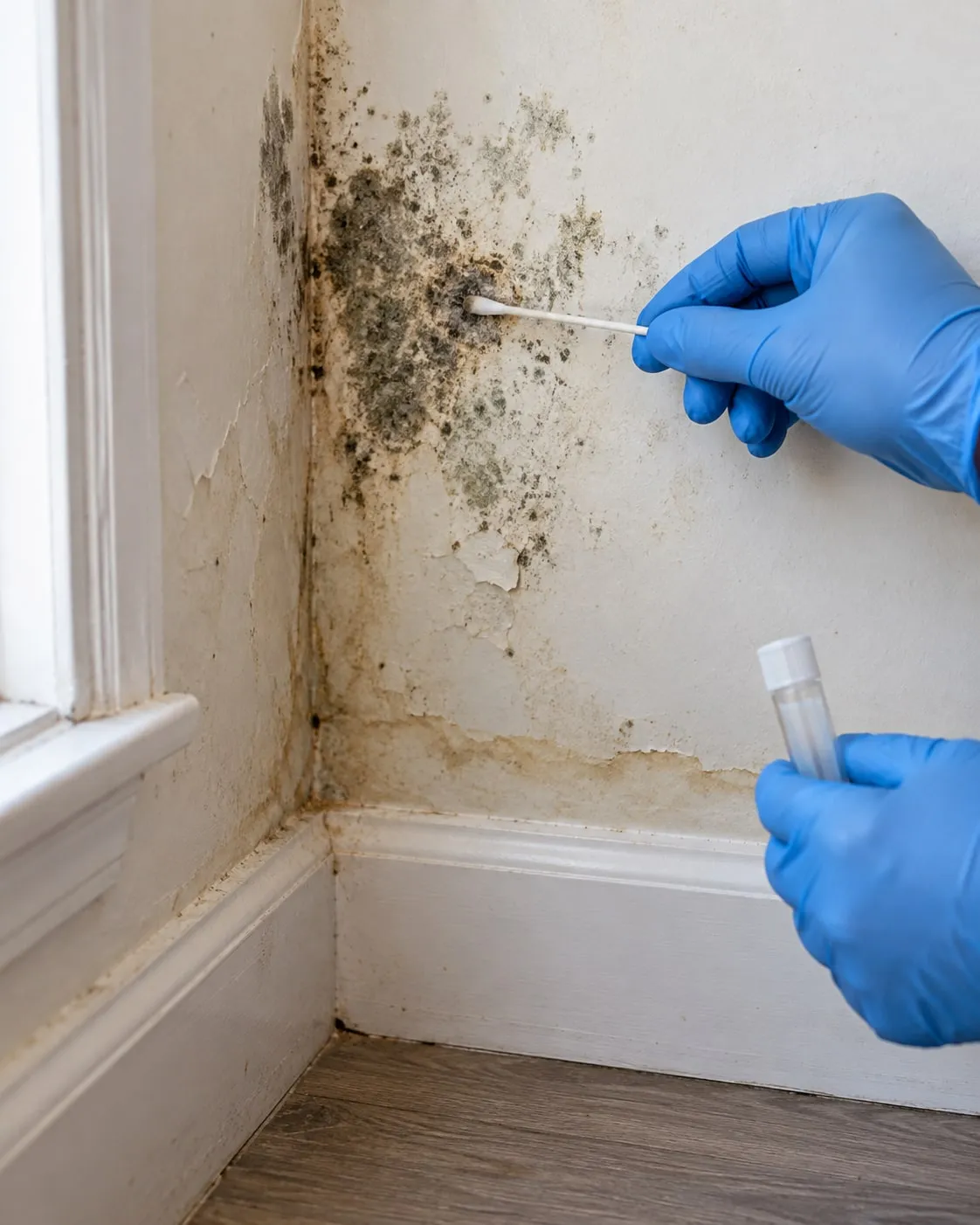
The big one is pulling the units early. Drying runs until the structure reads dry, not until the visible water is gone, and a Scottsdale slab needs weeks, not days. When the units leave early, the mold shows up about three weeks later. See why the mold appears after the equipment is gone. The meters should be part of the handoff. Ask for the final numbers in writing before the truck leaves, because the truck rarely comes back for free.
Where air movers fail here
Scottsdale fails drying jobs with heat and time. In July and August the house is hot, and hot air holds more vapor, so a wall can feel dry while the air around it carries a lot of moisture. Run movers alone in that house and the water leaves the wall and lands in the cooler rooms, the closets, the garage, anywhere the vapor finds a surface.
Time is the second failure. Equipment pulled after three days while the cavity is still wet is the classic story. A slab that took monsoon water releases moisture slowly for weeks, and an air mover running for three days has not begun to dry the slab. It dried the surface that hides the slab.
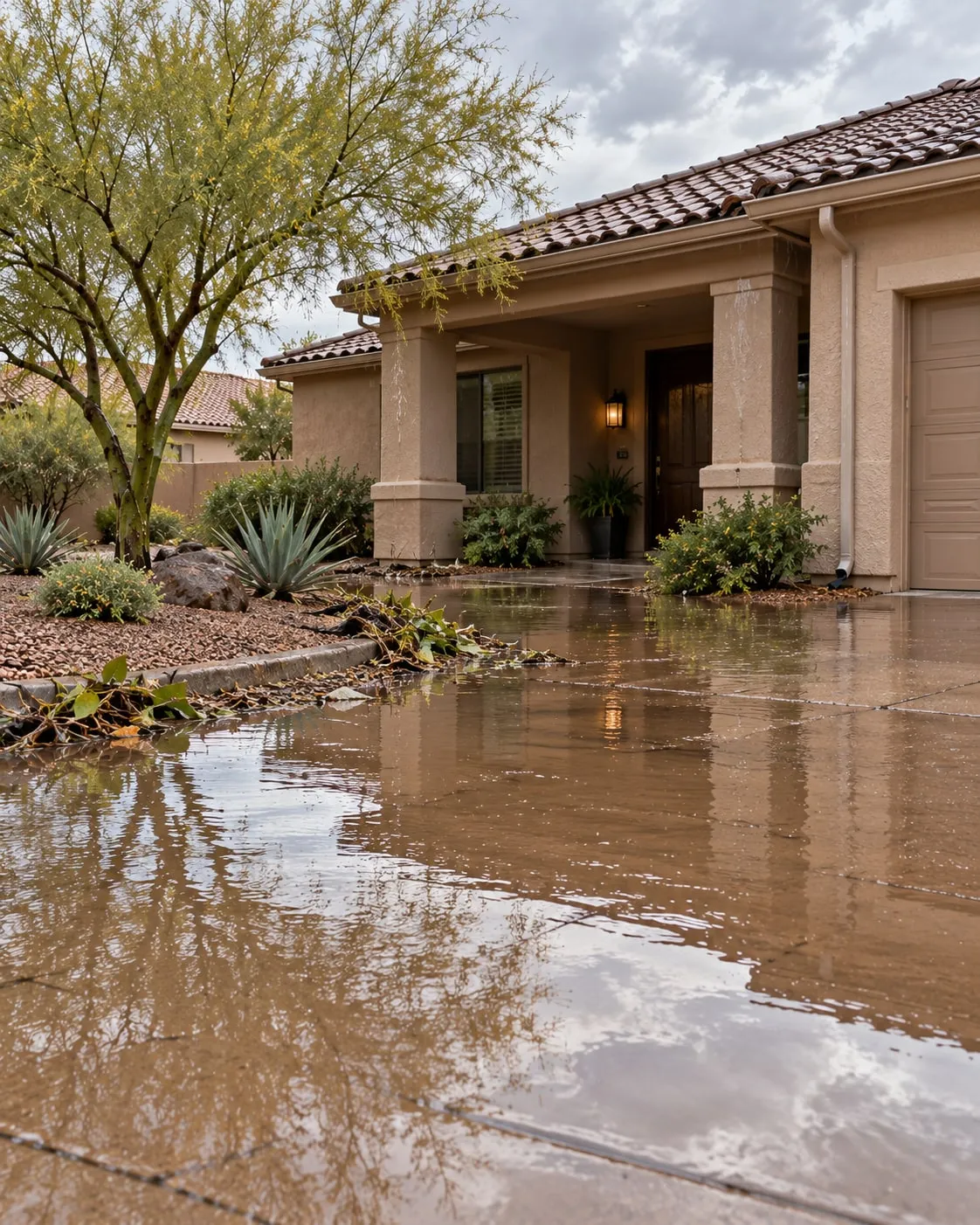
Monsoon humidity stacks the deck the same way. July and August storms spike the moisture in the outside air, and every time a door opens, the wet air comes in and slows the whole job. A drying plan that ignores the monsoon calendar is drying against the weather.
What it costs and what drives the number
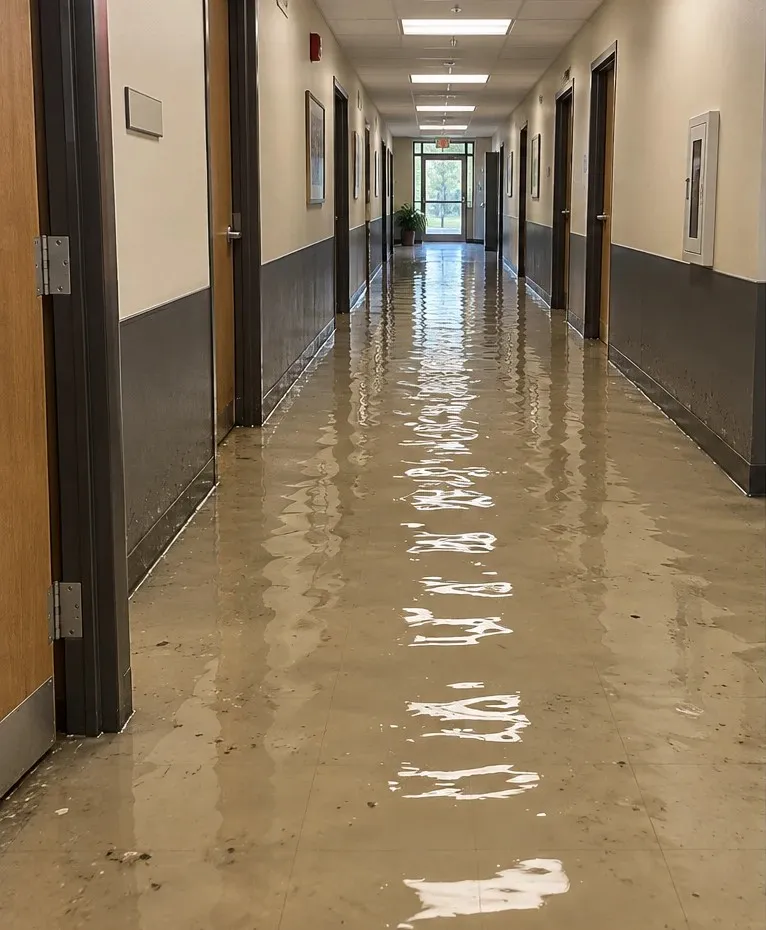
Drying equipment is priced per day, and the days are what drive the number. More square footage, more units, more days. The category of the water changes the plan too, see category 1 vs category 2 water, because contaminated water means more material out and less to dry. The whole restoration cost moves with how long the equipment has to run, and that is decided by readings, not by a calendar. On a monsoon loss in a closed-up second home, the equipment days are often the largest single line on the bill, because the water had time to get into the slab before anyone found it. The drying is priced per day, and the slab sets the number of days.
What good work looks like in Scottsdale
- The drying plan pairs movers and dehumidifiers, and the numbers on both get checked.
- Equipment stays until the meter says dry.
- Undersized setups get flagged before the days start adding up.
- The plan gets explained in plain language. The home page lays out the whole approach.
A wall that smells damp a week after the fans left, a slab that never quite dried, a ceiling that stayed soft after a monsoon. Call (480) 386-9277 and tell us what is happening, or see our complaints policy if a drying job already went wrong.
Before anyone pulls the equipment, ask to see the final readings. If you need someone to sort that out, call (480) 386-9277.