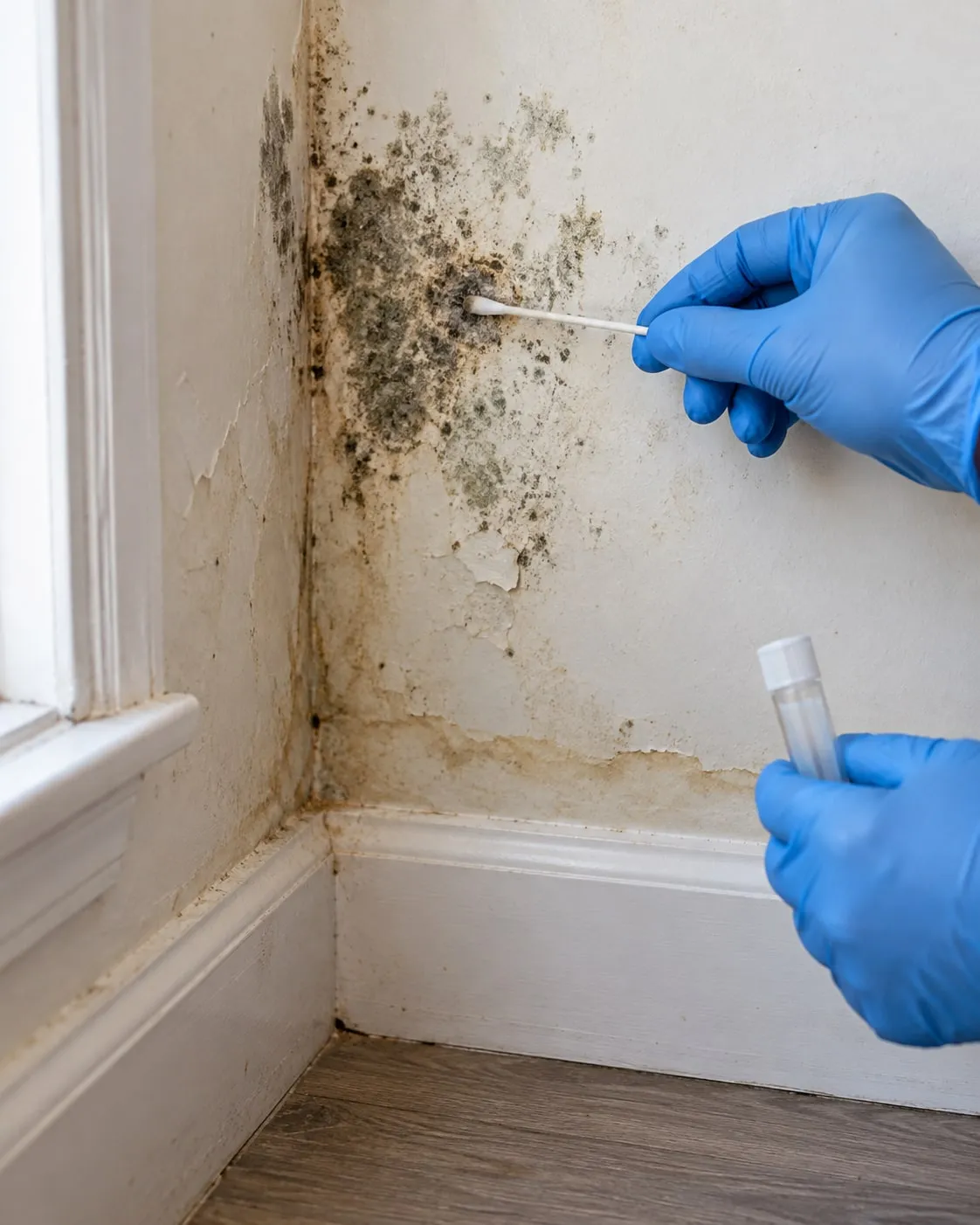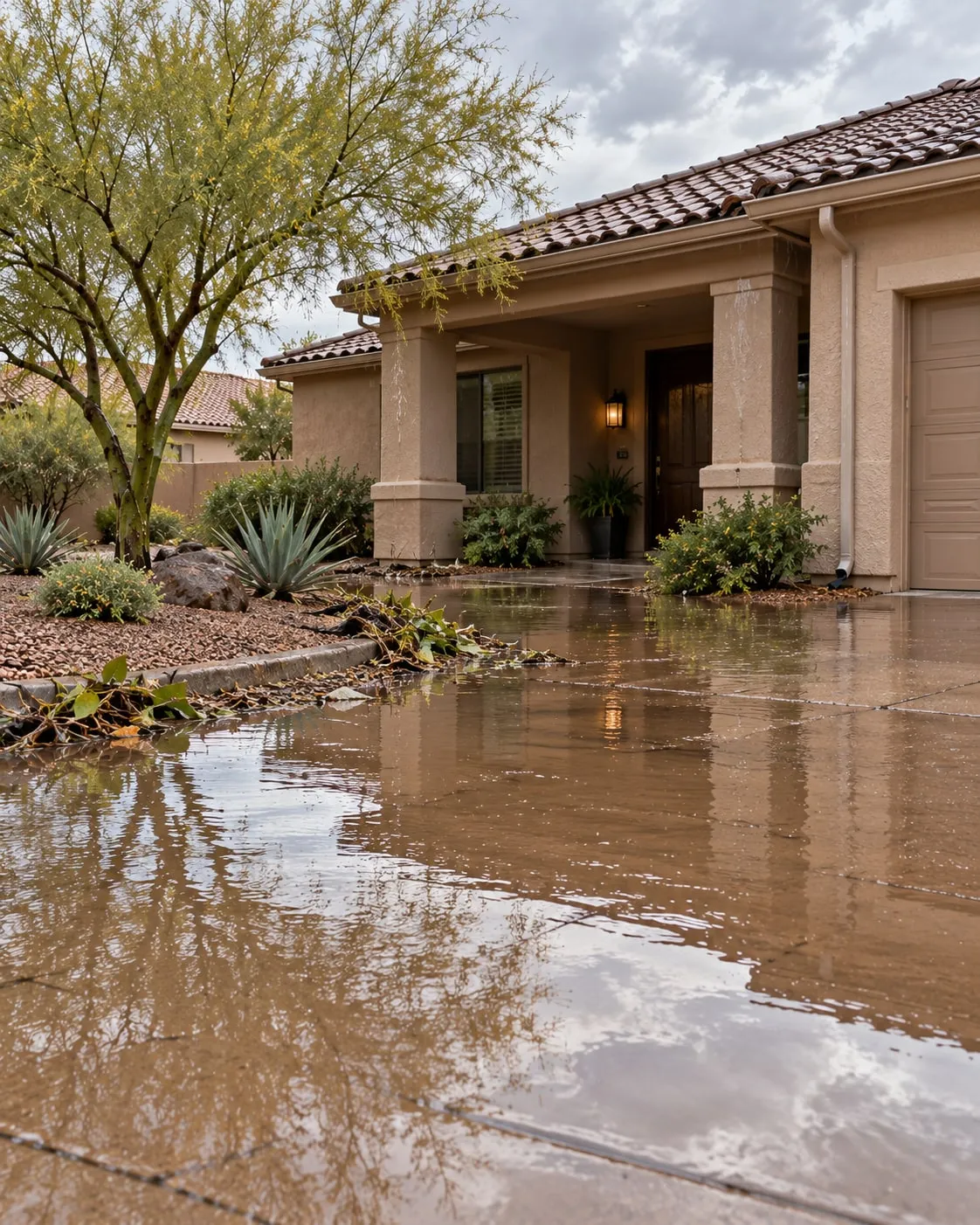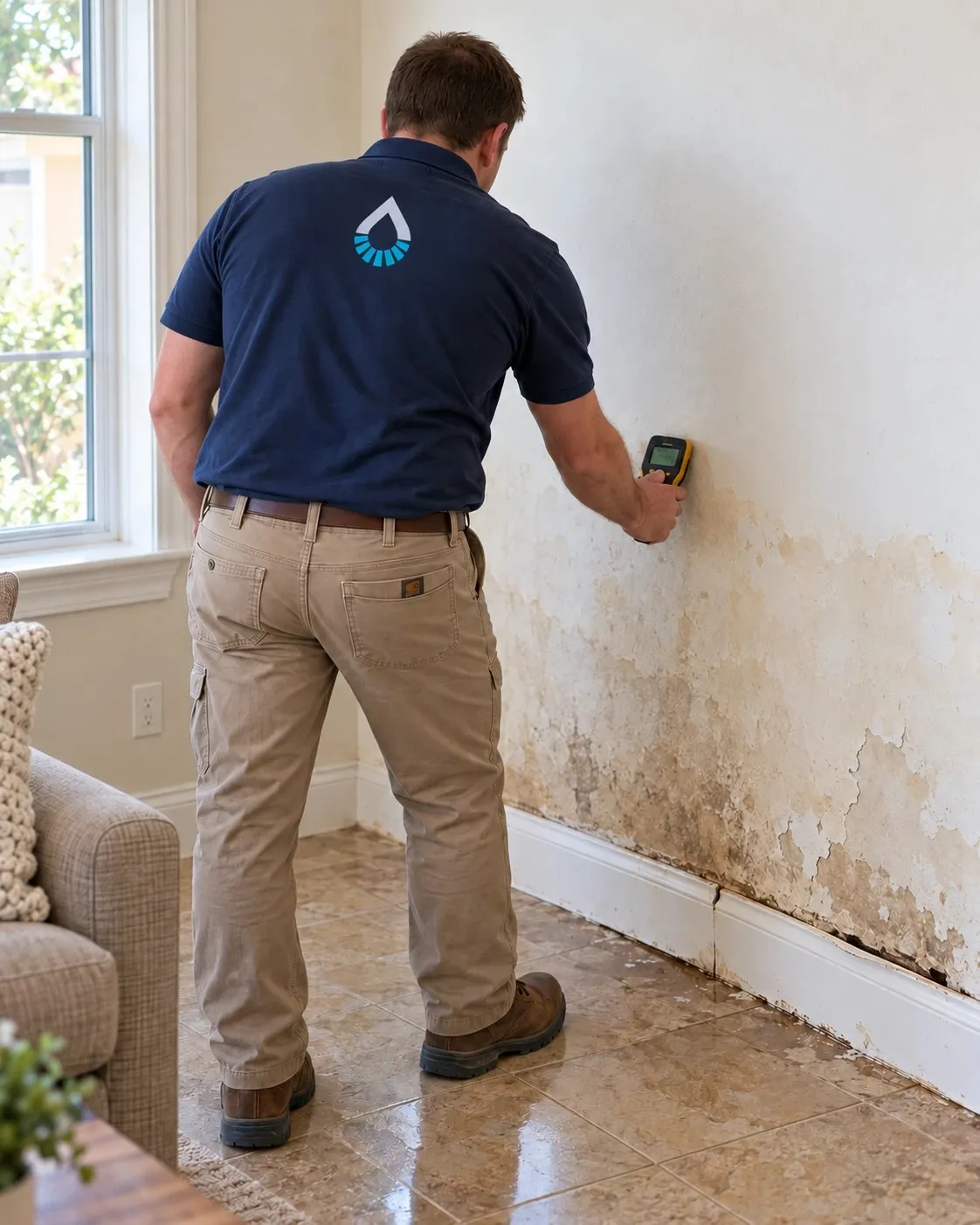
Removal kills the mold you can see. Remediation fixes the moisture that grew it, contains the spores, removes what cannot be saved, and verifies the air afterward. In a Scottsdale house, removal without remediation means the mold comes back.
The short answer
Mold removal is a surface cleanup. Mold remediation is a building science job: find the moisture, fix it, contain the area, remove the damaged material, dry the structure, and verify with a clearance check. Which one your house needs depends on the wall, the ceiling, and whether the moisture source is still active.
Mold remediation: what it actually is
Remediation treats the mold as a symptom, not the disease. The first step is finding the moisture source and stopping it: a leaking supply line, a parapet flashing that failed, a condensate drain that drips into the ceiling. Then the work area gets contained. Plastic barriers, negative air, so spores stirred up during removal do not ride through the rest of the house.
Then the damaged material comes out. Porous material that has absorbed mold, drywall, insulation, carpet pad, goes. Hard surfaces get cleaned and dried. The structure gets dried to the dry standard, and the job closes with a clearance check, a read on whether the air in the room is back to a normal spore load. Our page on water mitigation vs restoration covers the drying half of that sequence.
In Scottsdale the source is usually one of three things: a flat roof seam that opened in a monsoon, an AC condensate line dripping into a ceiling, or a supply line leaking inside a wall in a house that sat empty. Finding the source matters more than removing the colony, because a colony with a fixed source is a finished job, and a colony with an active source is a subscription.
Mold removal: what it actually is
Removal is the visible work. Wipe the growth off the wall, spray a biocide, fog the room, paint over the stain. It costs less than remediation and it finishes faster, which is exactly why it gets sold.
Here is the problem. Mold is an organism with roots. Bleach on a porous surface, drywall, wood, grout, kills what it touches and evaporates before it reaches the root. The stain fades, the spores stay, and the moisture that fed the colony is still there. Killing surface mold without fixing the moisture source does not end the problem. It pauses it until the wall is warm and wet again, and Scottsdale delivers warm and wet every July.
Where mold remediation fails here
Remediation goes wrong in predictable ways, and most of them are about scope and money. Homeowners report remediation quotes that swing wildly for the same room, because the scope is never written down clearly enough to compare. Testing gets sold as a solution, a test result is not a fix, and a stack of lab reports does not stop a leak. Containment gets skipped because plastic and negative air cost money, and sanding mold in an open room spreads spores through the house. And the final failure: drywall replaced over a wet plate, so the rebuild feeds the next colony. The full breakdown is in our piece on why mold shows up three weeks after the equipment leaves.
A remediation scope you can actually read names the rooms, the square footage, the containment setup, what gets cut out, the drying target, and the clearance check. A scope that says mold cleanup, whole house, tells you nothing and lets the price be whatever it needs to be on the day.
Where mold removal fails here
Scottsdale houses grow mold from leaks, not from outside humidity. A single slow supply-line leak inside a wall will do it, because the Arizona summer keeps the wall warm enough for the colony while the rest of the house stays dry. Add the local favorites: AC condensate lines run through ceilings, and monsoon roof leaks at flat roofs and parapets. Kill the surface mold and the condensate line keeps dripping into the same ceiling. The mold is back before the paint cures.
Second homes are the worst case. A house in Carefree or DC Ranch closed up through summer gives a small leak months of quiet, warm, undisturbed time. By the time the owner walks in, the colony is established, and a surface wipe handles maybe a tenth of it.
Monsoon roof leaks play the same trick faster. A July storm opens a seam over a guest room, the water sits in the ceiling cavity through the hottest weeks of the year, and the stain that finally appears in September is the small part of what is up there. Spraying the stain is how people get a repeat visit the next July.
What it costs and what drives the number
Mold work prices itself by scope, and that is why quotes swing. Containment, the amount of material cut out, the drying time, the clearance check, all of it varies with the room and the colony. Surface removal is the cheap end. A contained remediation with rebuild runs far higher. The honest answer is that the number depends on what is behind the wall, and nobody can price that until the wall is open. See how the whole restoration cost breaks down. Two quotes for the same room should list the same line items. When one quote has containment and clearance and the other does not, they are not quotes for the same job, and the cheaper one is usually quoting the cheaper job, not the better price.
What good work looks like in Scottsdale
- The scope starts at the moisture source, not at the size of the stain.
- Good work contains the area before it disturbs anything.
- The clearance check gets requested in writing, before the rebuild, not as an afterthought.
- Two quotes read side by side make the comparison line by line. The home page has the whole approach.
A stain on the ceiling, a smell in the hall, a second home you have not opened since May. Call (480) 386-9277 and tell us what you found, or see our complaints policy if a company you used already made it worse.
Do not open the wall yourself. Call (480) 386-9277 first.