Water damage in a desert home often shows up as a warm spot on the floor, a smell in a closet or a jump in the water bill, long before there is a puddle. Here are 8 signs worth acting on, and what each one usually means.
A warm spot on the floor
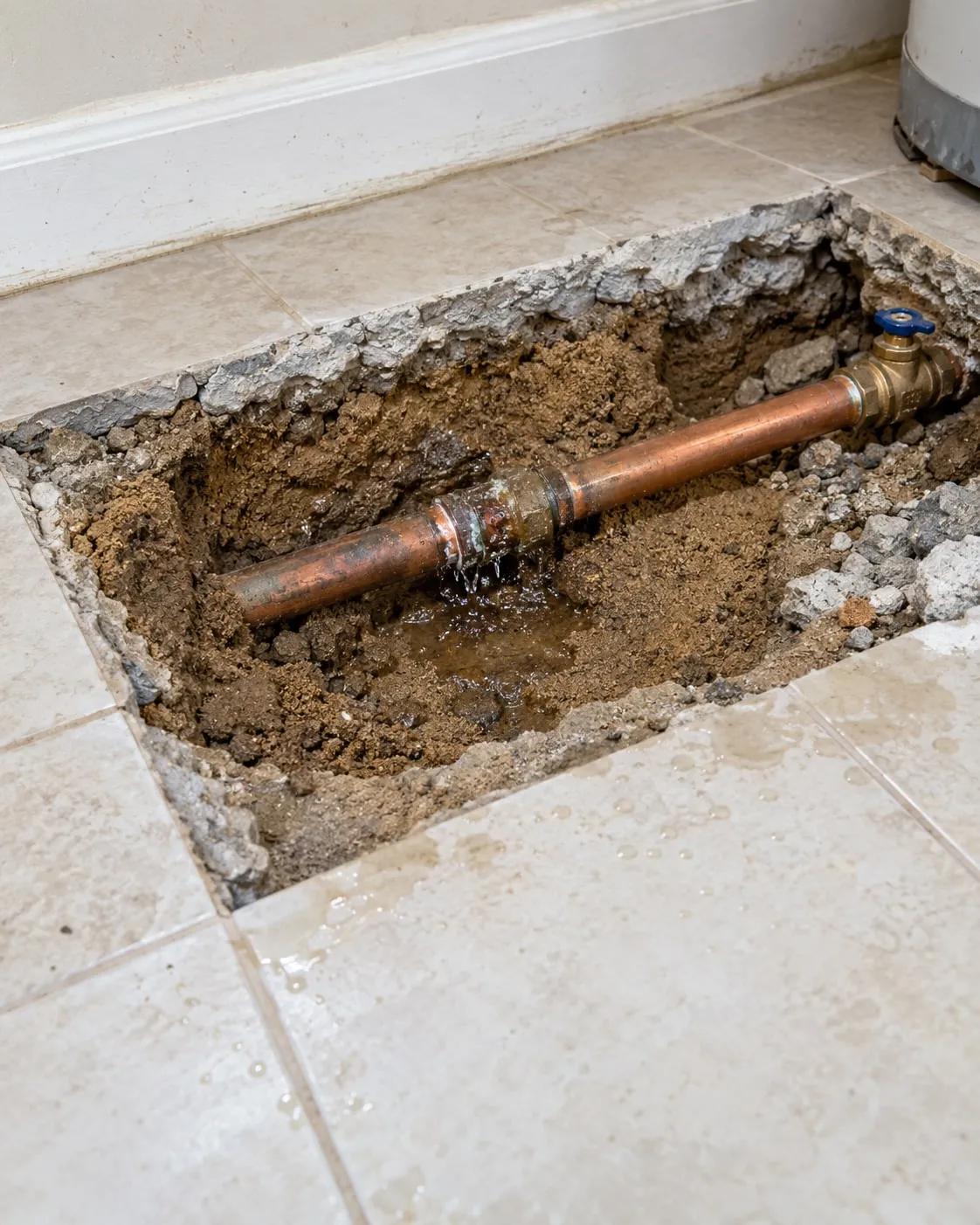
A warm patch of floor with no clear reason can point to a hot water line leaking under the slab. Confirm it with the meter test before you assume anything.
A hot water line leaking under the slab can warm the floor above it, so a patch of tile or concrete feels noticeably warmer than the rest. The same leak can also show up as a spot that never quite dries, or a faint sound of running water when everything in the house is off.
To run the meter test:
- Turn off every faucet and every appliance that uses water.
- Look at the meter and note the reading, or watch the leak indicator.
- Wait without using any water, then look again.
If the meter still moves, water is going somewhere. Close the main valve and call a leak detection plumber, who can find the spot. A slab leak can spread water under the flooring and into the bottom of the walls, out of sight. See how slab leak and burst pipe water damage is usually handled.
Ceiling and wall stains, and what they tell you
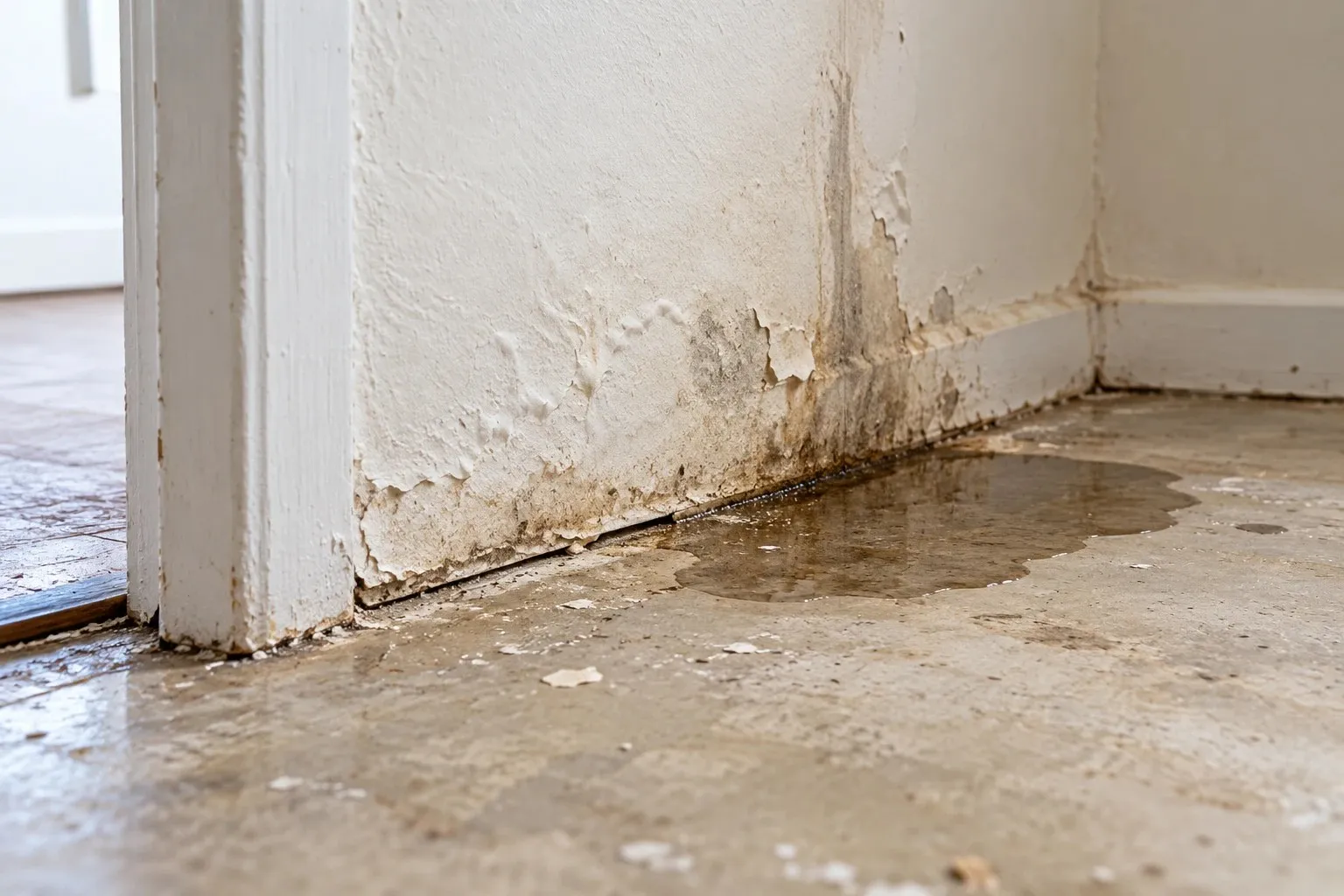
A brown ring or a dark patch usually means water has been arriving for a while. A stain that grows is active, and a stain that bulges means the board above is holding water.
How to read a stain:
- A ring. The ring is the edge of the wet zone.
- A stain that grows. The leak is still active.
- A bulge or a soft spot. The board is soaked and may need to come out. Stay out from under any part of a ceiling that sags.
- Streaks on a wall. Look for lines running downward and paint that has started to bubble or separate.
Common sources include roof flashing, an AC condensate line, or a supply connection on the floor above. To see whether a stain is still active, lightly trace its edge with a pencil and write the date. If it grows past the line, the leak is still running.
Do not paint over it. The stain is the clearest marker you have of where the water is going. The guide to ceiling water damage covers what to do first and who to call.
A musty smell that keeps coming back
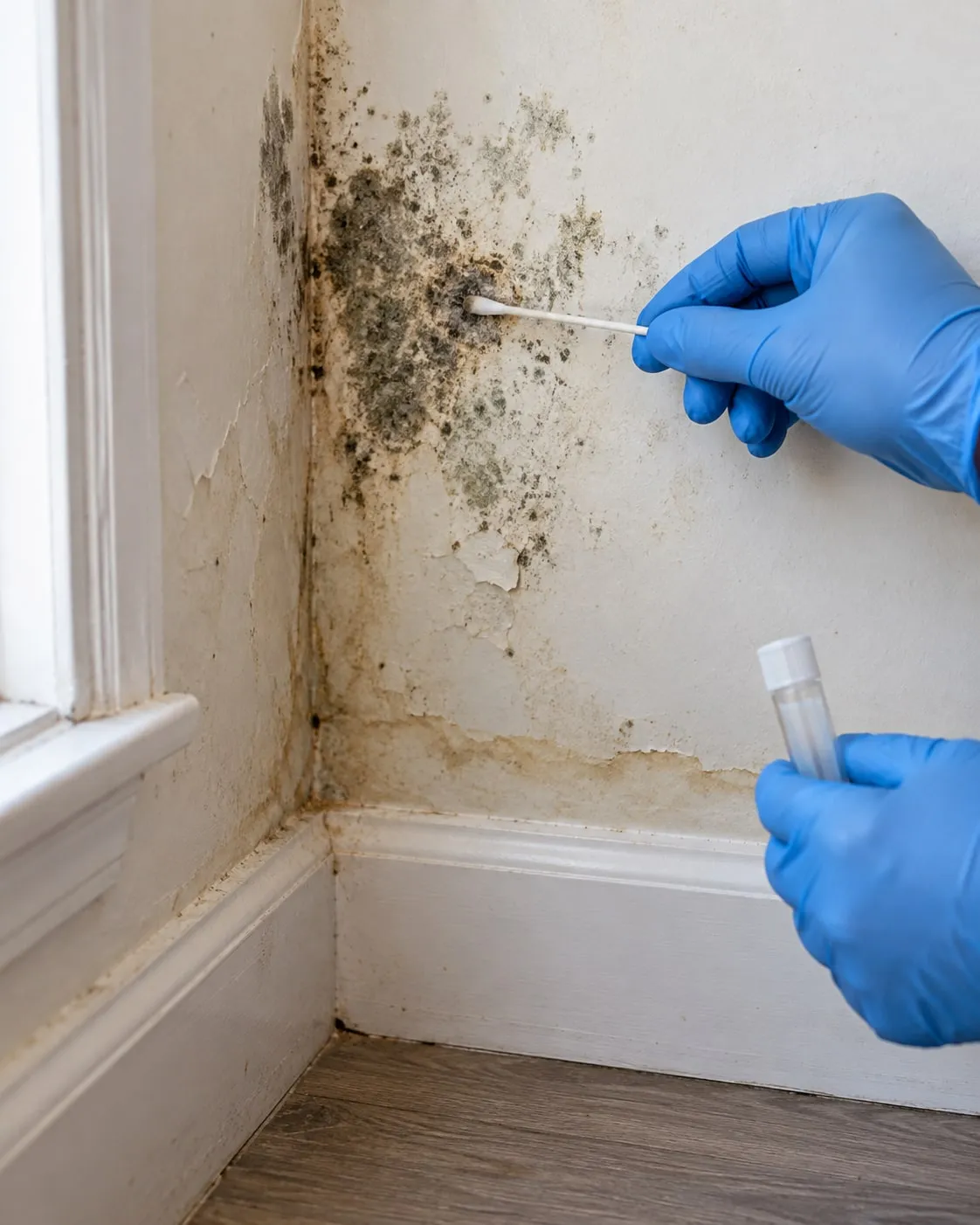
A musty smell that returns after you clean usually means moisture, and often mold growth, somewhere you cannot see. The fix is finding the water, not covering the smell.
Your nose is often faster than your eyes. Mold produces the musty, earthy smell people link with damp spaces. It tends to show up in closets, under sinks, in the air handler closet and in rooms that stay closed.
The EPA says you may suspect hidden mold if a home smells moldy but you cannot see the source. It lists places where mold can hide, such as the back side of drywall, the top side of ceiling tiles and the underside of carpet and pad.
Air fresheners only cover the smell. The EPA puts the real fix plainly: control the moisture, and you control mold growth. That means finding the water and drying the wall or floor it soaked.
In a closed-up house in summer, the smell can be the first sign anyone notices. A monthly walkthrough is worth the time when nobody is living there.
Floors that cup, crown or feel soft
Wood floors that lift at the edges or in the middle, and tile with loose or dark grout, mean the layers under the finish are wet.
What each one can point to:
- Cupping. The edges of a board rise above its center. It can point to moisture from below.
- Crowning. The center rises above the edges. It can point to moisture from above.
- Buckling. Boards lift right off the subfloor. That usually means the subfloor is wet.
Tile shows it differently. Watch for grout that loosens, tiles that sound hollow when tapped, or a grout line that darkens and stays dark.
All of these mean the layers under the finish are wet. Refinishing the surface without fixing the water just hides it.
A water bill that jumped
A sudden jump in your water bill, with no change in how you use water, often means a leak that runs all the time. The meter test settles it.
The City of Scottsdale lists “a sudden spike in your water bill” among its signs of a leak. Its other signs, mostly for outdoor and irrigation leaks, are soggy spots or dark areas and unusually green patches in the yard.
Note your normal use. Then compare the next bills, with no change in habits. A step up that does not go away points to a leak.
Scottsdale Water customers with hourly water use can get leak alerts through the city’s WaterSmart portal.
The bill matters for another reason. Scottsdale city code makes owners responsible for leaks on their side of the meter, including the water lost. Check the bill after a monsoon storm and after any plumbing work. A small step up can be an early warning long before damage shows.
Doors that stick, drywall that bulges
Doors that suddenly rub, cabinets that no longer close square and drywall that feels soft are signs that water has reached the structure.
Watch for:
- A door that sticks or rubs when it used to close easily
- A cabinet that no longer closes square
- A baseboard that has pulled away from the wall
- Drywall that feels soft, or sounds hollow when you tap it
Wet drywall can lose strength before it shows a stain. A bulging ceiling is a warning about weight, not just looks. Treat it with care rather than poking it, and keep people out of the room below.
Rust, corrosion and staining around fixtures
A ring of rust or a dark stain under a fitting means it has been weeping, sometimes for months, into a dark, enclosed space where mold can grow.
Where to look:
- The cabinet floor under each sink
- Around the base of each toilet
- The connections at the water heater
- The valve where a supply line meets the wall
Older plumbing raises the odds. A national IBHS study found that homes 30 years old were 3 times as likely to have a plumbing supply or drainage problem. The same study found that 44% of sink incidents came from faulty supply lines. Census data shows the median Scottsdale home was built in 1991.
Humidity and condensation that seems wrong
Fogged windows, condensation on tile or a vent grille, or a room that always feels damp all point to moisture with nowhere to go. A moisture reading settles it, not a guess.
The cause can be a blocked AC drain, a leak inside a wall, or a supply line in the slab. The EPA advises keeping air conditioning drip pans clean and the drain lines unobstructed, so the indoor AC unit is a good first place to look.
The EPA also suggests keeping indoor humidity below 60%, ideally between 30 and 50%. A simple humidity meter shows where each room stands. A room that reads much higher than the rest of the house is worth a closer look.
What to do when you spot one of these signs
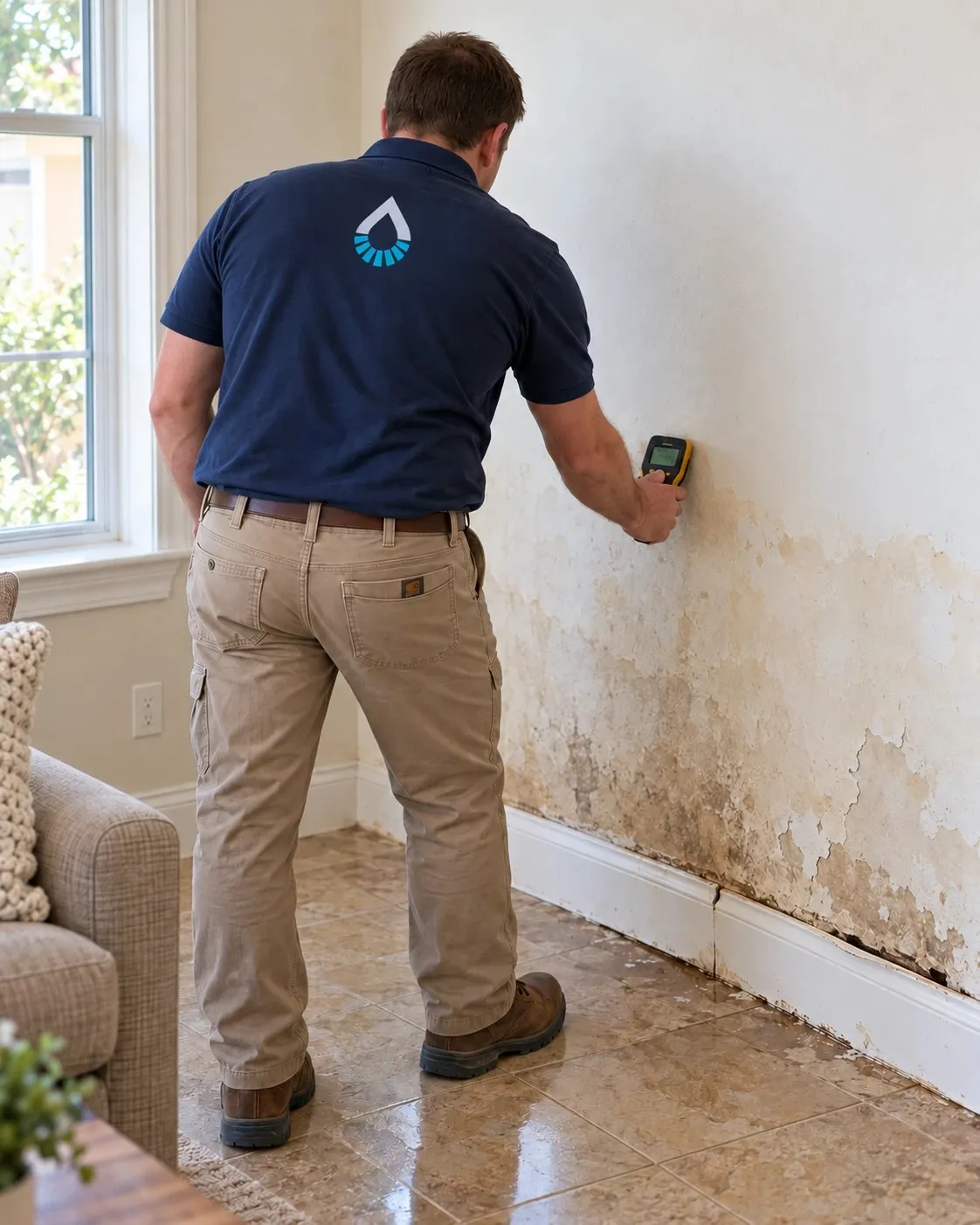
Do not wait for it to get worse. Shut off the water if a supply leak is possible, take photos, and get a moisture inspection with a meter and a thermal camera.
- Stop the water if you can. Close the main or the fixture valve. The guide on how to shut off your water in an emergency shows where to find each one.
- Take photos. Photograph the stain, the floor, the fixture and the meter. Write down when you first noticed the sign.
- Get a moisture inspection. Meters and a thermal camera show how far the water spread. That map sets the scope of the work and gives your insurer a record of what got wet.
If mold is already growing, see how mold remediation works. Then call and describe what you found.